 In this area
The Valletta issue
Floriana, Valletta: the quieter apron with the best walk into town
A flat, leafy suburb with grain pits under the biggest square on the island, Floriana is Valletta’s practical, lived-in neighbour: greener, calmer and far better value than the capital proper.
By Julian CamilleriWood-oven ftira to Strait Street wine cellars
Most people cross Floriana without quite admitting they’re in Floriana at all: off the airport bus, past the Triton Fountain, through City Gate and into Valletta with their eyes already on Republic Street. Their loss. This is the flat bit of the capital’s front porch, the place where the island’s grain pits lie under a square big enough for concerts, where the church bells ring over ministries and cat colonies, and where you can still find a decent bed without selling a kidney for the privilege. It is a suburb that works for a living, and you can feel that in the morning air.
What Floriana is known for
Floriana was laid out in 1724 and named for Pietro Paolo Floriani, the Italian engineer whose defensive lines wrap the suburb like a belt. You read the place best from the edge of the bastions, where the light comes off Marsamxett Harbour and the whole thing makes sense: this was never meant to be decorative. It was meant to hold. The Knights understood exposed rock when they saw it.
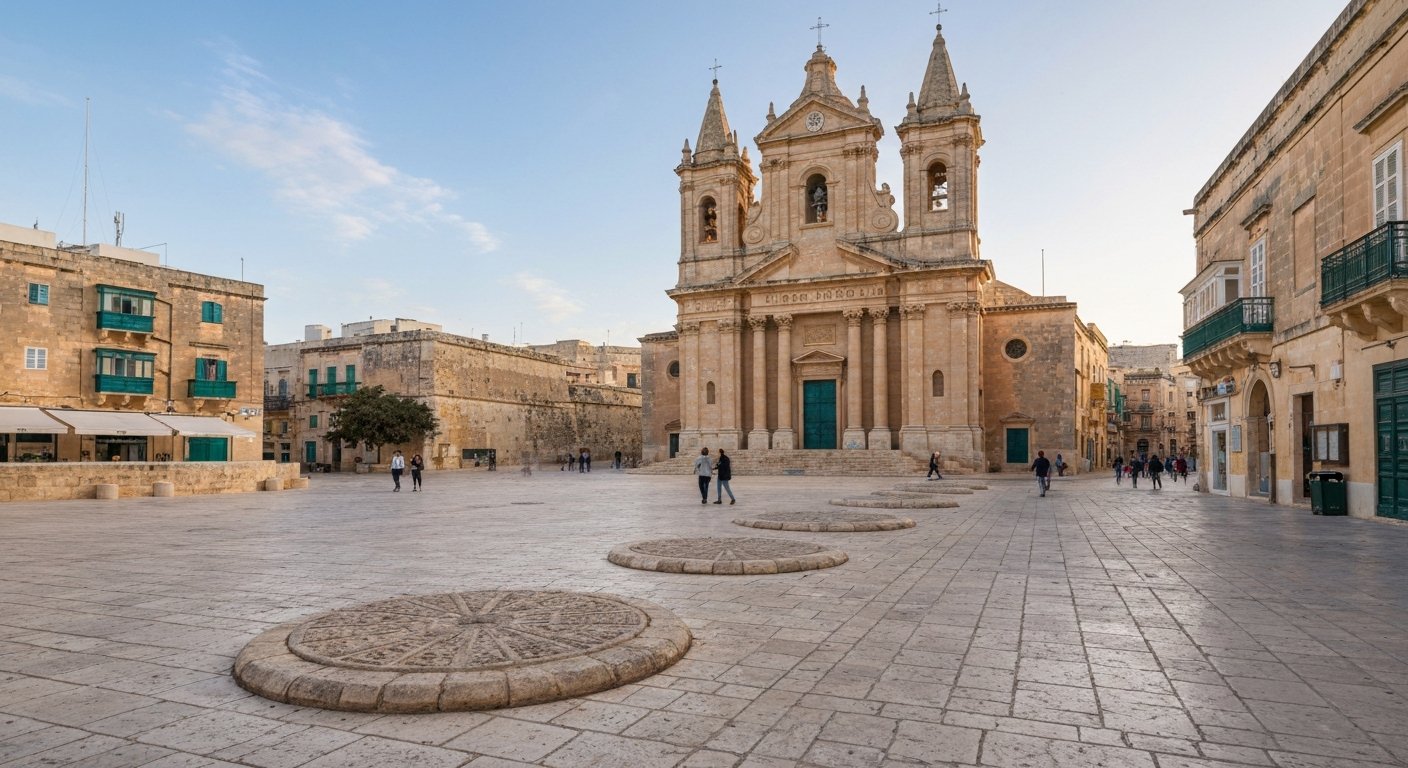
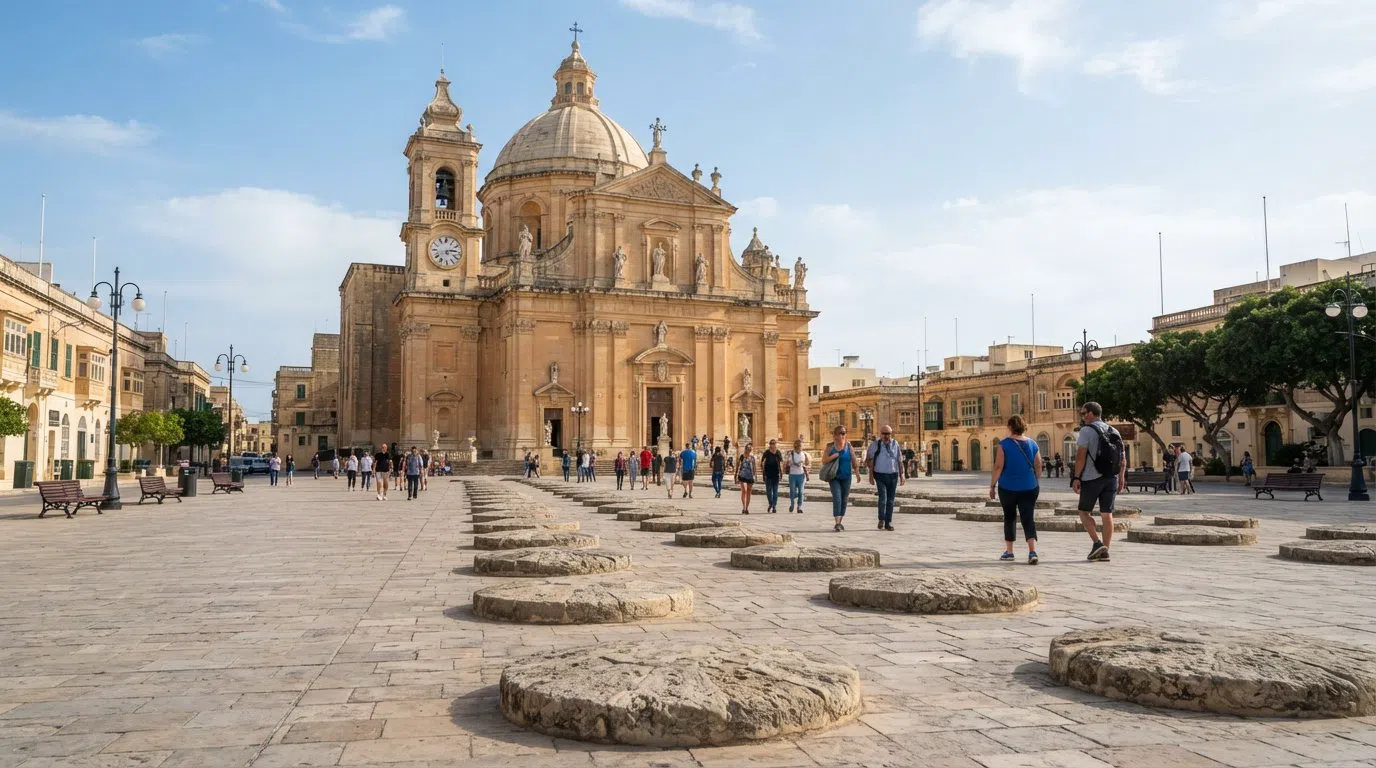
At the centre of that practical geometry sits the Granaries, or il-Fosos, in Pjazza San Publiju — the largest square on the island, and one of those Maltese facts that sounds like a boast until you stand there and look at the scale of it. The bell-shaped pits sunk into the rock once stored grain against siege; now their round stone caps sit flush in the paving like a field of dropped coins. On event days the square becomes a concert ground of proper size, and in July it has hosted Isle of MTV, with the sort of crowd that makes a quiet suburb remember it has a public life.
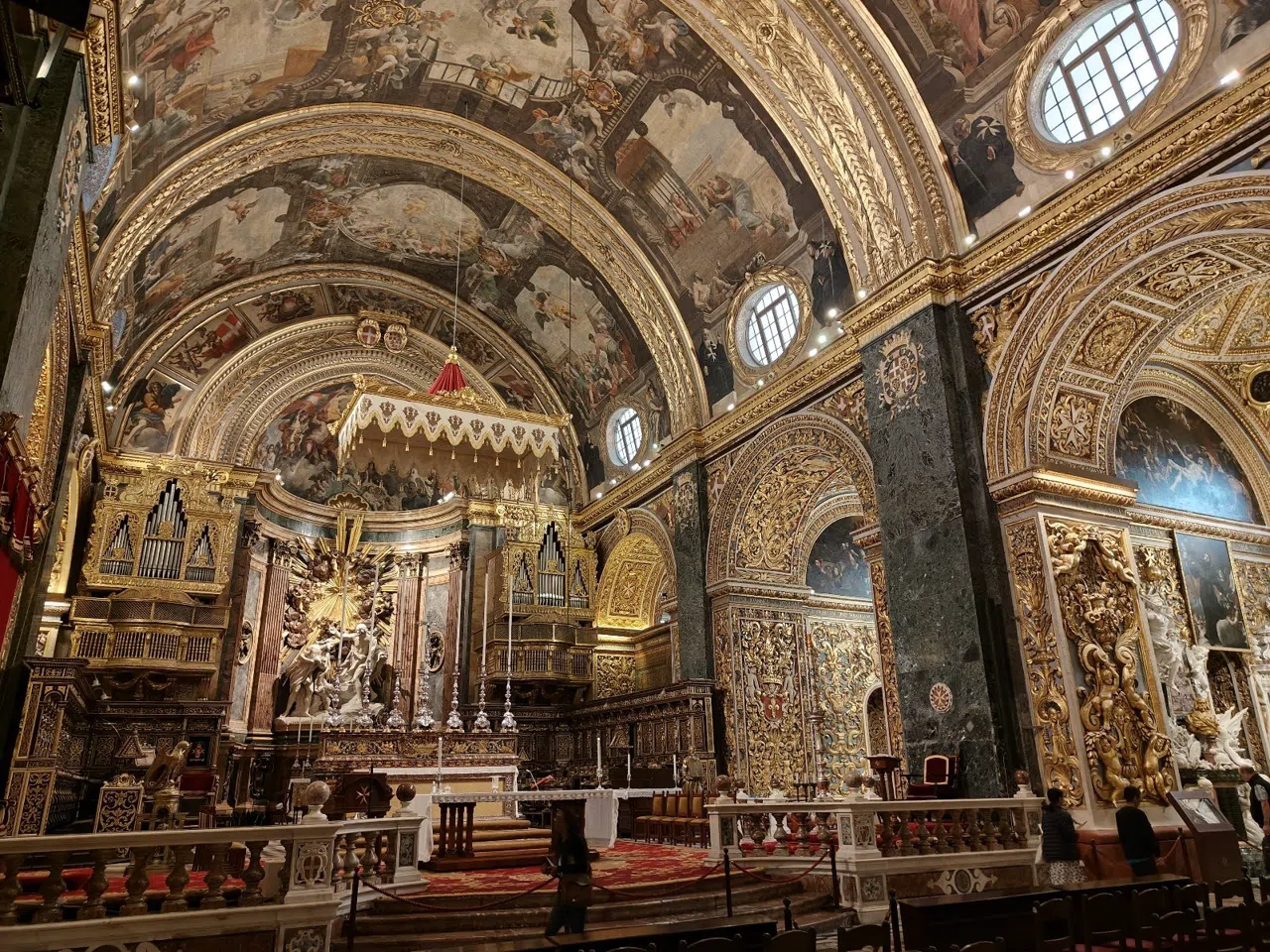
Facing the square is St Publius Parish Church, begun in 1733, bombed in 1942 and painstakingly rebuilt. It is one of those buildings that carries its damage without theatrics. In Floriana, even the grand gestures have a working temperament. The church is dedicated to the first Bishop of Malta, and its bells set the rhythm of the day better than any app on your phone.
Floriana is also, rather more mundanely and perhaps more usefully, the island’s transport nerve centre. The Valletta bus terminus sits just outside City Gate beside the Triton Fountain, so nearly every route on Malta touches down here. That makes the suburb feel less like a destination than a hinge: a place to arrive, to depart, to pause for a coffee and a pastizz before the next bus takes you somewhere else. Which is very Maltese, really. Nobody here is trying to be Paris.
Plan your Valletta trip
Live prices from our booking partners.
Guests & rooms
Free cancellation on many rooms. We may earn a commission when you book.
Where to eat & drink
Be honest about Floriana and it becomes easier to love: this is not a dining district, and it does not pretend to be one. Most of the sit-down restaurant action visitors imagine is actually down at the Valletta Waterfront on Pinto Wharf or across the gate in Valletta proper. Floriana’s gift is more modest and more useful — the kind of food that keeps a city moving.
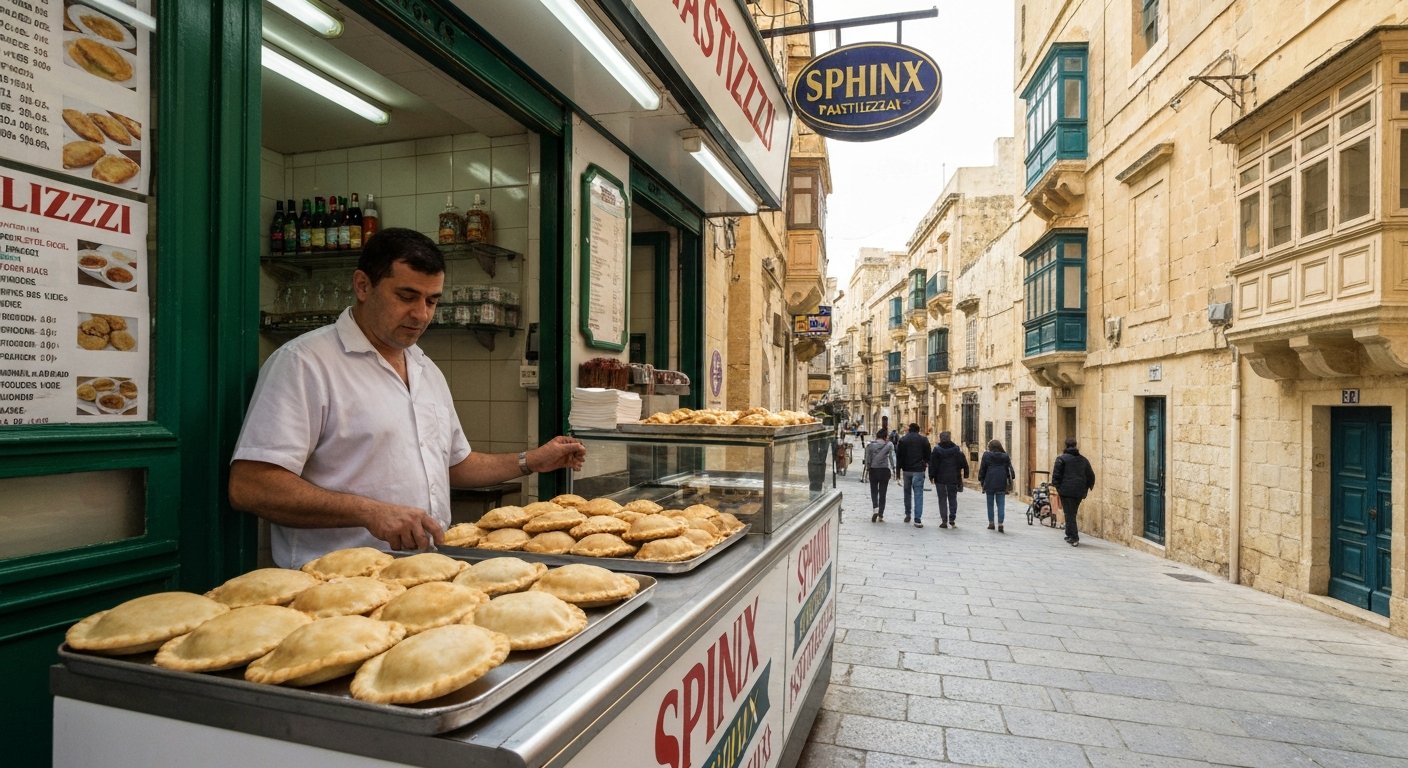
The original branch of Sphinx on St Anne Street is the emblem of that. It is the island’s best-known pastizzeria, and for good reason: flaky ricotta and mushy-pea pastizzi for a euro or two, eaten warm enough to scald the roof of your mouth if you are not patient. That is the correct way to do breakfast in Malta, and no amount of hotel buffet can improve on it. Buy a couple, find a bench, and let the crumbs fall where they may.
Around The Mall and St Publius Square, the small pastizzerie keep the neighbourhood fed with qassatat — the rounder, pea-filled cousin of the pastizz — and there’s something reassuring about that. Floriana runs on ordinary appetites. It is a place for coffee on the move, for a paper bag in the hand, for not making a meal of lunch when a snack will do.
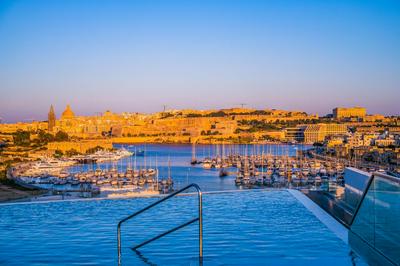
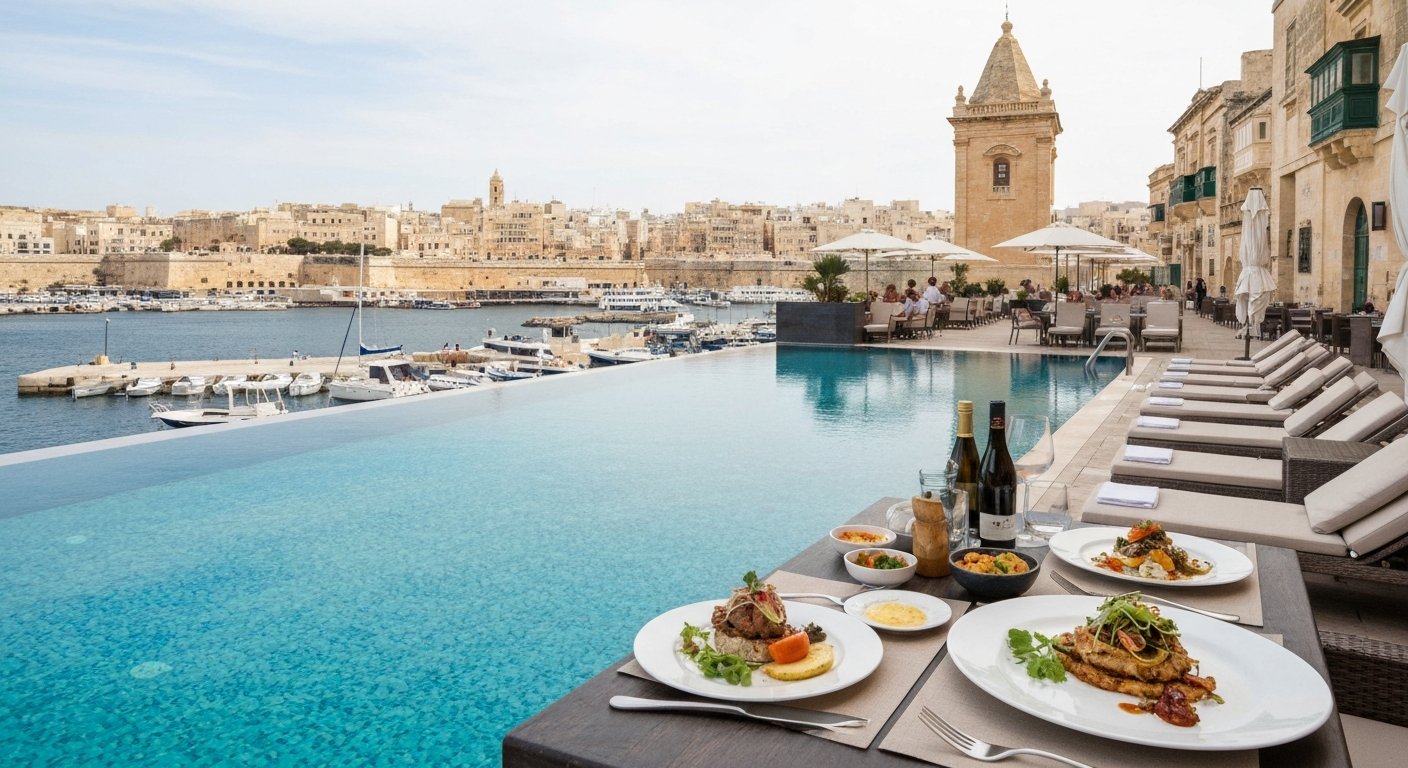
For a proper sit-down meal without leaving the suburb, The Phoenicia Malta is the grande dame. Its gardens run down to the walls, and inside that setting Contessa does refined Southern-Mediterranean cooking rooted in Maltese produce, in a conservatory over the grounds. The room has the sort of calm that makes you lower your voice without quite knowing why. The Bastion Pool Bar & Restaurant is the more relaxed sibling, serving al fresco Mediterranean-Asian plates beside the infinity pool on the bastion — ceviche, poke, a smash burger, lobster linguine — with the harbour spread below as if the view had been hired for the afternoon. And if you want to be civilised about it, the Palm Court Lounge is there for coffee, cocktails and afternoon tea, which is as close as Floriana gets to old-school hotel glamour.
Going out
Floriana quietly shows you the door once the offices close. That is not a criticism; it is the neighbourhood’s honest contract. There is no bar strip, no club lane, no late-night theatre of the sort that keeps the pavement warm until 3am. The streets empty, and the place returns to itself.
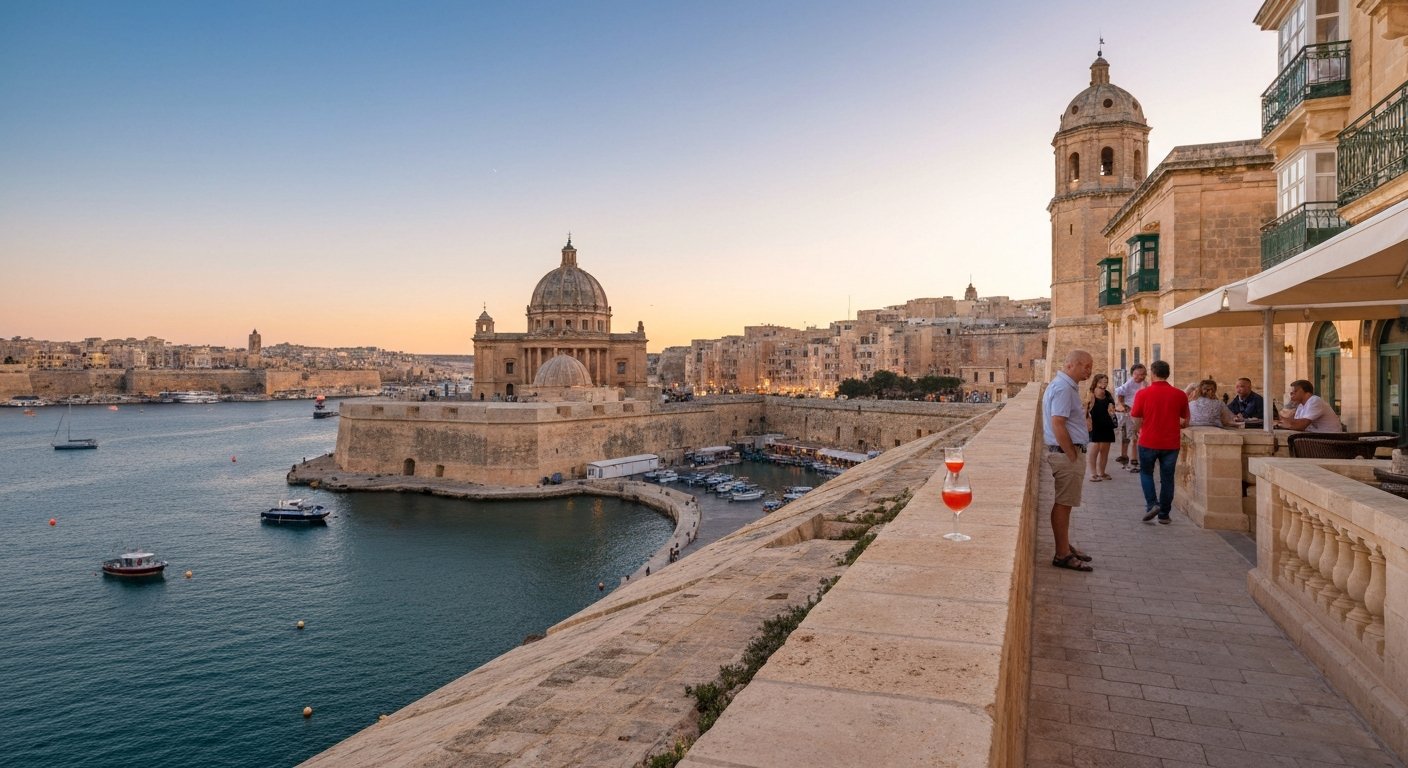
For a sunset drink, the obvious civilised option is The Phoenicia bars, with their bastion-side terraces and club bar looking over Marsamxett Harbour. On a clear evening the water below catches the last light and the harbour turns a shade of silver that flatters even a mediocre wine. The Bastion Pool also runs occasional Nights Under the Stars barbecue evenings in summer, which is about as lively as Floriana likes to get without losing its manners.
Beyond that, the honest advice is to walk. It is five minutes through City Gate to Strait Street, Valletta’s reborn nightlife lane, where gin bars, cocktail dens and wine cellars do their work in a more civilised register than club loudness. If you want the full midnight-to-3am circuit, ferry across to Sliema or keep going to Paceville in St Julian’s. Floriana’s job is to give you a quiet bed to come home to afterwards, and it does that without complaint.
Things to do / what to see
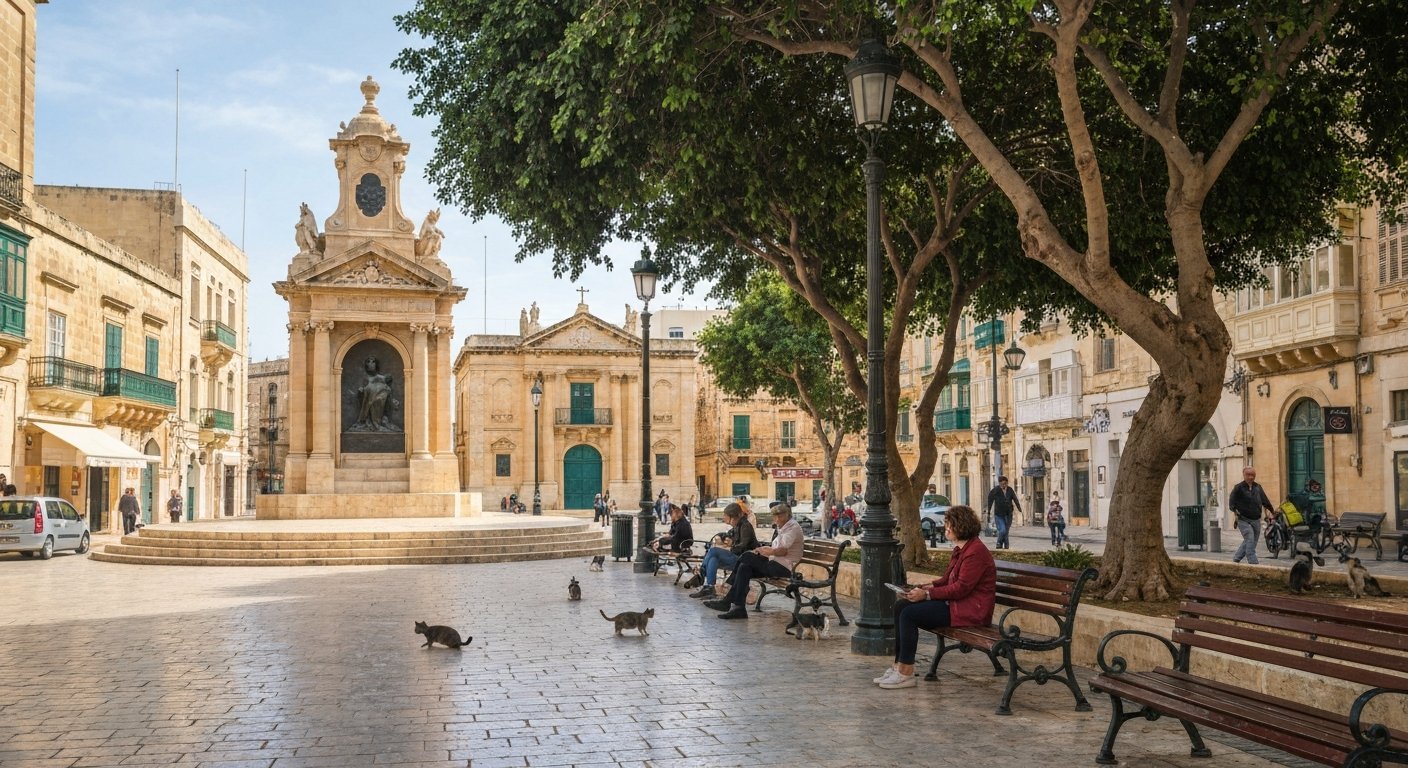
Floriana rewards a slow morning and a pair of decent shoes, though in fairness the shoes do not need to be heroic because the ground is flat. Start on The Mall, also known as Maglio Gardens: a 400-metre tree-lined promenade laid out in 1656 by Grand Master Lascaris for the ball-and-mallet game that gave it its name. The walls came down in 1942, and what remains is a run of monuments to Maltese worthies, with a well-loved colony of stray cats dozing between the benches. It is one of the best places in the island capital to do absolutely nothing in public, which is a skill more travellers should practise.
From there, walk to the Argotti Botanic Gardens, the third-oldest botanic garden in the Commonwealth. It was merged into one in 1741 and reopened after a €2.4 million restoration, and it feels like one of those places that should be busier than it is. There is a 250-year-old dragon-blood tree, Moreton Bay figs with tangled aerial roots, a Knights-era nymphaeum and commanding views over Marsamxett Harbour toward Mdina. Entry is free, though the Resource Centre asks a small donation. That is the sort of bargain that makes a city feel generous.
Do not skip the churches. St Publius Parish Church presides over the Granaries with the confidence of a building that has been bombed and rebuilt and still come back for Mass. Sarria Church is smaller, but in some ways more interesting: it is the only church entirely designed by the painter Mattia Preti, and inside hang seven of his large canvases. That is a proper Maltese oddity — a church by a painter, for a plague-struck city, with art that still does the talking.
The route then turns architectural and a little eccentric. Porte des Bombes is the baroque gate that catches the eye without shouting, Wignacourt Water Tower marks the 1615 aqueduct that watered Valletta, and Sa Maison Garden drops down the bastions toward Marsamxett Harbour in a shady, half-secret terraced sweep most day-trippers never find. It is the sort of place you discover by accident and then quietly decide not to tell too many people about.
Don’t miss in Floriana
Argotti Botanical Gardens
The Granaries (Il-Fosos)
St. Publius Parish Church
Shopping & markets
Floriana is not a shopping quarter, and that is part of its appeal. You come here for gardens, grain pits and a decent bus connection, not for boutiques and shopping bags swinging in the sun. The retail you do get is practical and local: neighbourhood grocers, a pharmacy or two, the pastizzeria counters, and small shops along St Anne Street and around the bus terminus, handy for stocking a self-catering flat or grabbing water and snacks before a day-trip.
If you want actual browsing, walk the five minutes through City Gate to Valletta’s Republic Street, the capital’s pedestrian spine of boutiques, jewellers and the historic Caffè Cordina. Most shops there shut by around 19:00, and Sundays are very quiet island-wide, so don’t arrive expecting a retail miracle. For a proper market experience, the covered Is-Suq tal-Belt food hall in Valletta and the famous Sunday fish-and-produce market at Marsaxlokk on the south coast are the ones to aim for, both easily reached from the Floriana terminus.
Where to stay in Floriana
Floriana is the smart-value answer to the old Valletta complaint: lovely, yes, but expensive and full of stairs. Here you stay minutes from City Gate and the bus terminus, on flatter ground, usually for less. That matters more than people admit, especially after a long day carrying bags or coming home late from a ferry.
At the top end sits The Phoenicia Malta, the island’s first five-star, a 1930s grande dame on seven acres of gardens with an infinity Bastion Pool over Marsamxett Harbour. If you are here for a special occasion, it is the obvious choice, and it knows it. For character on a saner budget, 23 Boutique is an adults-only 18th-century palazzo restored around a courtyard, a stone’s throw from the Waterfront and about ten minutes’ walk into Valletta, while Tritoni Valletta Boutique Hotel offers another intimate option near the gate. Below that, Floriana is full of restored townhouse guesthouses and self-catering apartments that undercut equivalent rooms inside the capital — which is why budget-minded visitors and early day-trippers gravitate here.
Expect period buildings with limited parking; ask for a room away from the bus terminus and the Granaries if you’re a light sleeper, and remember that the square hosts major events, especially Isle of MTV in July, which brings noise and crowds. The live hotel availability renders below.
Hotels in Floriana
Our best-rated stays in this neighbourhood. Prices are approximate “from” rates — confirmed at the provider when you continue. We may earn a commission if you book through our partners — at no extra cost to you.
In this areaGetting around
Floriana may be quiet, but it is the most connected spot on the island. The Valletta bus terminus sits at its edge by the Triton Fountain, so essentially every Tallinja route on Malta starts or passes here: buses to Mdina and Rabat, the Three Cities, Ċirkewwa for the Gozo ferry, Sliema and St Julian’s, and the airport. The old express X-routes were withdrawn in April 2025, so for the airport use the current Airport Direct TD routes — TD4 links the airport, Floriana, Valletta and the Gozo ferry — or plan any journey door-to-door with the free Tallinja app. A single bus fare is a couple of euros, or you can use a Tallinja or Explore card.
On foot, everything in Floriana is flat and walkable, and it is an easy 5–10 minute stroll through City Gate into Valletta. To reach the Grand Harbour and the Valletta Waterfront below, use the Barrakka Lift rather than the steep climb, or hop the Sliema–Valletta ferry for the scenic crossing to the nightlife side. Malta International Airport is roughly a 20–30 minute drive or a direct TD bus away. In other words: you can sleep here, move from here, and not spend half your holiday climbing stairs with a suitcase.
Gallery
Floriana in pictures
Floriana — your questions
Is Floriana a good area to stay in Valletta?
Yes — if value and convenience matter more than buzz. Floriana sits right outside City Gate, so it’s a flat 5–10 minute walk into Valletta and steps from the island’s main bus terminus, usually for noticeably less than equivalent rooms inside the capital. It’s quiet, green and residential, with everything from budget guesthouses to The Phoenicia. The trade-off is that evenings are sleepy, so it suits sleepers more than bar-hoppers.
Is Floriana safe?
Very. Malta is a low-crime country and Floriana is a calm, residential suburb where the biggest issue is a quiet street after the offices close. Use the usual big-city sense around the deserted bus terminus late at night, and expect large crowds and noise when the Granaries hosts a major event such as Isle of MTV in July.
How do I get from Floriana to Malta Airport?
It’s roughly a 20–30 minute trip. The simplest options are a taxi or ride-hail, or the Airport Direct TD bus routes from the Valletta terminus on Floriana’s edge. TD4 links the airport, Floriana, Valletta and the Gozo ferry. The old X1–X4 express buses were withdrawn in April 2025, so check the free Tallinja app for current routes and times.
What is Floriana best for?
Floriana is best for value stays within walking distance of Valletta, flat streets, gardens, and easy early departures by bus. It’s a residential base rather than a nightlife district, so it suits slow travellers, budget-minded visitors, and anyone who prefers a bench and a coffee to a bar strip.