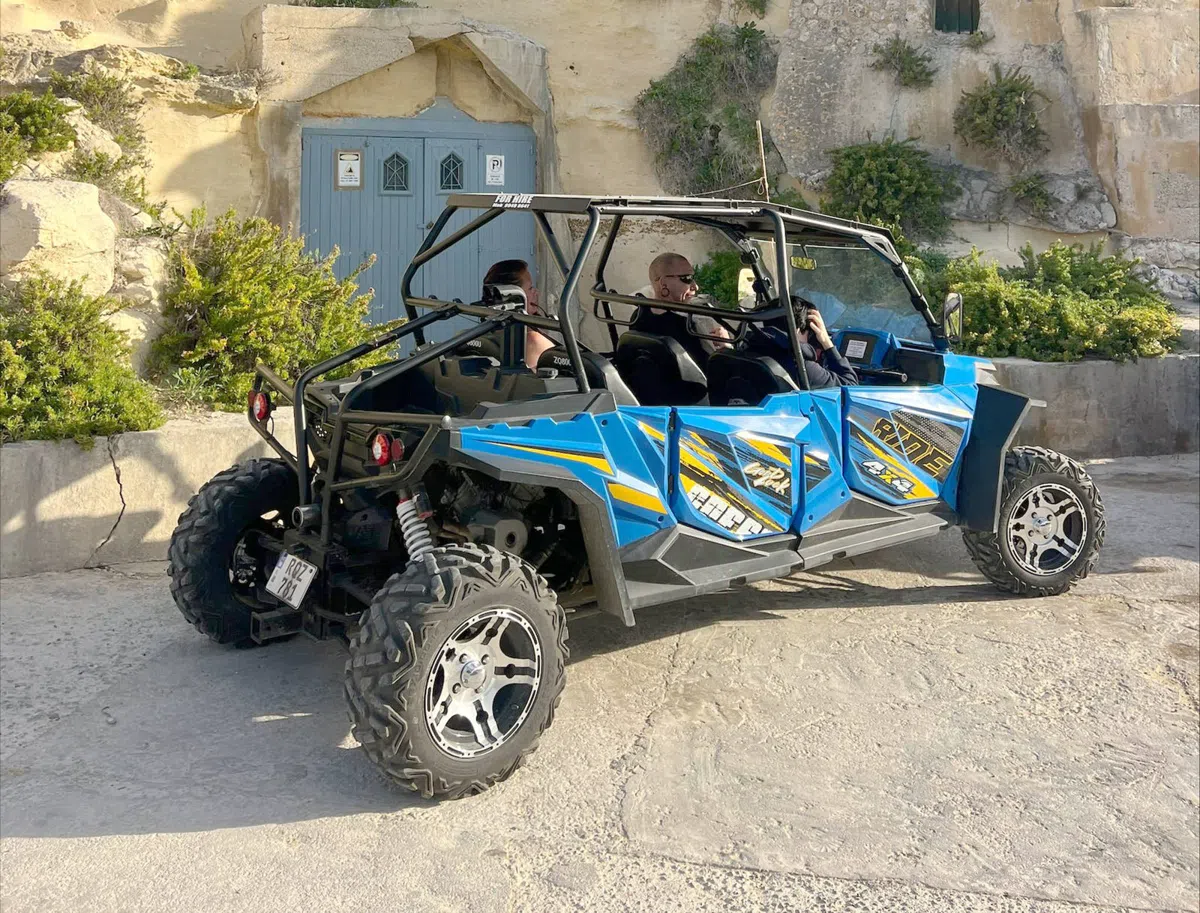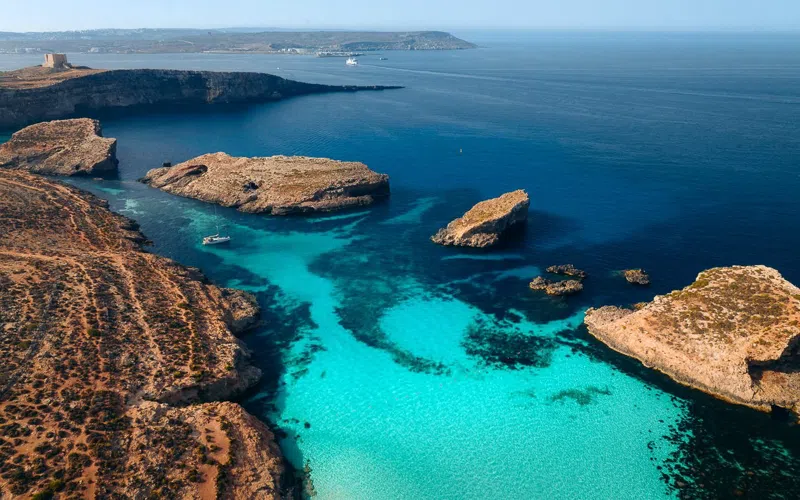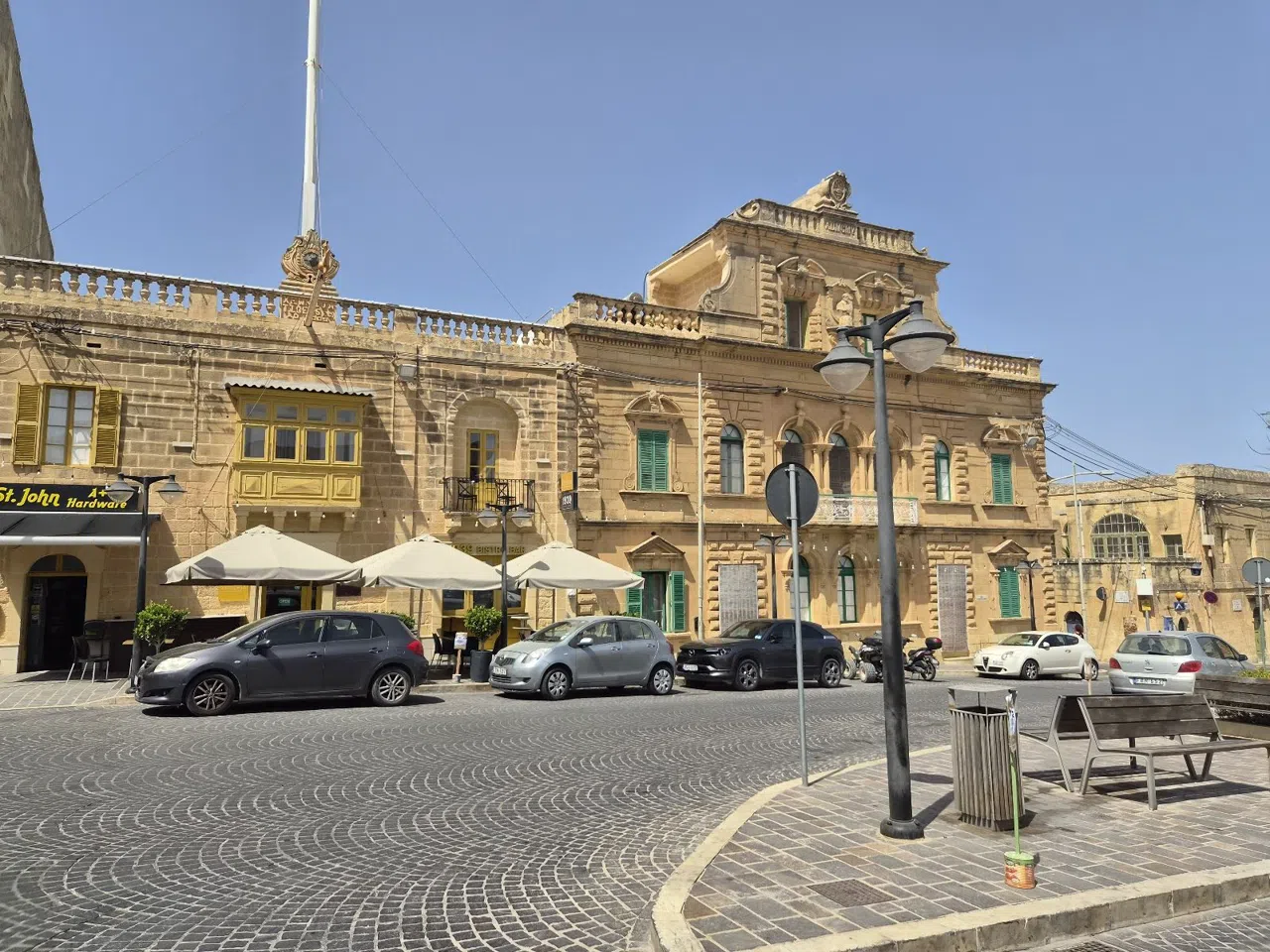

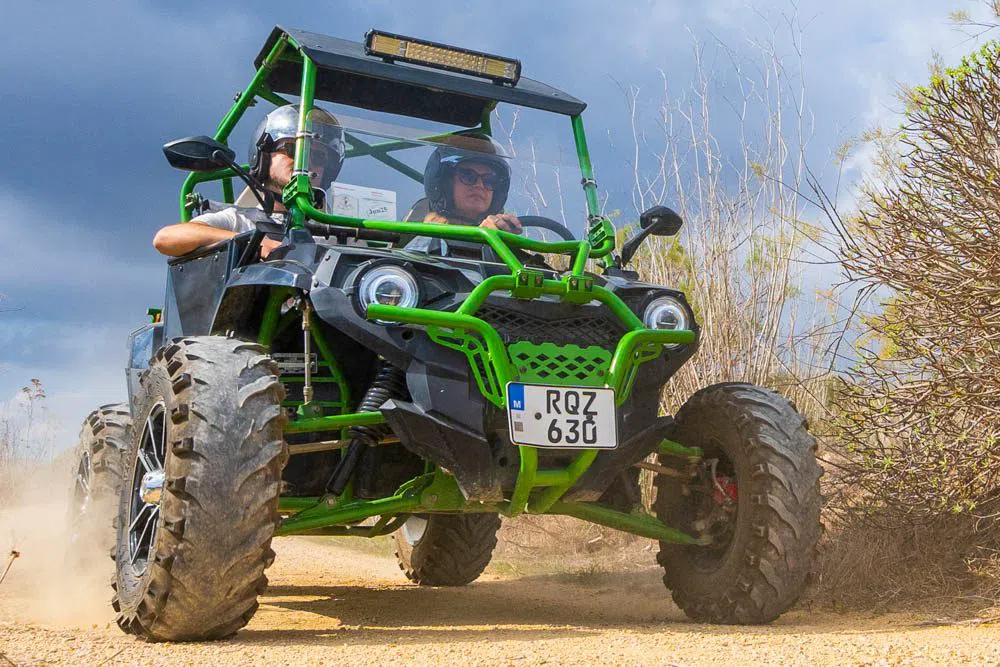
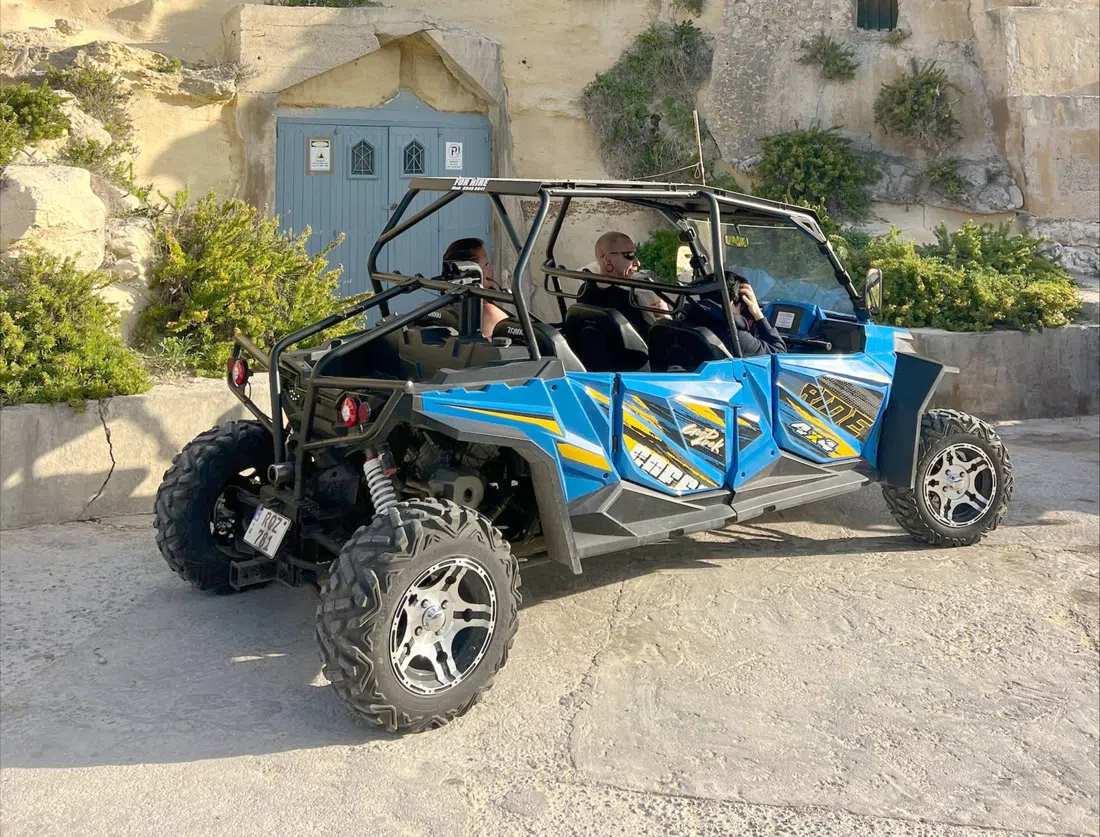
The pickup is at eight, the crossing is by powerboat, and by mid-morning you are holding the keys to a small four-wheeler with a roll cage, a bench seat and no doors at all. Gozo is roughly fourteen kilometres end to end, so the vehicle is less transport than the point of the trip: dry-stone walls at elbow height, salt pans cut into the rock, a citadel on a hill and a red-sand bay, all linked by lanes too narrow for a coach to enjoy. The rest of this covers what the day contains when you start from Valletta, what the stops cost at the door against a guided price, and which pieces of it the weather can take away from you.
What a private buggy day includes
The package is four things bolted together: a hotel pickup on the Malta side, a sea crossing, about six hours of driving on Gozo, and a lunch someone else has already booked. Gozo Pride Tours (Malta-side hotel pickups, 08:00 collection) publishes the clearest version of it: the powerboat crossing, six hours on the island and a two-course lunch, at €115 for a solo buggy or €195 for a buggy carrying a driver and a passenger. It runs Monday to Sunday. The buggies take two people, driver plus one, so a party of six is three vehicles rather than one, and the group moves as a convoy behind a lead guide. The same operator adds the caves and the lagoon on the islet in the channel only when the sea allows, which is a fair warning about the whole category: this is a weather-dependent day and the people selling it say so.
A fully private buggy day with a driver is a different product from a shared convoy you drive yourself. Yippee Malta (year-round, 10:30 starts) shows the gap plainly: from about €97.50 per person on the shared self-drive day, against roughly €288 upwards for a private buggy tour with a driver, with private groups quoted by email on a €100 deposit and guiding available in English and French. Same roads, same stops, very different pace. On a shared convoy you keep station behind a guide and stop when the guide stops. On a private one you can sit forty minutes longer at a viewpoint because nobody else is waiting, which is most of what the extra money buys.
The north coast, salt and a gorge
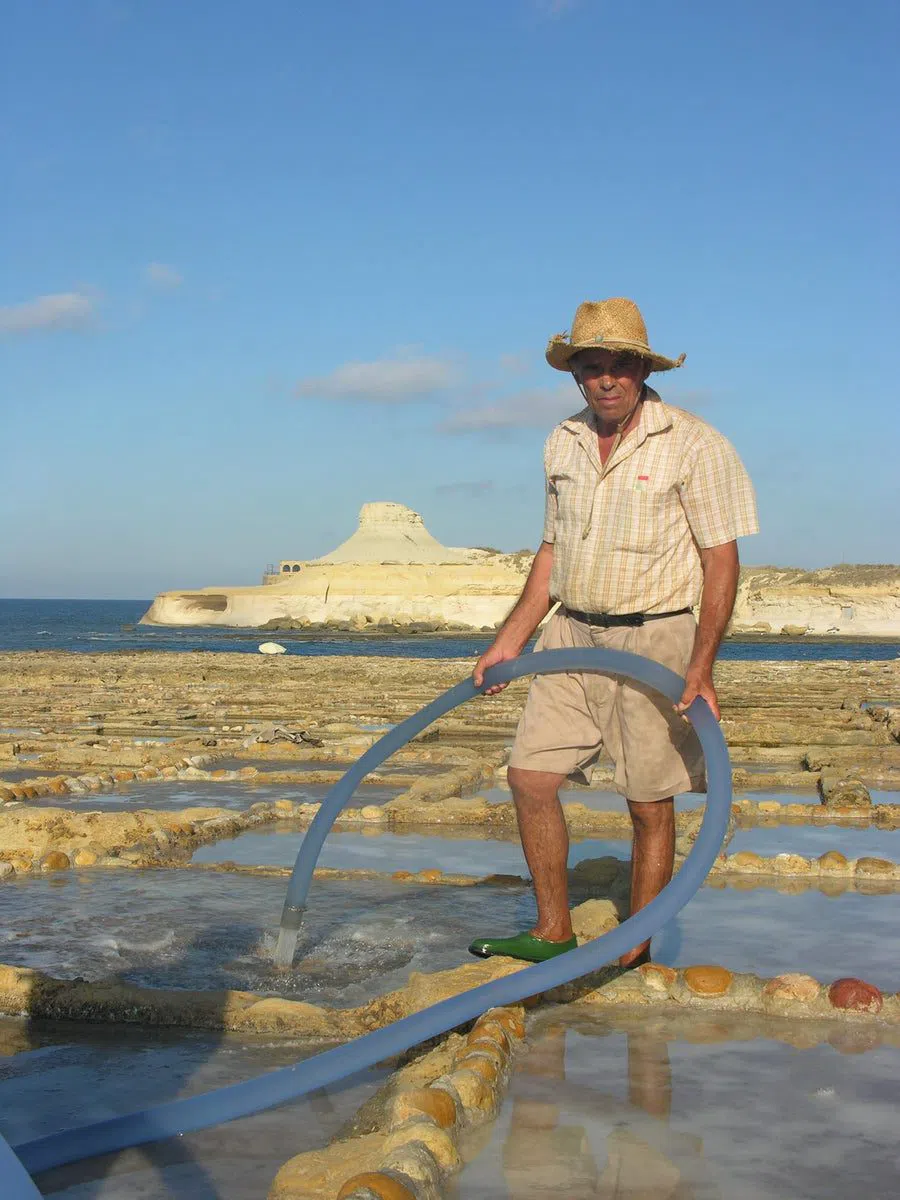
Most routes work the north side first, while the light is still soft and the coast road is empty. Xwejni Salt Pans (Leli tal-Melħ, on the Marsalforn coast road) is a working trade rather than a display. The Cini family take visitors into the rock-cut shop and explain it themselves, packets of local sea salt go for a few euro, and harvesting runs roughly weekly from mid-May to early September, weather permitting. A convoy pulling in together is fine here; there is room and no ticket. It is the one stop where you are watching people earn a living rather than looking at a view.
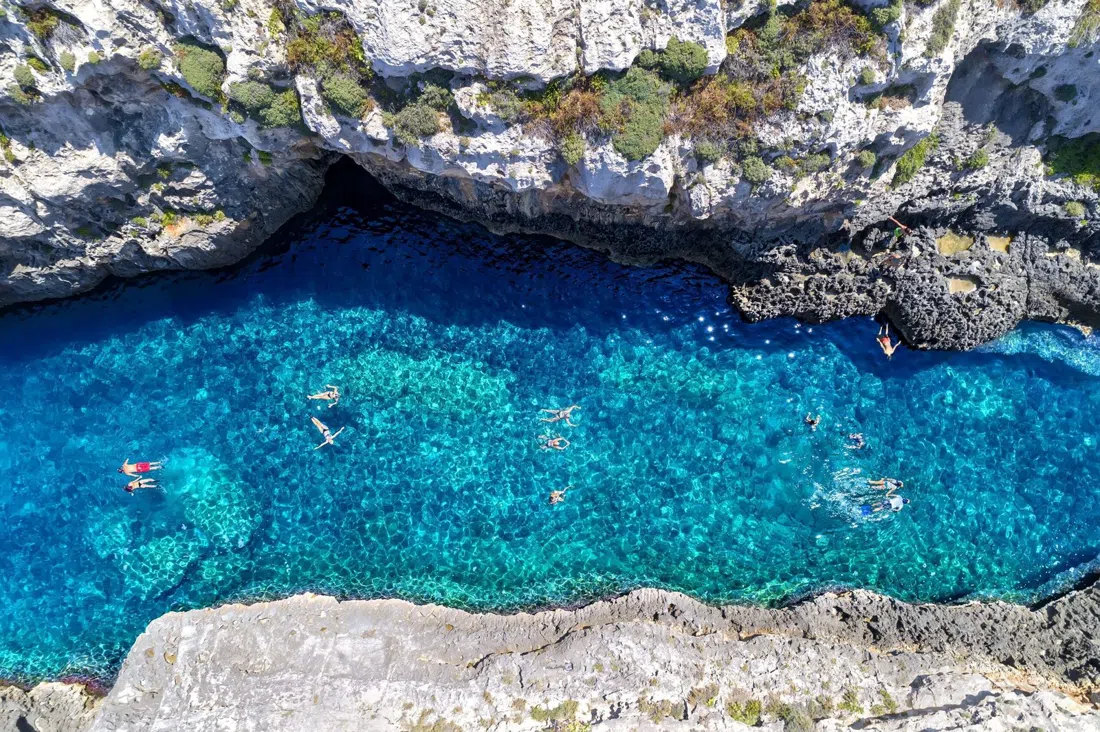
Wied il-Għasri (off Triq Is-Sagħtrija, north coast) is the opposite: no gate, no staff, and informal parking so tight that it caps how many vehicles can stop at once. This is where the convoy shape bites, because three or four buggies arriving at the same minute will not all fit, so agree a plan before you turn off. The gorge itself is 104 steps down, about fifteen minutes, and a harder twenty-five back up, with no toilets, no shade and no café at the bottom. It is exposed to northerly swell. Treat it as a fair-weather stop and not a beginner swim.
Inland from the coast, the Basilica of the National Shrine of the Blessed Virgin of Ta' Pinu (on the ridge above the north-west fields) is free to walk into during visiting hours, donations welcomed, and takes thirty to sixty minutes. It is a working shrine, so groups keep quiet and stay clear of Mass times. The rule that catches buggy passengers is the dress code: shoulders and knees covered. If you have dressed for a beach day, carry something to pull on in the vehicle, because there is nothing to hire at the door. Early morning or late afternoon is quietest.

Where the day stops for lunch
On a northern route the sit-down lunch lands at Il-Kartell Restaurant (Marsalforn seafront), a few minutes from the salt pans. Family-run since 1973, open Monday to Sunday 11:00–15:00 and 18:30–22:30, seafood-led with pasta, rabbit and meat mains at mid-range prices, and one of the family fishes, so the catch is landed daily. Two things matter for a buggy group. The lunch window closes at 15:00, which is tighter than it sounds once you have lost half an hour at a viewpoint. And the terrace tables are the ones worth having, so book ahead rather than arriving with six people and hoping.
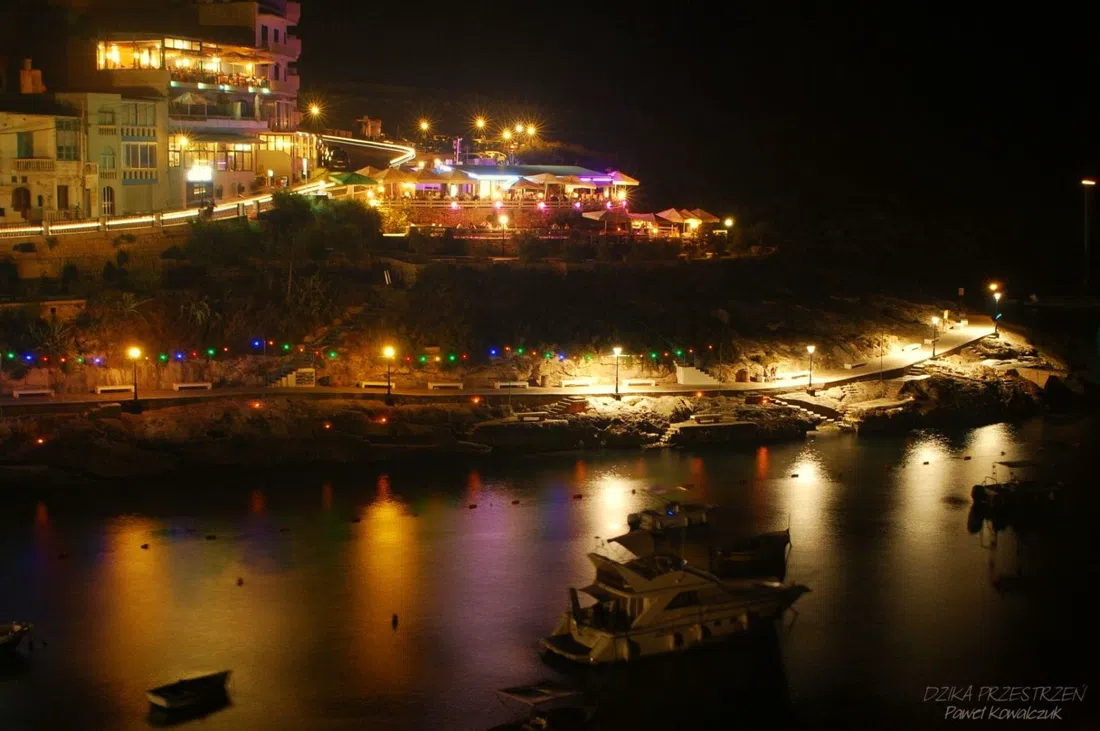
If the route runs south instead, lunch falls at Xlendi Bay (harbour village on the south-west coast), where the promenade restaurants take walk-ins but the strip is genuinely small: a couple of buggies is easy, six is a conversation. Mains sit in the usual Gozitan seafood band. The cliff path up to Xlendi Tower is open to anyone and gives you the run of coastline towards the southern cliffs. July and August evenings are the busy window here; spring and autumn it is calm.
Dwejra and the arch that is not there
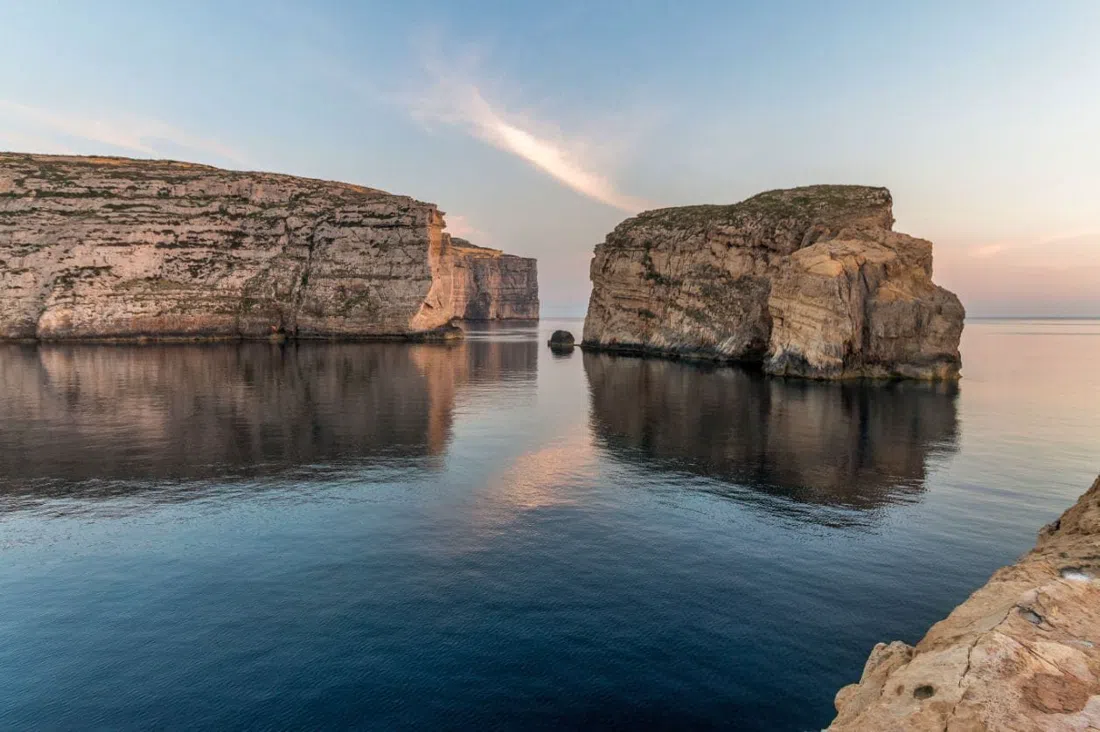
Dwejra — Inland Sea, Tunnel and Fungus Rock (west coast) is the most weather-dependent stop on the island. There are no tickets and no booking: small wooden boats take a handful of passengers at a time through the tunnel to the open sea, roughly €5–10 per person in cash to the boatman. A larger group splits across several boats and waits its turn, so budget more time than the drive suggests. The tunnel run is suspended in swell and works reliably only from about June to September. Settle this with your passengers before you arrive: the Azure Window that once stood here collapsed in 2017. You are coming for a walled lagoon, a rock stack offshore and a boat ride through a cliff, not an arch.
The plateau, the temples and the citadel
Ġgantija Temples (Xagħra) is the cultural anchor of any route across the plateau, a ticketed Heritage Malta site with an interpretation centre and a fixed pathway, older than the pyramids. Coach groups are routine, so arrive off the hour to miss the bunching. The combined ticket with the windmill is €10 for adults, €8 for youth, seniors and students, €6 for children aged 6–11, and free under six. Photography is allowed, but no tripods, and no flash inside the interpretation centre.
Ta' Kola Windmill (Xagħra) is five minutes away and already paid for on the same ticket, which makes it the cheapest add-on on the island. It is open seven days a week. The rooms are small and the staircase is tight, so a group filters through a few at a time rather than walking in together. What you get is eighteenth-century village life, the tools, the living quarters and the machinery, rather than another panorama.
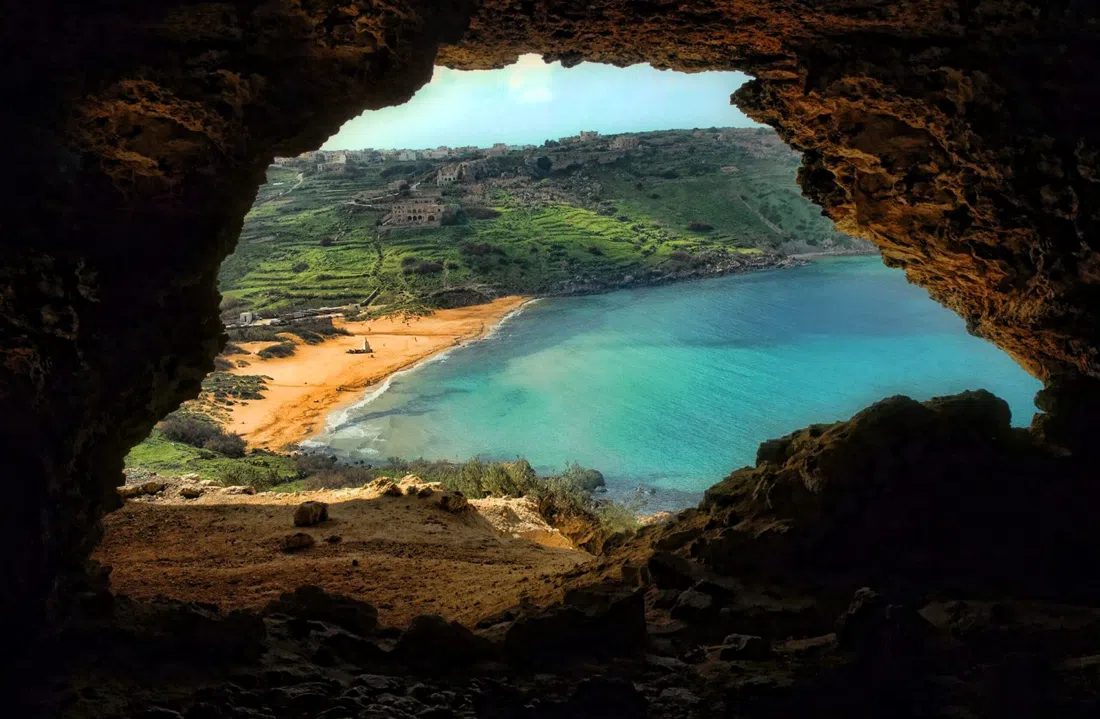
From the same village, drop to Ramla Bay (red-sand beach below Xagħra) by way of the Tal-Mixta Cave viewpoint. Shoot the bay from above first, then go down to the sand; it is fifteen to twenty minutes on foot between the two. The beach has toilets, showers, changing rooms and a kiosk, free roadside parking and a €2-a-day private lot that fills by about 10:30 in July and August. One correction worth making in advance: Calypso Cave itself stays closed for geological safety. The viewing platform over Ramla is open. Tell your passengers to expect the view rather than the cave.
Ċittadella (Victoria, Rabat) is the one stop where the whole island reads in a single sweep from the bastion circuit. The citadel is open at all hours and free to walk. The €5 combined ticket covers the Visitors' Centre, the Gozo Archaeology Museum, the Nature Museum, the Old Prisons and Gran Castello Historic House. The Visitors' Centre runs Tuesday to Sunday, 09:00–17:00, closed Mondays and on 1 January, Good Friday and 24, 25 and 31 December. That Monday closure is the detail that ruins midweek plans: the walls still work, the indoor sites do not.
For a view without a climb, the Rotunda of St John the Baptist (Xewkija) charges about €3 for the sculpture museum and the lift to the dome gallery, with the church itself free. On a clear day you see Gozo end to end and across to northern Malta. The catch is the timetable: open daily 06:00–12:00 and 15:00–20:00, and that long midday closure is exactly when most buggy convoys are on the road. If you want it, ask for it to be slotted early or late.
The southern edge at the end of the day
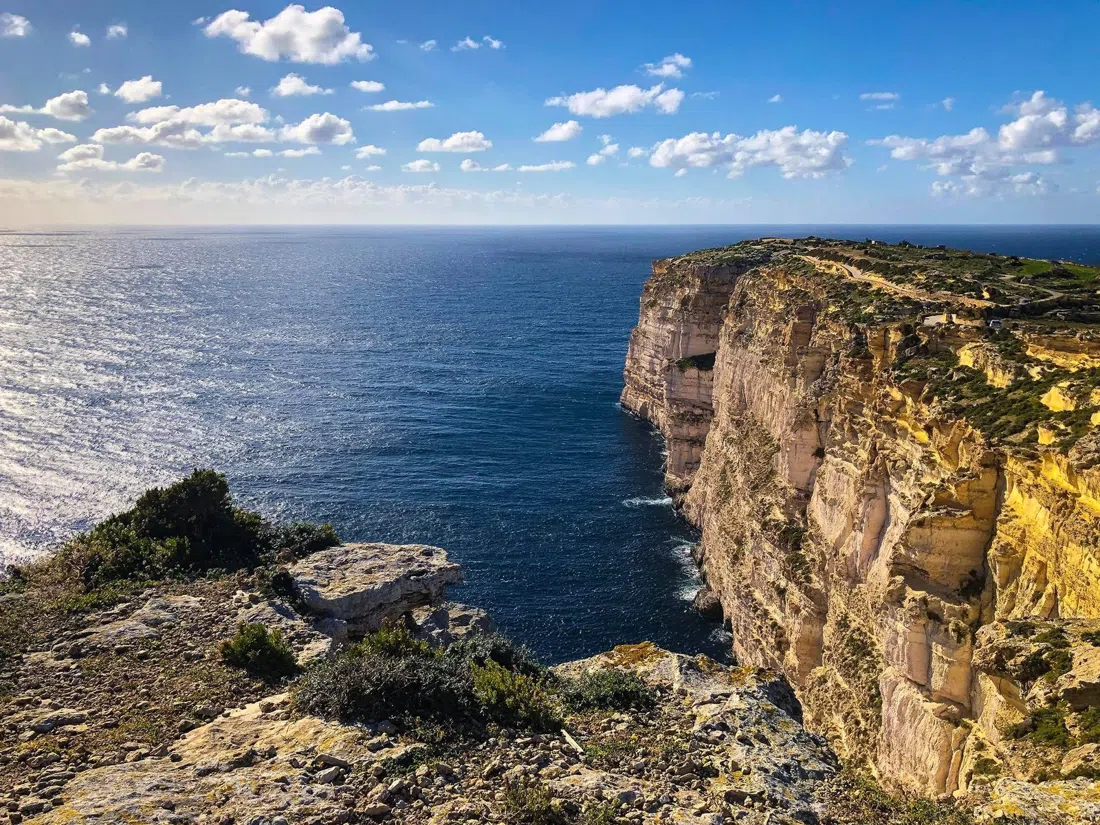
Sanap Cliffs (with Ta' Ċenċ, Munxar) is a short run from Xlendi and faces the sunset. There are no facilities and the parking area at the end of a narrow road is very small. It fills with local cars in the early evening, so a multi-buggy group should expect to spread out and walk in. The drop is unfenced, which is the one thing to plan around if you are bringing children.
Hiring the buggy yourself instead
The alternative to a guided price is the hire desk. Gozo Quad Hire & Tours (Gozo-side, with transfers) runs around 20 quads and 9 buggies in two-, four- and six-seat configurations, so a family can move in one vehicle instead of three. Rates go by vehicle type and include a full tank of fuel, helmets, fully comprehensive insurance, a safety briefing and route maps, with return transfers from the ferry terminal or selected villages. What you do not get is a guide, a lunch booking or anyone navigating, and on Gozo the navigation is the work.
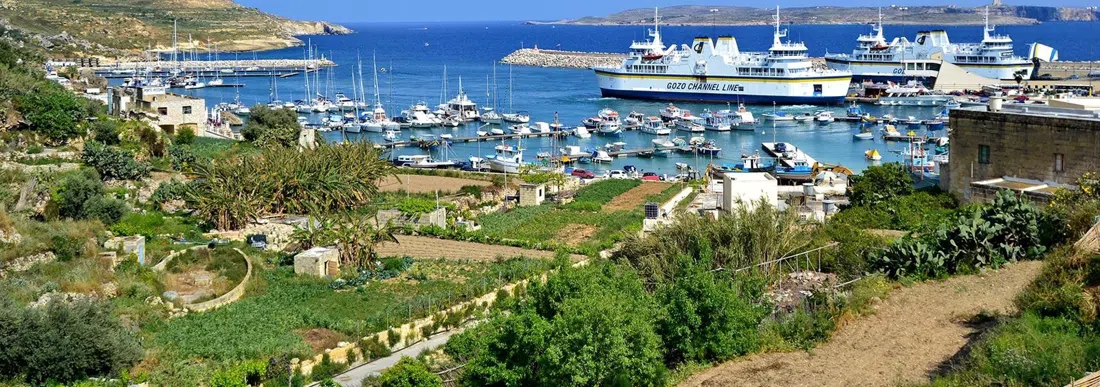
Mgarr Tourist Services (Shop No. 4, New Ferry Terminal, Mġarr Harbour) is the first desk you meet off the boat, with six-seater buggies alongside standard buggies and quads. Rates are on request by phone or email and are not published online, which makes it a walk-up option rather than something you can plan a day around. If you want a fixed price before you leave Valletta, this is not the route to it.
Rules, licences and who can drive
The driver must be 21 or over with a full licence and photo ID, and it has to be the physical licence rather than a photo of it. Two people per buggy is the norm, and on a self-drive convoy both can drive if both are 21-plus with valid licences, which matters on a six-hour day in open sun. Helmets come with the vehicle. There are no doors, so anything loose goes in a bag between your feet. Sunscreen, water and something with sleeves for the shrine cover most of what people forget.
Is it worth the money
For two people who want to see Gozo in one day without driving a hire car onto a ferry, yes. The buggy gets down lanes a car can technically use and enjoys none of. The guided version removes the two hardest parts, which are parking at the tight stops and timing lunch around the 15:00 cut-off. The door costs at the stops themselves are small: €5 at the citadel, €10 for the temples combo, about €3 for the dome, €5–10 cash at Dwejra. The bookable private tours here carry 130 traveller reviews, with the top one rated 4.9 out of 5 from those 130, and depart seven days a week; a guided day of this type starts from 556 USD per person, against €115–€195 for a buggy on a full-day package with lunch and transfers included, or roughly €97.50 per person on a shared self-drive convoy. The premium buys privacy and pace rather than access, since nothing on the route is gated behind a tour.
It suits couples and small groups comfortable in an open vehicle, and anyone who wants a day fully handled from a Valletta hotel door. Families do less well out of it: the seating is two per buggy unless you go to a hire desk with six-seaters, and the best viewpoints are unfenced. If your idea of a good day is three hours on one beach, hire a car.
Best time to go
April to June and mid-September to October are the best windows, warm enough to swim, cool enough to sit in an open vehicle for six hours, and quiet at Xlendi and Ramla. July and August give you the most reliable sea for the Dwejra tunnel and the chance of catching the salt rakes actually in use, but the private parking at Ramla is gone by about 10:30 and the Xlendi strip is at its busiest in the evenings. Winter runs too, since the operators are year-round, but the tunnel run is unreliable outside roughly June to September, the gorge is exposed to northerly swell, and an open buggy in wind is a long day.
Within the day, aim early. An 08:00 pickup puts you on the north coast before the coach traffic, leaves the temples reachable off the hour, and gets you to the southern cliffs for the light. Avoid building a Monday route around the citadel's indoor sites, and check the dome's 12:00–15:00 closure against your lunch slot.
Practical notes
Getting there: the day starts with a hotel pickup on the Malta side and a sea crossing, so you do not need your own transport from Valletta. See the Valletta guide for what to do with the evening either side, and the Valletta hotel search if you are still choosing a base, because a pickup-friendly address saves you a taxi at 07:30.
Cash: carry €30–40 in small notes per person. The Dwejra boatmen are cash-only, the salt shop is cash-friendly, the Ramla parking lot is €2, and the smaller sites are quicker to pay in coins.
Timing: six hours on the island sounds generous and is not. Four substantial stops plus lunch is a full day. Pick your non-negotiables before you go rather than negotiating them in a lay-by.
Budget: the buggy itself is €115–€195 on a full-day package with lunch and transfers, or from about €97.50 per person shared and self-driven. Add €20–25 per person for entries across the citadel, temples, dome and the Dwejra boat, plus lunch at mid-range prices. Book ahead for the private version, because departures are daily but the private product is small by design.