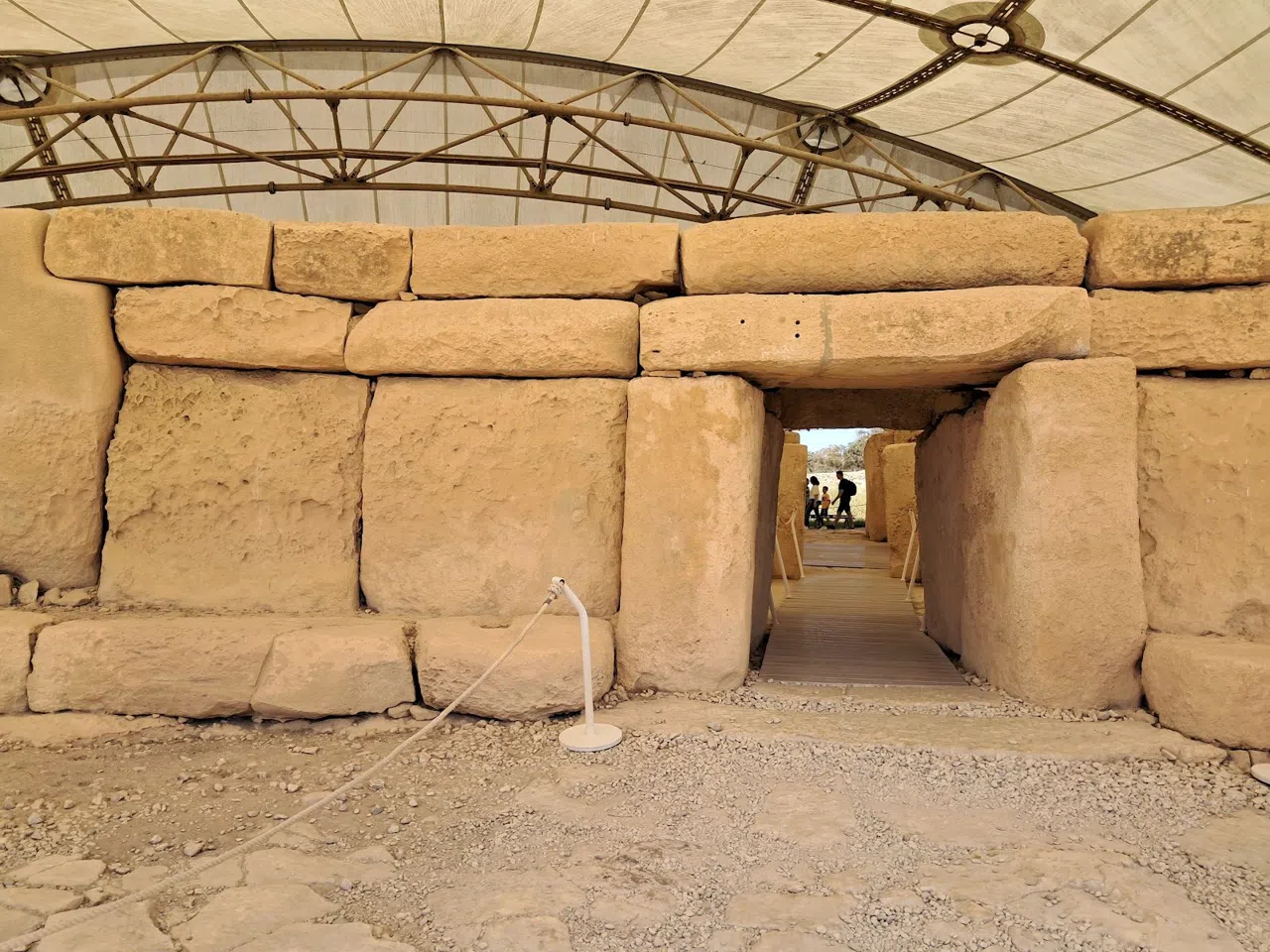

You arrive at the top of a limestone headland with the sea on three sides and almost nothing growing higher than your knee. A canopy stands over the main temple, the ground beyond it falls away to the water, and the stones themselves, slabs the height of a door stood on end roughly five thousand years ago, sit in a shallow bowl of dry ground. The site is small enough to rush and interesting enough that rushing it is a waste, so decide how much of your morning it gets before you leave the city.
What you are actually looking at
Ħaġar Qim Temples (Triq Ħaġar Qim, on the south coast at Qrendi) is a fenced, ticketed archaeological park run by Heritage Malta, not an open field you wander into. One ticket covers two separate temple complexes and the interpretation centre between them. The whole park takes 90 minutes to three hours, depending on whether you walk down to the second temple and how long you spend indoors.
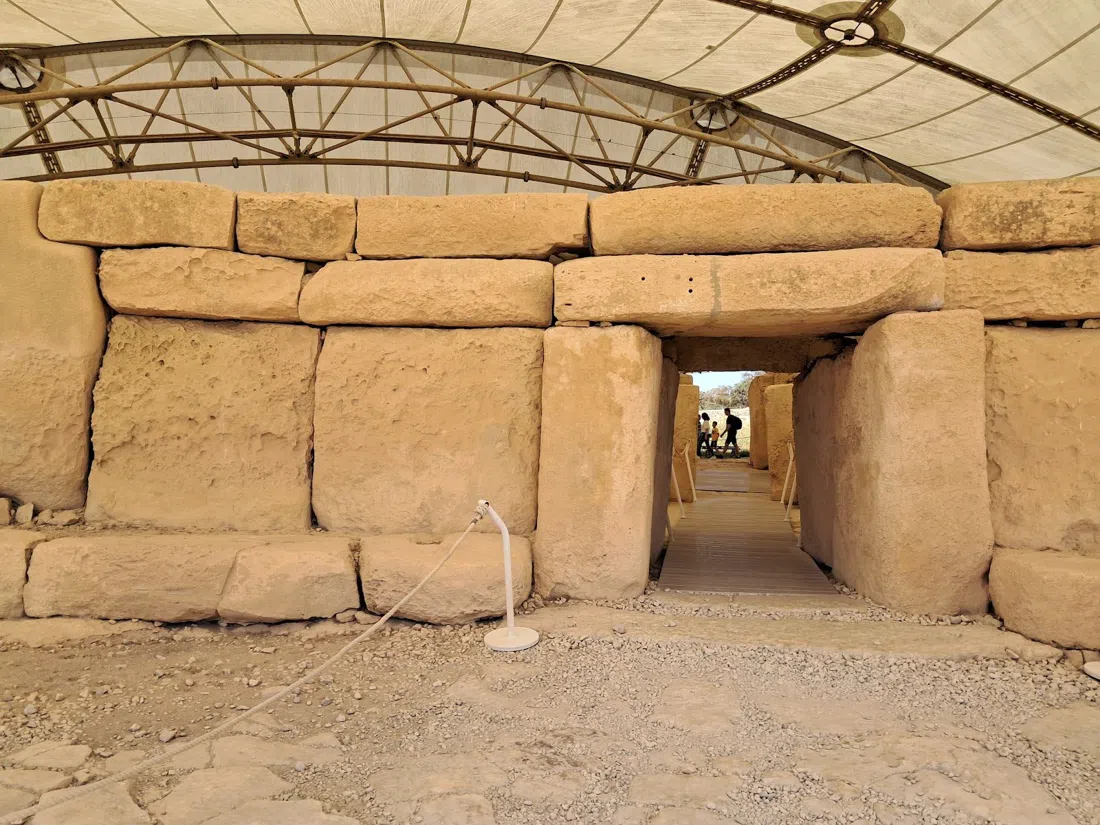
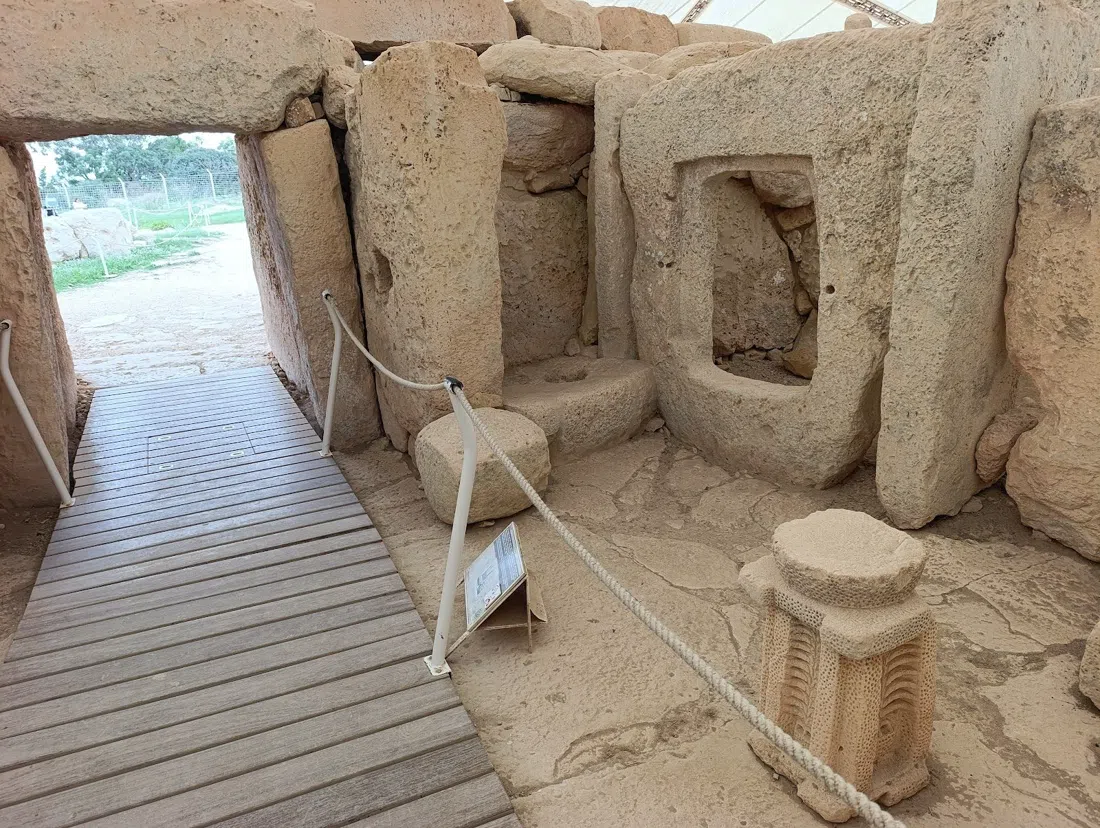
What you see is a circuit rather than an interior. The main temple sits under a protective canopy, and a marked path takes you around and between the chambers, looking in over rope lines rather than walking through them. That is less restrictive than it sounds. The scale reads better from outside anyway, and the carved and pierced stones that matter are all visible from the path. There is no compulsory guide. Audio guides come in ten languages, which suits most people better: you set your own pace, stop where you want, and are not tied to a group moving at someone else's speed.
Allow an hour for Ħaġar Qim itself if you are moving steadily and looking properly. Add the second temple and the centre and you are at two to three hours, which is the figure to plan around.
Start in the visitor centre, not on the stones
The Ħaġar Qim Park Visitor Centre (inside the park gate, Qrendi) is included in the ticket and almost everyone does it in the wrong order. Go in first. The short film and the site model explain what the roped-off chambers were for, and once you have that in your head the stones stop looking like a pile of rock and start looking like rooms. Do it afterwards and you spend the film realising what you failed to notice.
It is also the only shelter on the headland: air conditioning, toilets, lockers for bags, indoor and outdoor seating, a café and a shop, nappy-changing facilities and an unattended children's room. The auditorium seats a full coachload, which tells you what the building was designed for. If a bus has just pulled in, the centre absorbs the group for twenty minutes and the stones stay quiet, which is worth knowing when you arrive alongside one.
The second temple most visitors skip
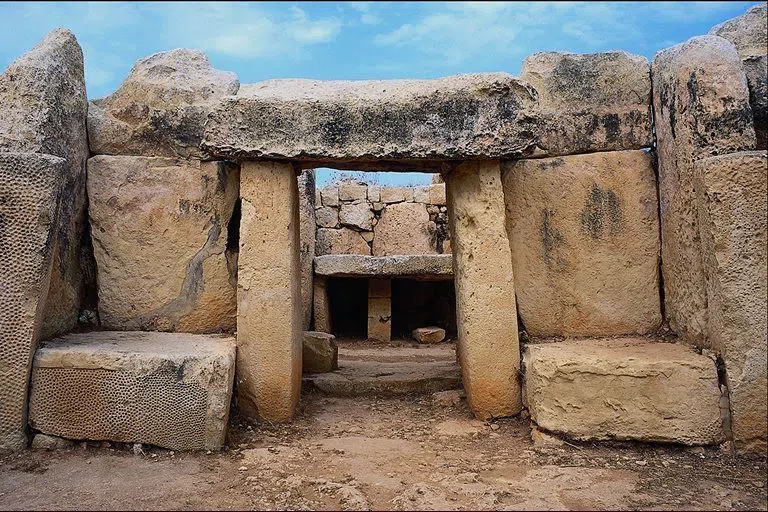
Mnajdra Temples (ten to fifteen minutes downhill from the main gate, Qrendi) is on the same ticket, run by the same operator, and reached by a paved path that drops toward the sea. It is the better preserved of the two complexes and reliably the quieter one, because people on a fixed schedule look at the walk down, calculate the walk back up, and turn around. Budget for it and you get a site at least as good as the headline one with a fraction of the people on it.
The path is exposed the whole way, with no trees, no walls and no shade. It is also not wheelchair accessible. A buggy transfer runs between the two temples, but you have to request it at the gate rather than assume it at the bottom of the hill. If anyone in your party is unsteady on a slope in heat, ask on the way in.
Two free things beyond the fence
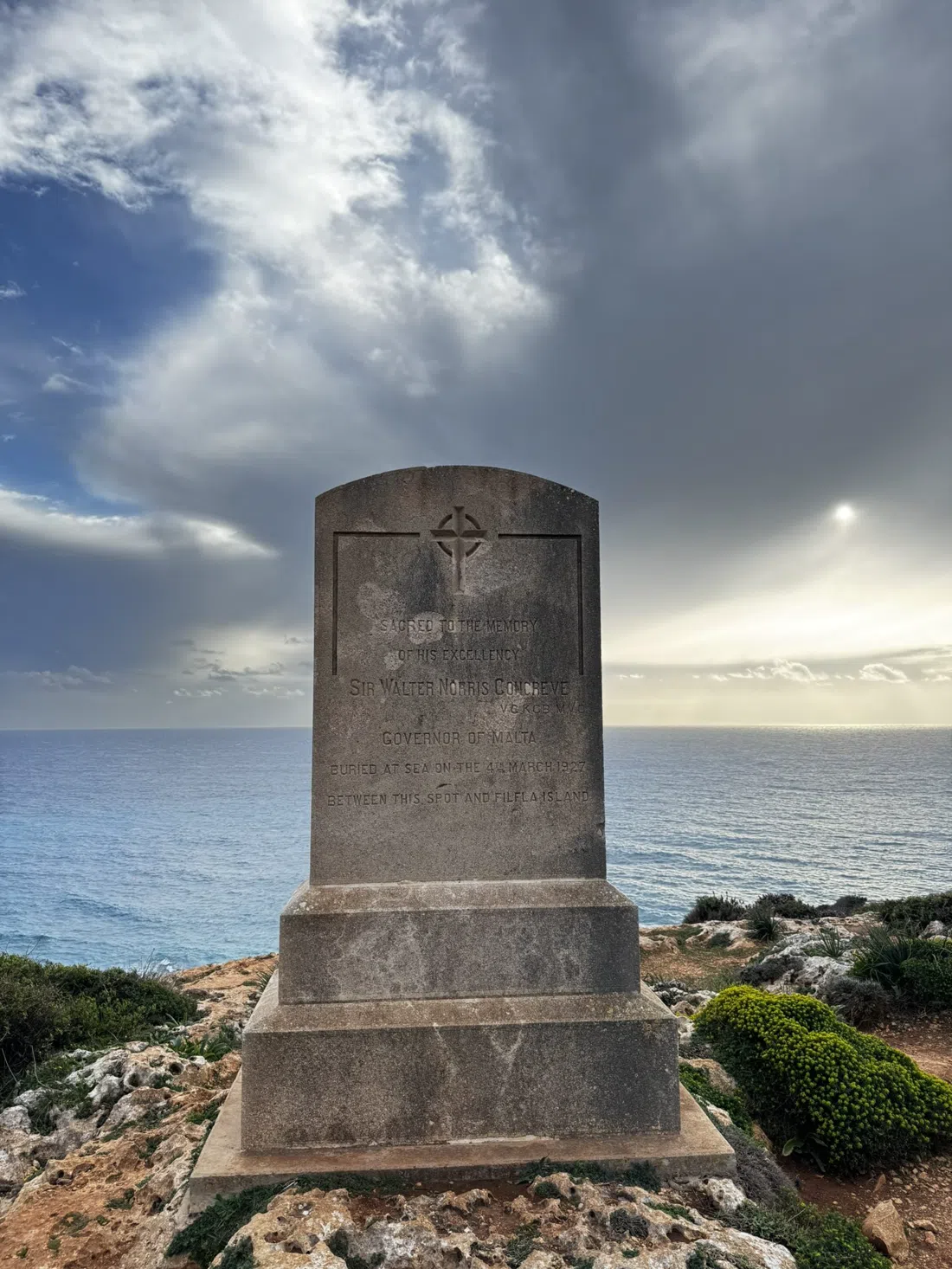
Ħamrija Tower and the Congreve Monument (five minutes along the coastal track from the temple fence) costs nothing and needs no ticket. It is open ground with a seventeenth-century watchtower on it and a clear view along this stretch of coast. The tower interior is closed to the public, and Heritage Malta only opens it as part of its own occasional guided evening walks, so what you are doing is walking out to the edge and looking. For most people that is enough, and it is the least crowded five minutes of the morning.
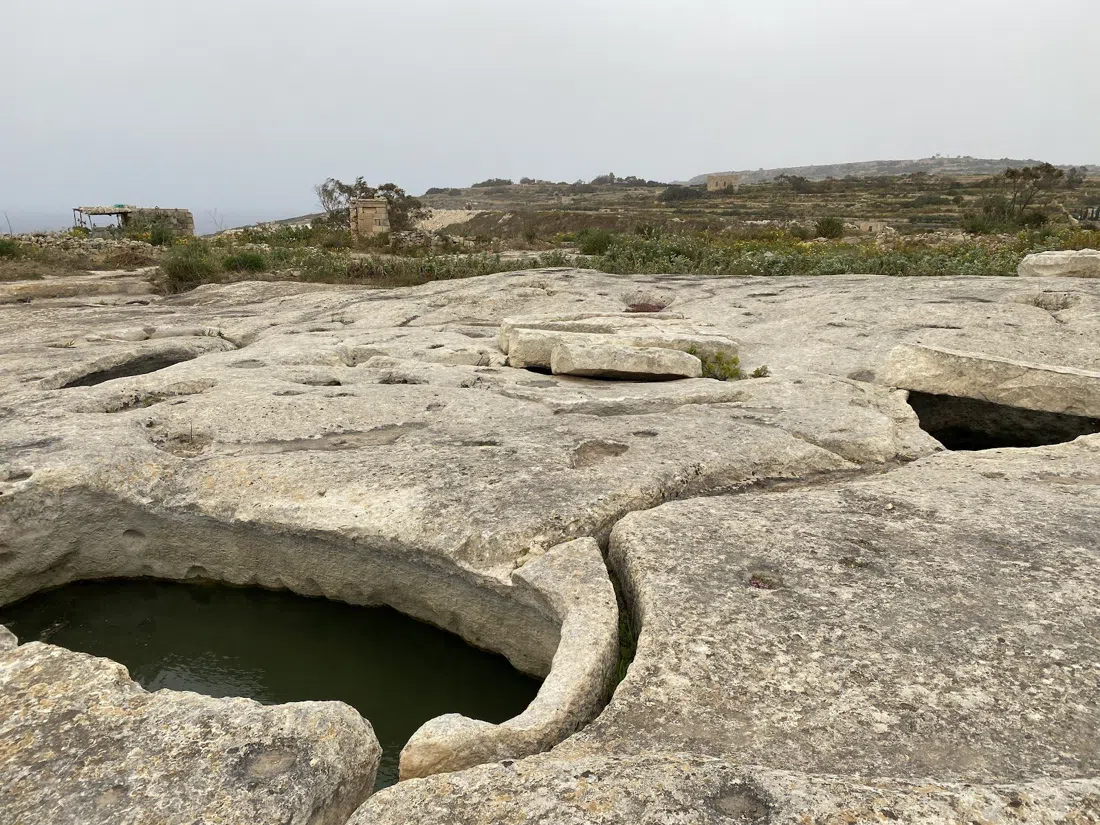
Misqa Tanks (about fifteen minutes uphill off the trail between the two temples) is a different proposition. Water-catchment basins cut into bare rock, unstaffed, no signage furniture, no handrails, and an approach that is genuinely rocky rather than merely uneven. Include it only if everyone with you is steady on rough ground. In a group of four adults in decent shoes it is a good addition; with a mixed-ability party it turns a calm morning into a slow one.
Paying at the gate versus booking a guided day
Entry is straightforward. €10 adult, €7.50 youth, senior or student, €5.50 for children aged 6 to 11, under-6s free. One ticket covers Ħaġar Qim, Mnajdra and the visitor centre, and it stays valid for 30 days, so if the weather turns while you are on the headland you have not lost the money.
Tickets are sold at the door and there is no timed-entry system to work around. What you are avoiding is the shape of the crowd rather than a ticket queue: coaches and school parties come daily, and they arrive in the middle of the morning rather than at opening. First entry at 09:00 puts you ahead of both the groups and the heat, and gets you the temples in flat early light.
A guided option exists and is attached to this page separately. Full-day private tours covering the site run seven days a week, priced from 337 USD per person, and there are 1,642 traveller reviews across the bookable tours here. That is a large gap over a €10 door ticket, and it buys transport, a driver and someone else's planning rather than better access, since there is no queue to skip. It makes sense if you are not driving, if you are working around a ship's departure time, or if you want the south coast and the city done in one day without timetables. If you have a car and a morning, the door ticket and the audio guide do the same job.
Access, shade and what the site demands
The approach to Ħaġar Qim is wide and gravelled and handles wheels well. Everything past the main temple is less forgiving, and the Mnajdra path in particular rules itself out for wheelchairs without the buggy. There is no shade anywhere on the clifftop, partial or otherwise, so between May and September the difference between 09:00 and 13:00 is the difference between a pleasant walk and an endurance test. Bring water, a hat, and shoes you can walk on uneven paving in. The visitor centre is the only place to cool down, and it is a five to fifteen minute walk back uphill from wherever you are.
The sea half of the day
Fifteen minutes' drive from the temples, the Blue Grotto Boat Service at Wied iż-Żurrieq is a fishermen's cooperative running up to about 25 boats on two shifts, eight to twelve passengers each. There is no advance booking. You turn up, pay at the quayside kiosk in cash, around €10 per adult and roughly half that for children, and wait your turn. Larger groups are split across several boats rather than refused. Two caveats: the caves only glow properly in morning light, and the whole service stops dead in a southerly wind or a swell. Treat the boats as a bonus you might get rather than a fixture of the day.
The Blue Grotto Viewpoint on Triq Wied iż-Żurrieq costs nothing and is where the photograph everyone recognises is actually taken. It is an unrestricted roadside layby with room for coaches, so it gets tight when two or three stop at once, but it is worth pulling in even on a day when the sea is too rough to sail.
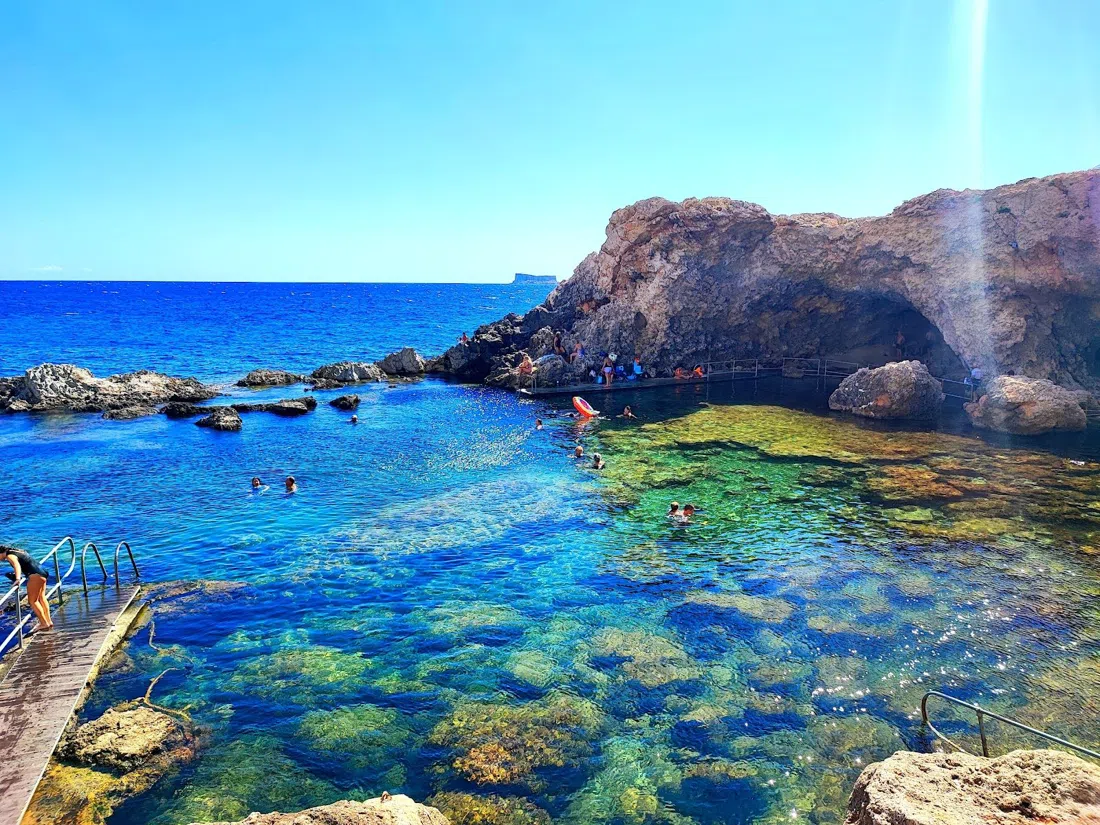
Għar Lapsi (a free public cove west along the coast) is the nearest swim to the temples and stays sheltered on days when the open coast is choppy. No gate, no staff, no lifeguard, and limited parking, so arrive early or be dropped off. The walk back up the slope is steep enough to rule it out for anyone with mobility problems.
Lunch on this coast
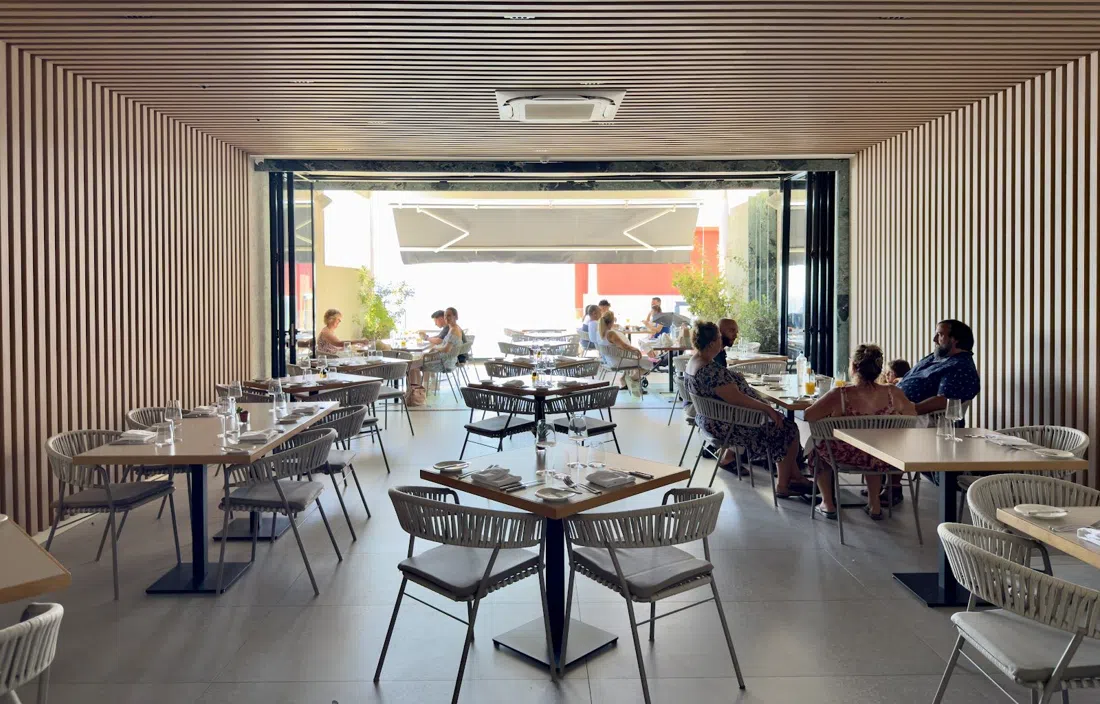
Aalto Restaurant & Bar (sea view, a short drive from the temples) is the reliable option because of its hours: open daily from breakfast at 08:30 straight through to 22:00, so it absorbs a lunch that has slipped to 15:00 because you spent longer at Mnajdra than planned. Mediterranean cooking, mains in the high teens to around €30. It takes group bookings and private events, so call +356 2166 7767 ahead if there are more than a handful of you.
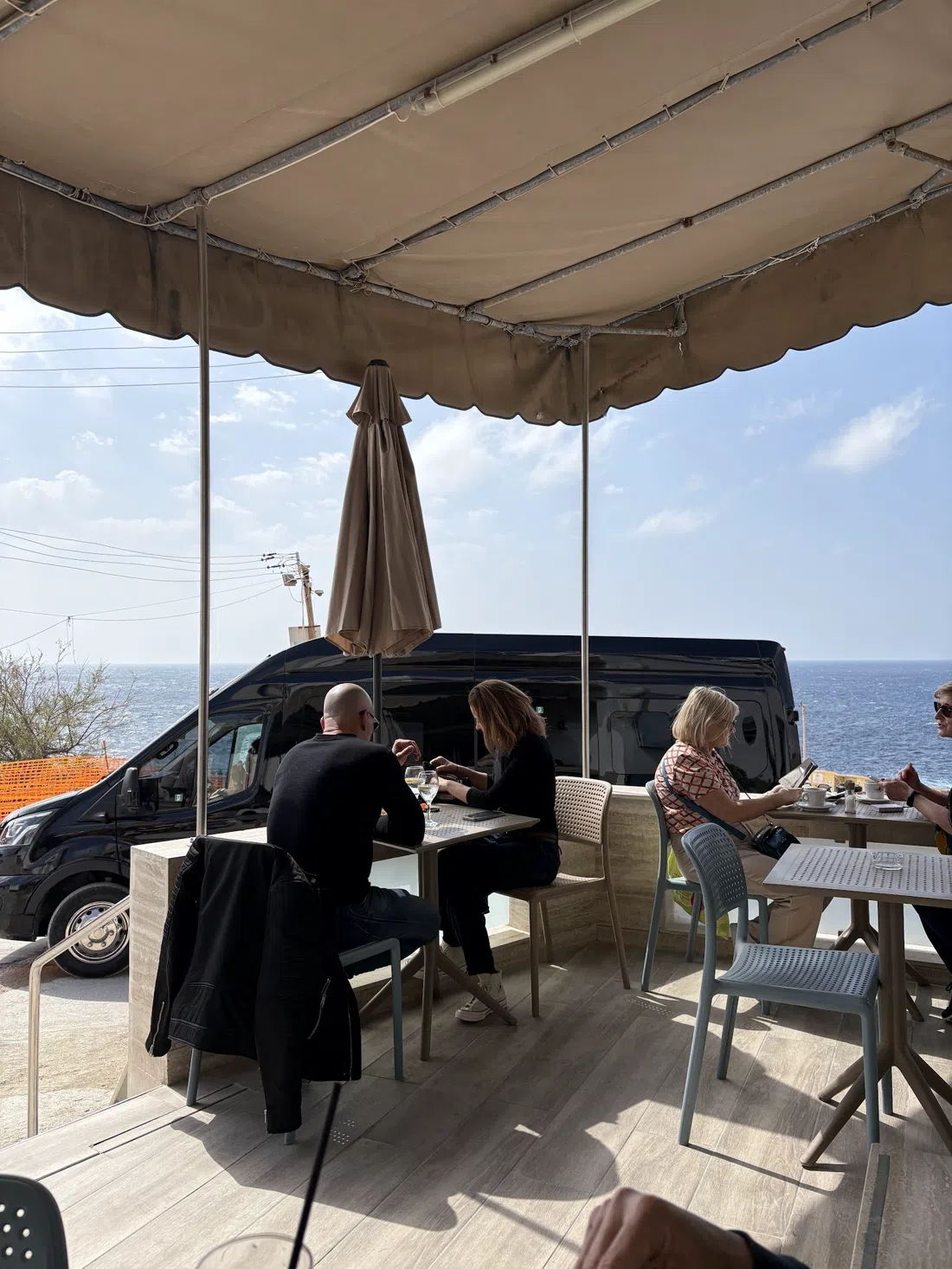
Blue Creek Restaurant (about ten minutes from the temples, overlooking the coast you have just walked) is the better meal if the timing works: fresh fish sold by weight, looking out at the same cliffs. The catch is the schedule. It closes on Tuesdays and runs dinner-only on some evenings, so confirm on +356 2146 2800 before you build a day around it, and certainly before you send a group.
When the clifftop is unbearable
Two indoor-ish fallbacks sit within a short drive. The Limestone Heritage Park & Gardens (in Siġġiewi, inland) is built inside a former quarry and explains the stone the temples are made from, with craft demonstrations, and limoncello and olive-oil tastings for parties of ten or more. It is roofed and shaded, which makes it the sensible substitute in rain or in a blazing afternoon. Check the opening pattern carefully, since it closes on Sundays and public holidays and only opens until noon on Saturdays, and check current rates on their tickets page before booking a group.
Il-Maqluba and St Matthew's Chapel (in Qrendi village, two kilometres from the temples) is a ten-minute add-on rather than a destination: a collapsed sinkhole with a chapel beside it, free, open, right by the Maqluba bus stop. The belvedere is narrow, so a group has to look in shifts, and the steps down are genuinely slippery. Hold the handrail and wear proper shoes.
The other half of the story, back in the city
Most of what was lifted out of Ħaġar Qim is not on the headland. The National Museum of Archaeology (Republic Street, Valletta) holds the finds, charges €5 adult, €3.50 youth, senior or student and €2.50 for children aged 6 to 11, and sits five minutes from the cruise gangway. It is fully accessible, has audio guides in ten languages, and runs quiet-hour provision on Wednesday afternoons. Doing the site in the morning and the museum in the afternoon is the version of this day that makes sense of what you saw.
The Ħal Saflieni Hypogeum (Paola, a short drive from the harbour) is the one thing you cannot improvise. Ten people are admitted at a time, a maximum of four tickets per purchase except for families, no under-6s, and coach groups cannot be accommodated at all. Tickets are €35 adult, €20 youth or senior, €15 child 6-11, with a €50 last-minute tier released the day before. Those day-before releases, sold at Fort St Elmo, the National Museum of Archaeology, the Domvs Romana or the site itself, are the only realistic fallback and go first come, first served. Plan it weeks out or accept you may not get in.
If you are arriving by ship, the day starts and ends at the Valletta Waterfront at Pinto Wharf, which has coach loading bays, an information booth and cafés used to turning over a shipload at once. The drive south is 30 to 40 minutes each way, so a temples-plus-museum day is comfortable on a normal turnaround and tight on a short one. If you land back with an hour spare, the Barrakka Lift up to Upper Barrakka Gardens takes three minutes. If you are staying in the city rather than passing through, the Valletta hotel search covers the harbour districts, and the Valletta guide has the rest of the city.
Is it worth it
Yes, with a condition. Ħaġar Qim rewards people who give it two to three hours, read the centre first, and walk down to Mnajdra. Given 45 minutes between coach departures, in full afternoon sun, without context, it is a field of large rocks and you will wonder what the fuss was. The €10 ticket is one of the better-value entries in Malta; what it demands is time rather than money.
It suits independent travellers with a car, couples who want a quiet morning, and anyone with an actual interest in prehistory. It suits families reasonably well, since the centre has a children's room and the circuit is short, as long as you accept the heat. It suits people with mobility problems only in part: the main temple yes, Mnajdra only with the buggy, Misqa Tanks not at all.
Best time to go
Go at 09:00. That single decision does more than anything else here, because it puts you on the stones before the coaches and before the sun clears the point where shade stops mattering. The next best slot is the last 90 minutes before closing, when the groups have gone, though you lose the option of a slow visitor-centre stop.
Midday between May and September on an unshaded clifftop is the version of this visit people remember badly. If that is the only window you have, invert the day: museum or quarry in the heat, temples late. Spring and autumn are the easiest conditions overall, walkable all day, with the sea usually calm enough for the boats. In winter you get empty paths and sharp light, but southerly wind cancels the grotto trips regularly, so hold that part of the plan loosely. Morning light is also what makes the caves glow, so if you want both the stones and the boats, the boats have to come straight after the temples rather than at the end of the afternoon.
Getting there, paying and what the day costs
Driving is the simplest approach: roughly 30 to 40 minutes south from the harbour, with parking at the park. Buses reach Qrendi and the Maqluba stop, but the last stretch to the temples is exposed walking, which is fine in March and unpleasant in July. A guided day removes the logistics entirely and runs seven days a week, at a price that reflects private transport rather than better access.
Carry cash. The boat kiosk at Wied iż-Żurrieq takes it at the quayside, small cafés prefer it, and the free sites need none. A realistic self-driven budget for two people is €20 for the temple ticket, €20 for the boats if they sail, €10 for the museum, and €50 to €80 for lunch depending on where you sit. Everything else on this coast is free.
One last piece of admin worth remembering: the temple ticket is valid for 30 days. If the wind gets up, or the light is wrong, or you simply run out of morning, you can come back on it.