
Walk five minutes inland from the Paceville strip after midday and the crowd thins to nothing. What's left is a fishing settlement that predates the bars by a couple of centuries: a church still saying Mass to the same families, a garden nobody advertises, and a stretch of rock where the water is exactly as good as anywhere on the postcards, minus the queue. This is the St Julian's that keeps its own hours, most of them well before the club lights come on.
The old village core: Balluta to Church Square
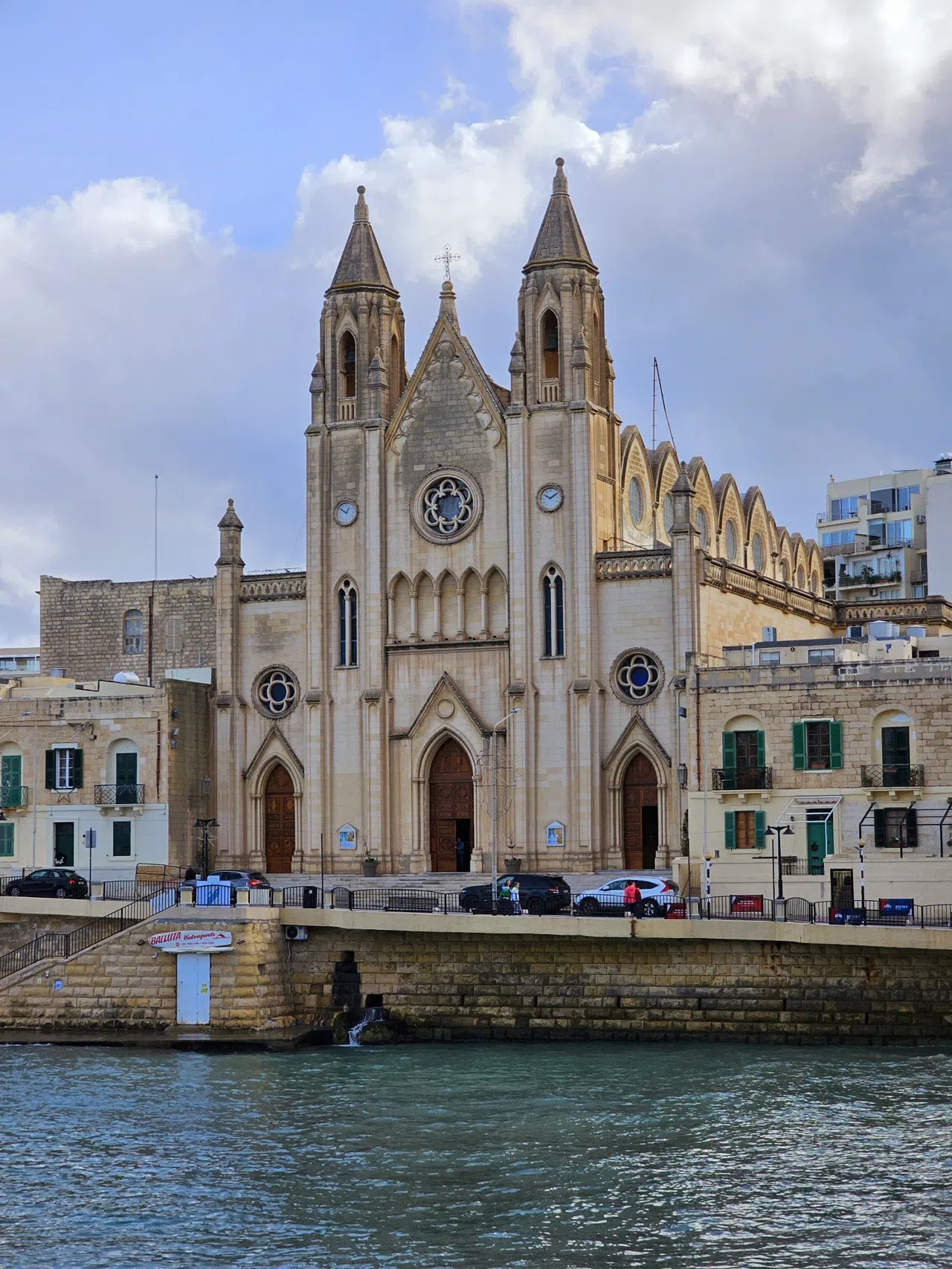
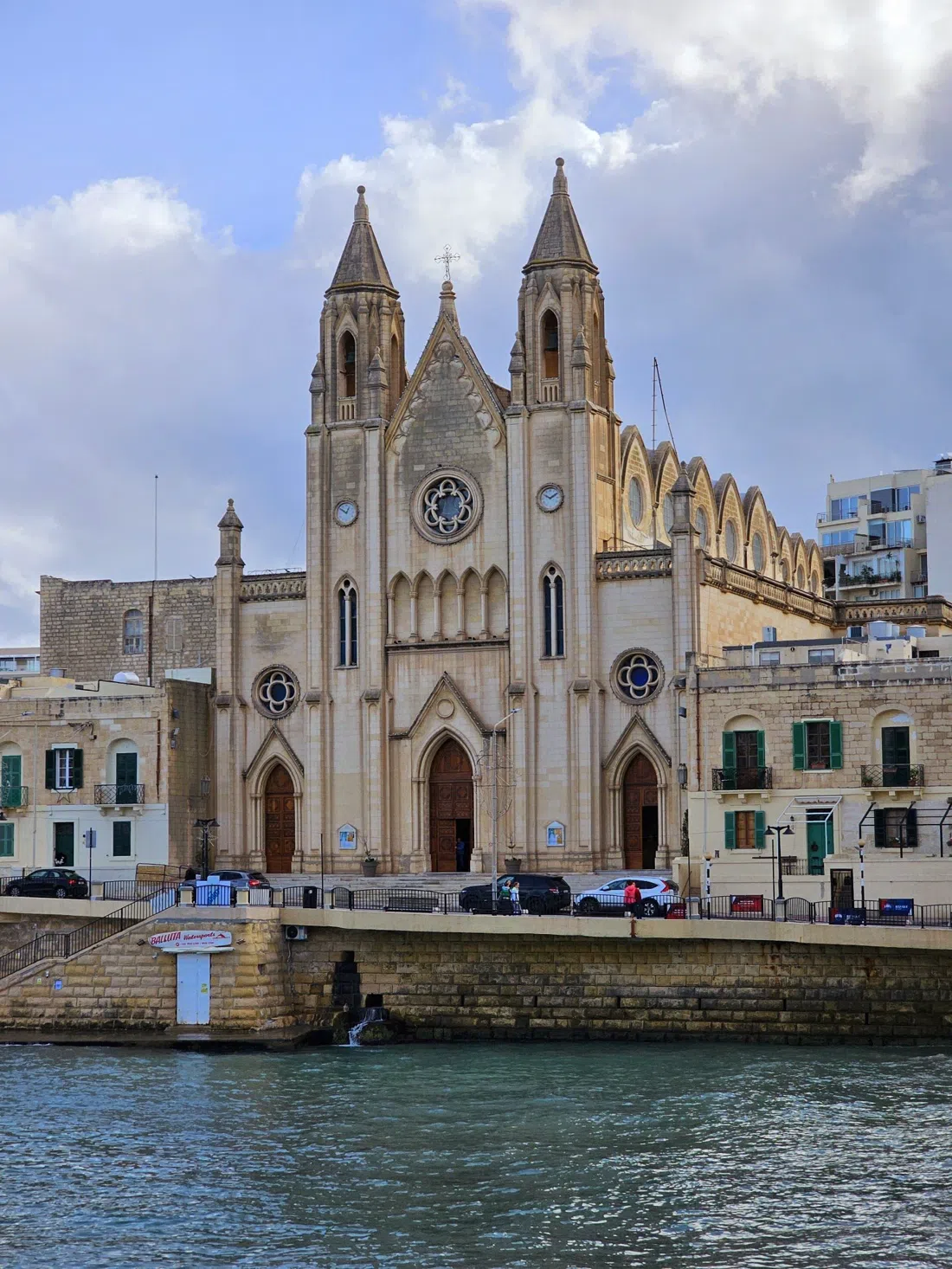
St Julian's didn't start as a resort. It started as a scatter of fishermen's huts and farmhouses around a bay, and the two buildings that anchor Balluta Bay still carry that history on their faces. The Parish Church of Our Lady of Mount Carmel (the Carmelite Church, in Balluta) is the spiritual centre of the old settlement — a working parish church with free entry and open doors, not a stop on anyone's guided tour. Dress respectfully, keep your voice down if Mass is on, and don't expect a ticket booth or a gift shop; this is a building people still use for what it was built for, forty minutes' walk from Paceville and about as far from it in spirit.
A hundred metres along the same waterfront stands Balluta Buildings, one of the last complete Art Nouveau façades left on the island. It went up when Balluta was still mostly nets and boats rather than restaurants, and it rewards nothing more than a slow walk-past — there's no interior access, so treat it as a five-minute photo stop on the way to or from the bay rather than a destination in its own right. It works for a solo visitor or a group of six; nobody's checking a guest list.
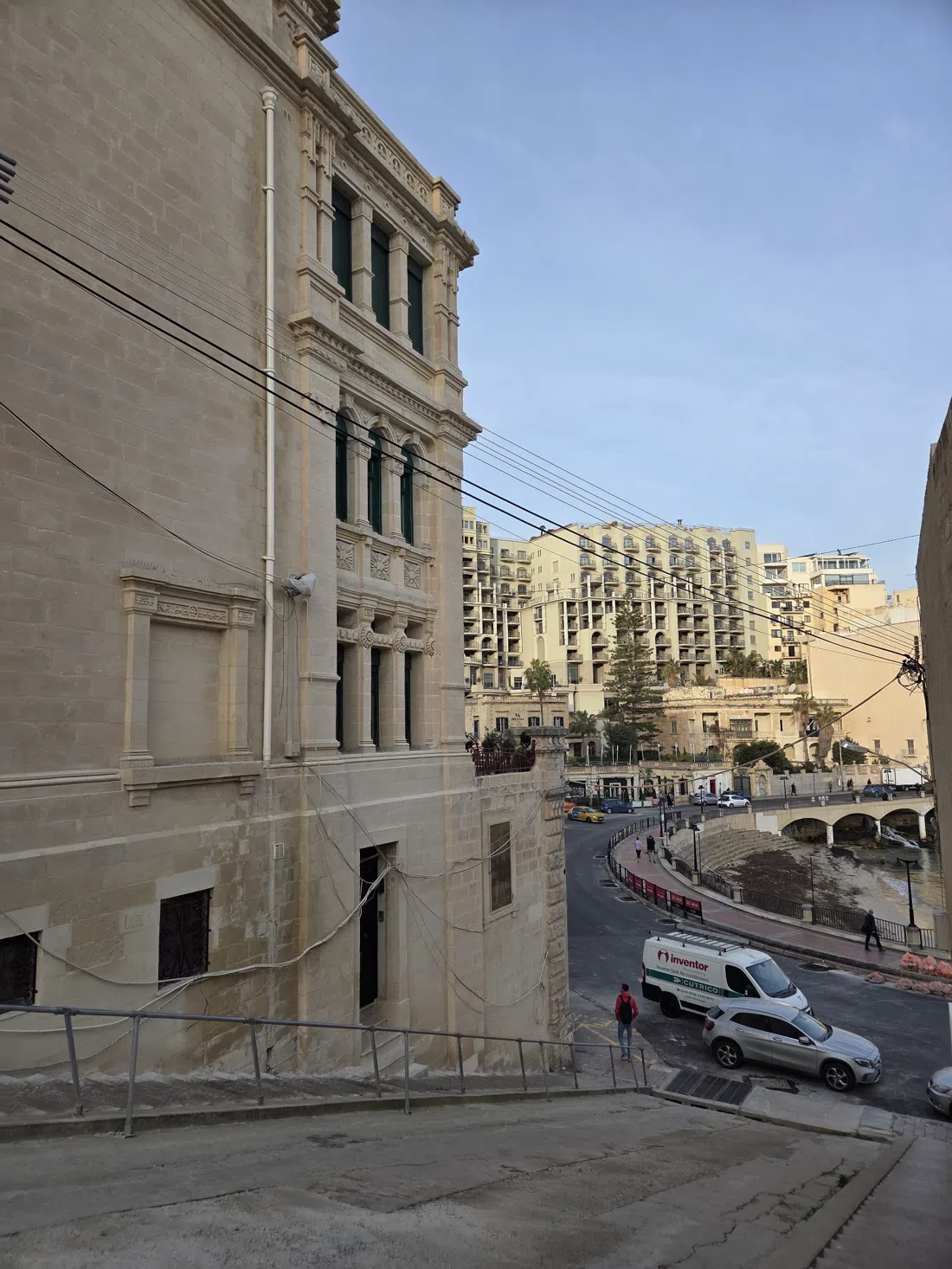
Head up the hill from Balluta and the streets tighten into the old core, arriving eventually at Church Square and the St Julian's Parish Church. This is a separate building from the Carmelite Church in Balluta — St Julian's had its own parish here since the 1580s, long before "St Julian's" meant nightlife to anyone. It's open to all, free, and — like its Balluta neighbour — a working church rather than an attraction, so time a visit around Mass times if you want to look inside without getting in the way. Sit on the church steps for ten minutes on a weekday morning and you'll watch the town go about business that has nothing to do with tourism: deliveries, school runs, an old man reading a newspaper on the same bench he probably sits on every day.
The walk between the two churches is short — a matter of a few hundred metres and a modest climb — but it does the job of separating two different eras of the same town. Down at Balluta, the bay and the Art Nouveau façade tell you this was once a working waterfront. Up at Church Square, the square itself, ringed by shuttered townhouses and a couple of unmarked grocers, tells you where the people who worked that waterfront actually lived. Neither spot takes more than twenty minutes, and together they're the clearest hour you can spend in St Julian's without going near the coast.
Ġnien Spinola and the chapel next door
Ten minutes' walk from Balluta, past the marina restaurants that fill up every evening, a gate opens onto Ġnien Spinola — the Spinola Palace Garden. It belonged to the Spinola family for centuries and only opened to the public in 2019, which is late enough that most people heading to dinner at the marina still walk straight past the entrance without registering it's there. Entry is free, no booking required, and the garden is calm enough for a family with small children or a couple wanting somewhere quiet to sit that isn't a restaurant terrace. There are no facilities to speak of, so treat it as a twenty-minute pause rather than an afternoon plan.
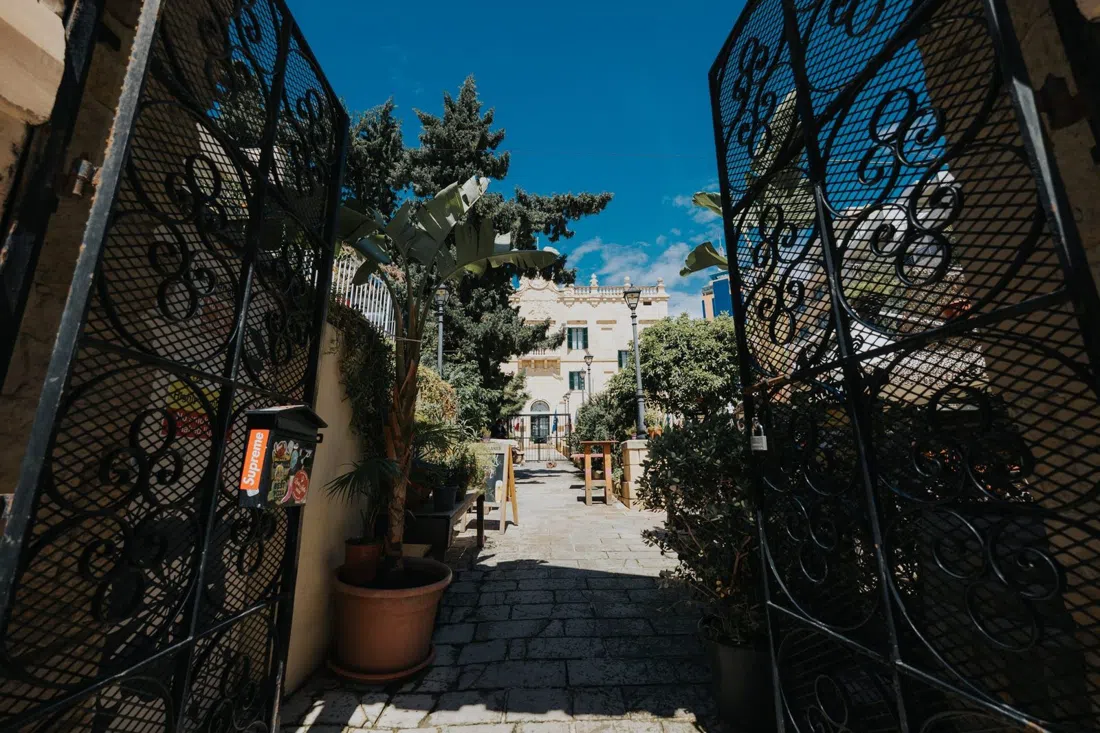
A short walk from the garden, tucked into the same pocket of the neighbourhood as the glass towers of Portomaso, is the Chapel of the Immaculate Conception in Spinola. It was built as the Spinola family's own private church, and it still behaves like one: the interior is mainly open on feast days and around Mass times rather than for casual visitors, so most people will only see it from outside. That's still worth doing. Standing in front of a 17th-century chapel with a modern tower development visible over its roofline is as clear a summary of St Julian's contradictions as the town offers — old money's private chapel, a few hundred metres from new money's marina.
Wied Għomor: a valley the marina crowd never finds
Most visitors to St Julian's never leave the coastline, which means most visitors never find Wied Għomor, a valley trail running inland from the built-up harbour area. It's one of the last green spaces left in this stretch of Malta's Northern Harbour region — unguided, free, and with no facilities, so proper shoes matter more than anything else you pack. The trail suits a small group of walkers rather than a large tour; there's nowhere for a coach to stop and nothing commercial waiting at the end.
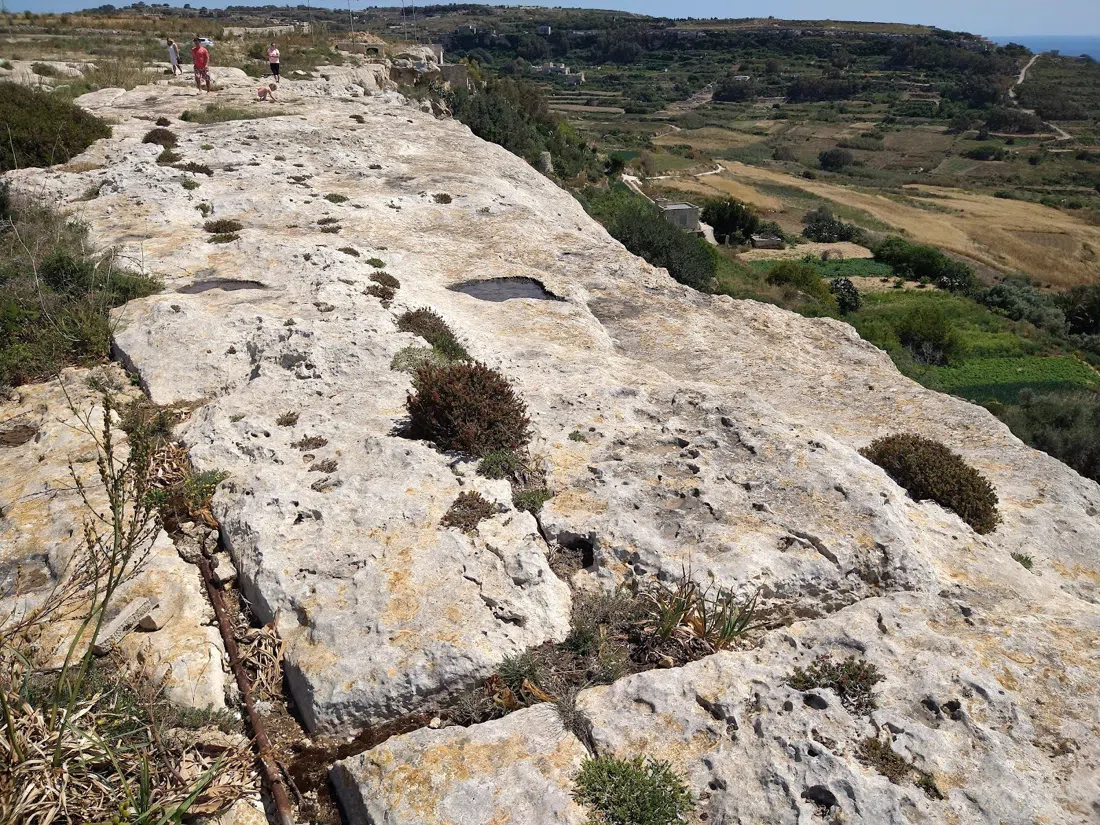
What makes the walk worth the detour is what's cut into the rock along the way: the Sant Andrija Cart Ruts, grooves worn into the bedrock by a farming community working these valleys roughly 3,000 years before St Julian's existed as a fishing village, let alone a resort. They're easy to walk straight past if you don't know to look — there's no signage doing the interpreting for you — so it helps to go in knowing what you're looking at rather than hoping to stumble onto an obvious monument. The valley also holds prehistoric burial shafts cut into the same bedrock, further reminders that this ground was worked and lived on long before anyone thought to build a casino or a marina nearby. Bring water, and treat this as a couple of unhurried hours rather than a quick add-on between the beach and dinner — there's nowhere along the trail to buy a bottle if you run out.
Where St Julian's actually swims
The bay everyone photographs from a hotel balcony is not where St Julian's residents get in the water. That happens a five-minute walk from the casino, along the rocky coast at Dragonara Point, known locally as Il-Qaliet. It's informal and free — no lifeguard, no facilities, nobody selling you a sunbed — and the water deepens quickly close to the rocks, so it suits confident swimmers rather than anyone easing a child in for the first time. Go on a weekday morning and you'll likely have long stretches of it to yourself, which is the entire point.
If you'd rather have the same water with a bar and a shower attached, The Reef Club at Westin Dragonara sits on the same stretch of coast and takes non-hotel guests for a day fee. It's a straightforward way into the coves for anyone who wants the quiet water without going fully bare-bones — book ahead, since access is seasonal and the club can fill up, and it works well for a small group who want sun loungers rather than a rock ledge. Either way, this is swimming as St Julian's residents actually do it: a short walk from where they live, not a hotel amenity built for guests who never leave the property.
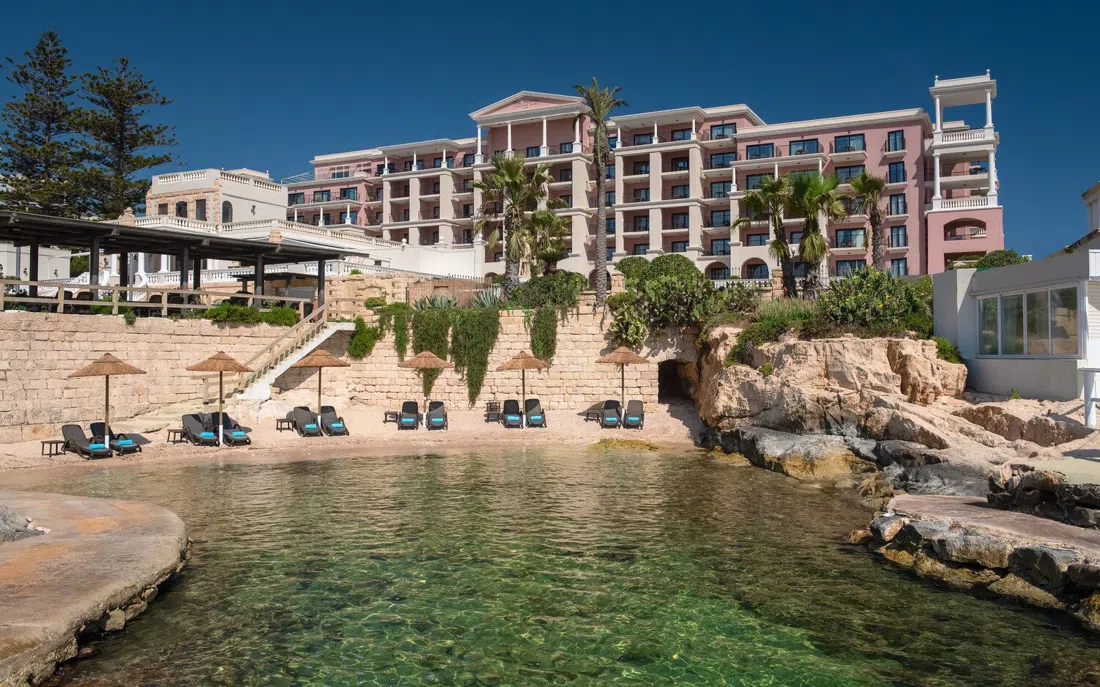
Both spots sit close enough together that the choice comes down to what you're carrying and who you're with. A couple travelling light with their own towels will do fine scrambling over the rocks at Il-Qaliet for free. A family, or anyone who'd rather not negotiate bare rock with wet feet, will get more out of paying for a sunbed and a shower at the Reef Club. Neither is right or wrong — they're the same stretch of coastline, priced two different ways.
Pastizzerija hours and back-street coffee
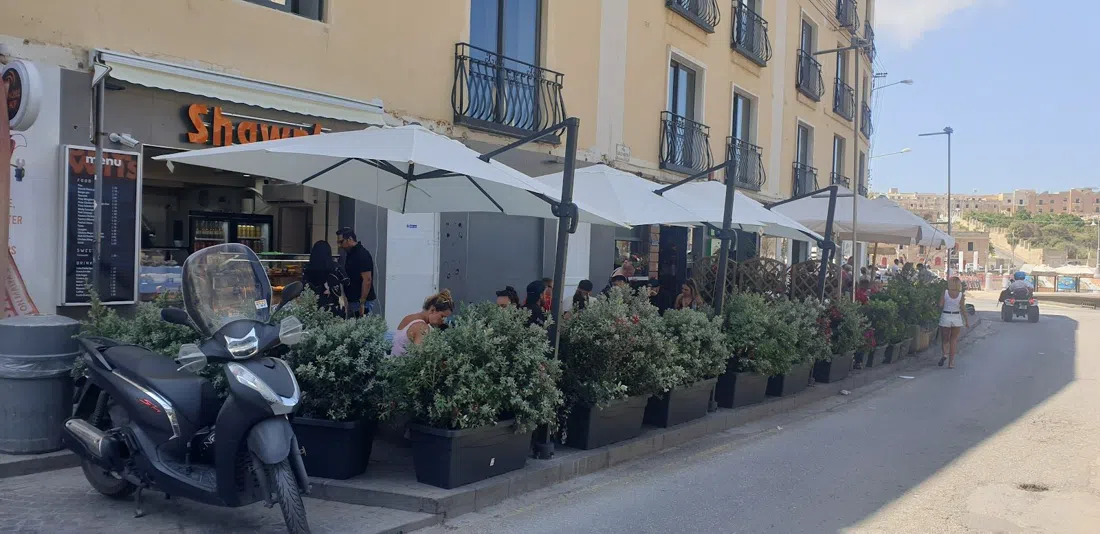
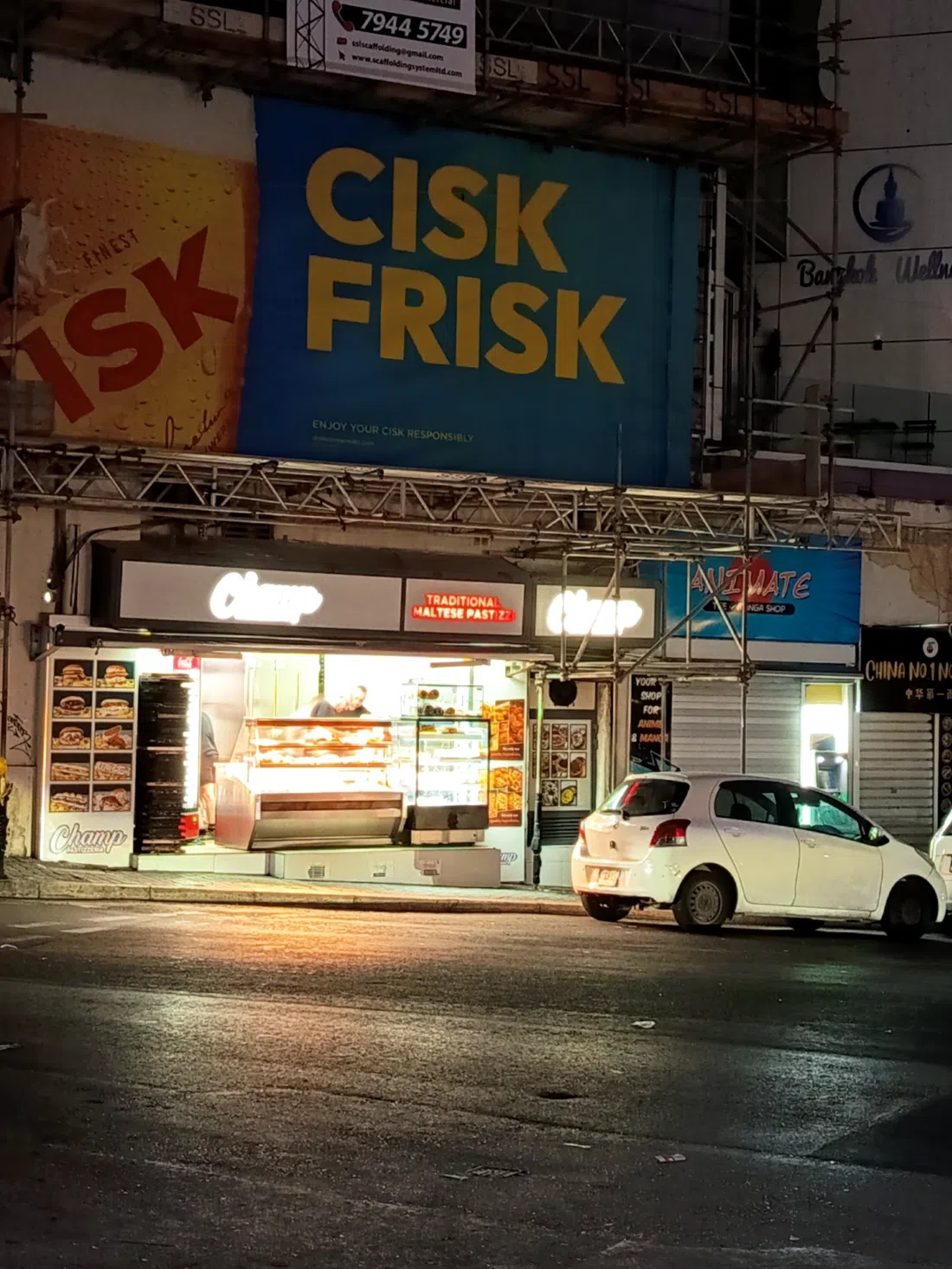
Away from the seafront, St Julian's runs on pastry and coffee at hours that have nothing to do with tourist breakfast service. Maxims Pastizzeria is a takeaway counter, cash-only and unpretentious, selling pastizzi for roughly €1-2 each — there's nowhere to sit, so treat it as a stop to grab a bagful rather than a café visit. Shawn's Pastizzeria covers the other end of the clock: it's open around the clock, casual pavement seating only, and catches both the early-shift locals coming on and the last stragglers of the Paceville crowd going home. The food, not the setting, is why either is worth the detour.
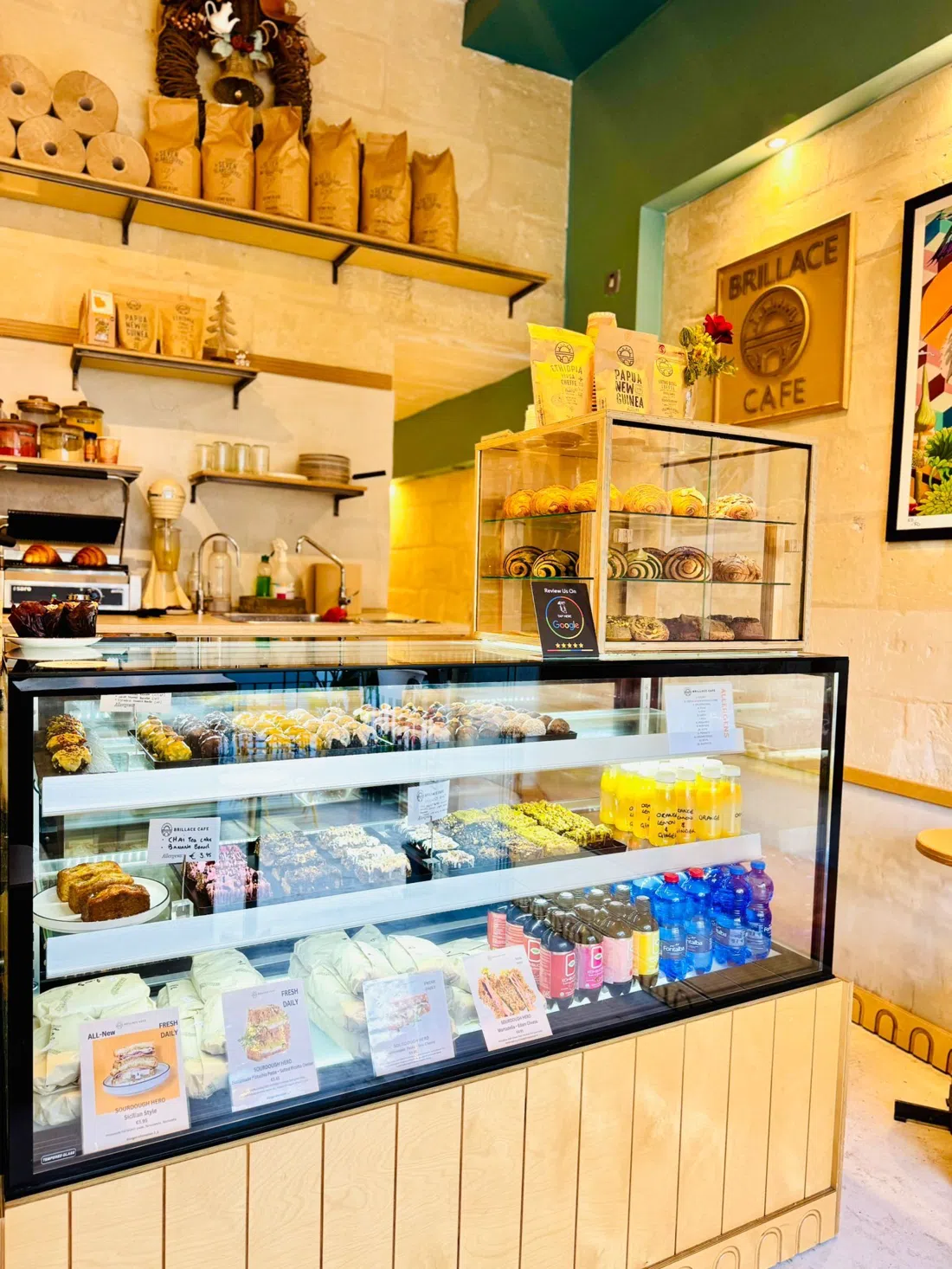
For something closer to a sit-down start to the day, Cafe Ole opens before dawn for shift workers rather than for anyone stumbling home from a club — it's a casual, walk-in neighbourhood spot that suits a small group over a simple breakfast, and about as local as St Julian's mornings get. If you want the newer side of that same instinct, Brillace Café in Spinola is part of the specialty-coffee scene that's reached St Julian's in the past few years — this is where residents go for a proper coffee instead of the bayfront chains, and it's a comfortable stop for a small group rather than a large one.
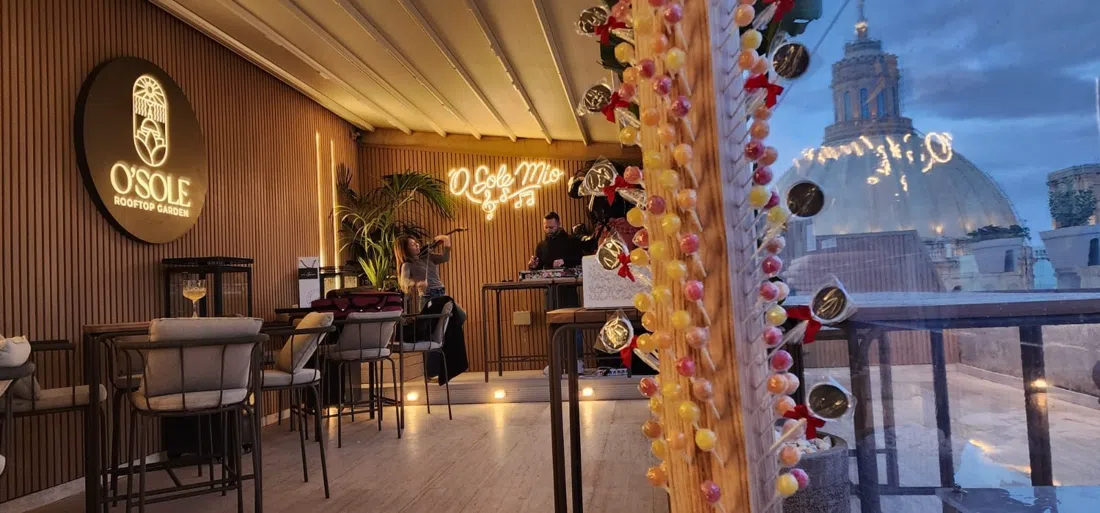
None of this is a restaurant crawl. It's a scatter of unglamorous, genuinely used places that happen to sit a few streets back from the bars — which, in a town built on its seafront reputation, turns out to be the more interesting few streets.
Getting there, cash, and timing
St Julian's is a short trip from Valletta — a bus ride, or a harbour ferry crossing followed by a twenty-minute walk along the coast; either way, budget half an hour door to door. Once you're there, the places in this guide cluster into three walkable pockets — Balluta and Church Square, Spinola and the marina, and the Dragonara coast — each roughly a ten-minute walk from the next, so a full day covering all three is realistic without a car or a taxi.
Carry cash. The pastizzeriji in particular run cash-only, and even where cards are accepted, a few coins make small purchases faster. None of the sites in this guide charge for entry except the Reef Club's day-access fee, so a day exploring the old village core, the garden, the valley trail, and the coves costs whatever you spend on pastizzi and coffee — realistically a handful of euros, plus whatever you choose to pay for beach-club access.
Timing matters more here than almost anywhere else in St Julian's. Go early — before 10am — for the coves and the valley trail, both of which are more pleasant without the midday sun and effectively empty at that hour. Aim for a weekday if you can, since the churches and the garden are calmest when there isn't a wedding or a feast-day service filling the square. And if you're staying in the area rather than day-tripping, it's worth checking the Valletta hotel search for a base that puts you within walking distance of the ferry landing, which makes the whole loop — old village, garden, valley, coves, pastizzerija — into a single unhurried day rather than several separate trips. For the wider context of the island beyond this one neighbourhood, the Valletta guide is the place to start.