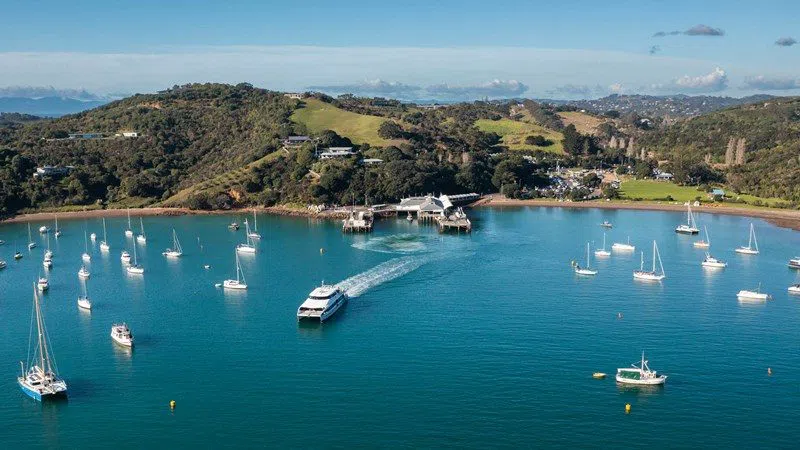

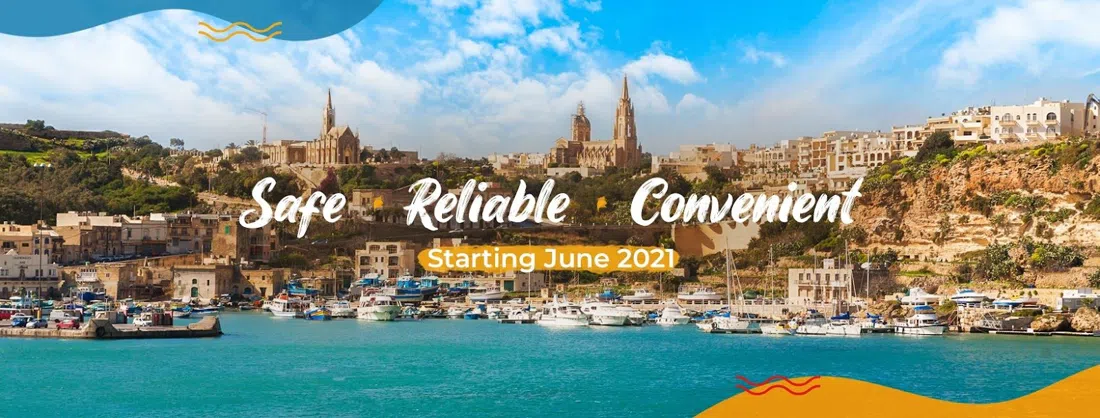
The boat out of Grand Harbour takes about forty-five minutes, and when the ramp goes down there is a chapel on the hill above the quay, a ferry swinging on its lines, and a row of open-sided tuk tuks idling in the shade. You have roughly six hours on an island fourteen kilometres end to end, and at least one of those hours will be spent in the water off Comino. Everything else is a routing problem, and it is worth understanding before you pay for anything.
What a tuk tuk day on Gozo actually gives you
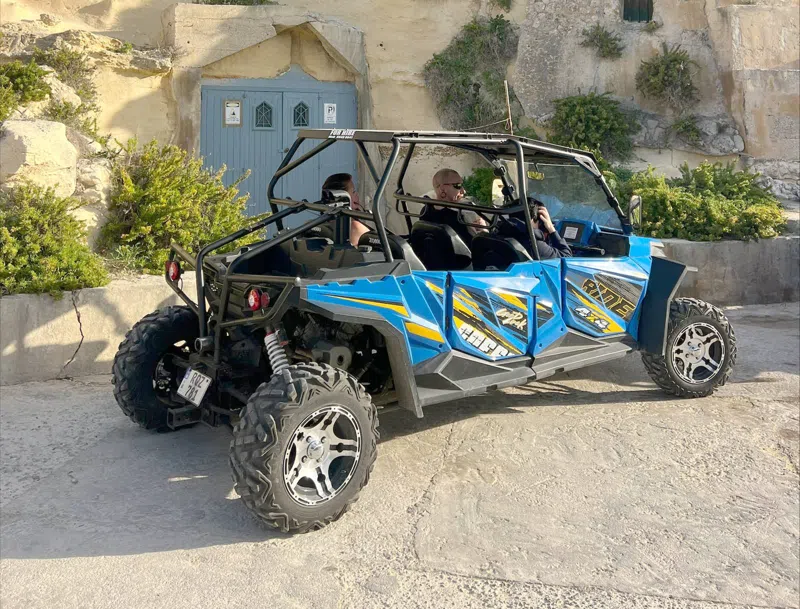
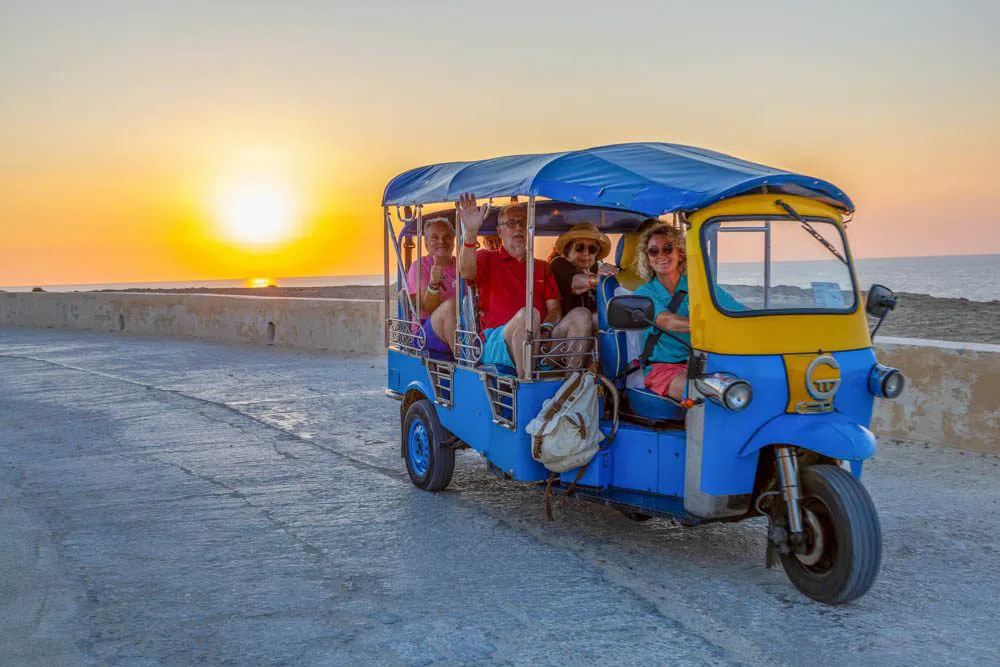
You get a three-wheeled, canopied vehicle with six forward-facing seats, a multilingual chauffeur-guide at the front, and a loop of the island that runs roughly seven hours from the harbour and back. The vehicle is slow, perhaps 40 km/h on the open stretches, and that turns out to be the point. Gozo's distances are short enough that a slow vehicle costs you nothing: the far west coast is twenty minutes from the far east, and you see the field walls, the church domes and the dry valleys at a speed where you can actually look at them.
Yippee (Cominology Ltd) runs it, out of Triq ix-Xatt in Għajnsielem, a minute from the harbour. Malta's official Gozo tourism site lists it as the only company running tuk tuk tours on the island, so a Gozo tuk tuk day tour effectively means this fleet, whatever channel you book it through. The full day runs about €90 to €100 per person all-inclusive: transfers, the Comino boat trip and a Gozitan lunch. A €25 per-person deposit holds a seat. Larger parties get split across a convoy of vehicles rather than crammed into one.
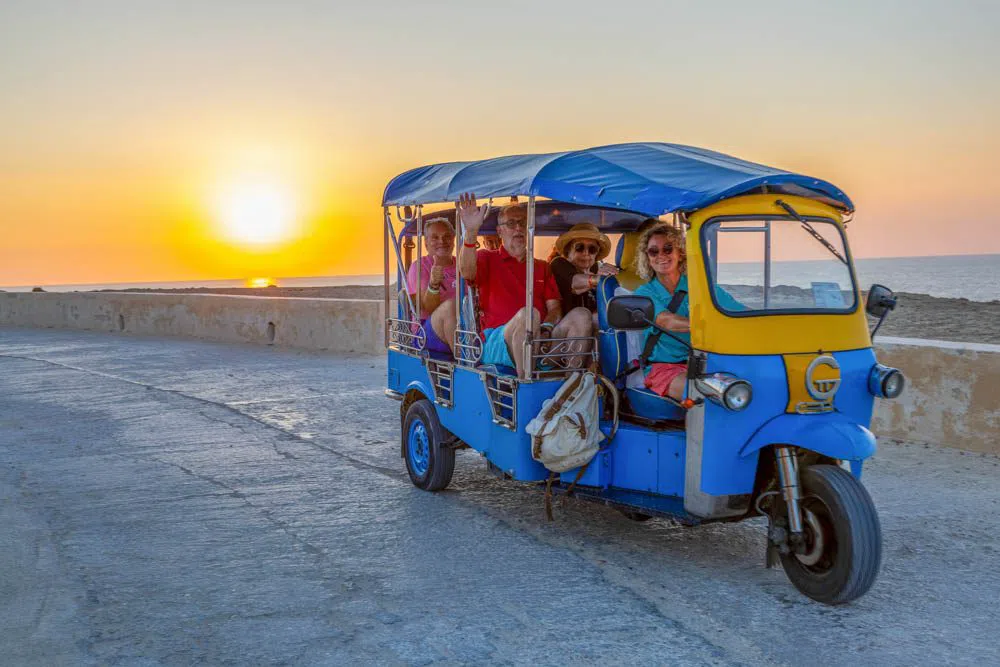
The island loop and the sea trip are sold as one day, and that is the argument for taking it rather than self-driving: the boat and the road stops are sequenced so you are not waiting on either.
Getting there from Valletta
Gozo Fast Ferry runs walk-on passengers only, no cars, from the Valletta waterfront to Mġarr Harbour in Għajnsielem. Roughly €7.50 one way and €15 return for an adult, about forty-five minutes door to door. Seating is unreserved, so groups board freely but do not expect to sit together on a busy sailing.
This is the whole reason the day is realistic from a Valletta base or a cruise call. The alternative is a bus north and the car ferry from the top of Malta, and that turns a six-hour island into a three-hour island. Take the fast boat.
Mġarr is the standard meeting point for tuk tuk convoys and coach groups, and there is plenty of quayside space. The ten minutes before departure (chapel above, ferry manoeuvring, tuk tuks lined up on the quay) is the most photogenic dead time of the day, so do not spend it queuing for coffee.
Comino, the Blue Lagoon and the timed pass
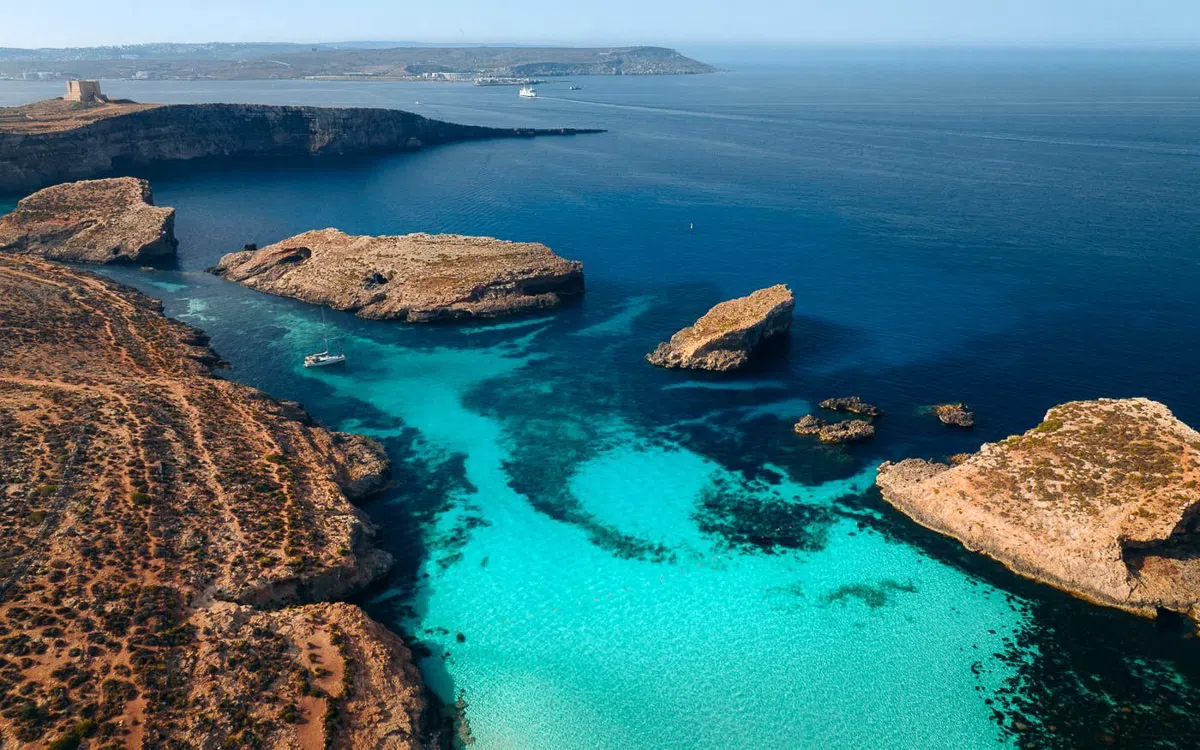
Blue Lagoon on Comino is the headline stop and the one with rules attached. Landing is free, but since 1 May 2025 and still in force through 2026, every person stepping ashore needs a free timed pass from the Malta Tourism Authority's Access Management System. It arrives as a QR code by email and is swapped for a wristband at the disembarkation point. There are three slots a day, 08:00 to 13:00, 13:30 to 17:30 and 18:00 to 22:00, with a cap of 4,000 people. Land without one and you risk a fine.
Tour groups are landed in batches and wristbanded on arrival, so on an organised day the pass is handled for you. Check that in writing before you pay, and if you are travelling independently, book the pass yourself in advance for every person in your party, children included.
The water is the colour it is in the photographs. The shore is not: on a summer midday the small beach shelf fills, and the better swim is off the rocks or off the boat.
Crystal Lagoon and the Comino sea caves, meaning Santa Marija Caves and Elephant Rock, reached only by boat, are where a skippered small-group run earns its money. The water is deeper, the place is quieter, and there is no shore to be crowded off. Most Gozo tuk tuk day tours include it; standalone Comino boat trips run about €25 to €40 per person. The cave passage is the part guests film.
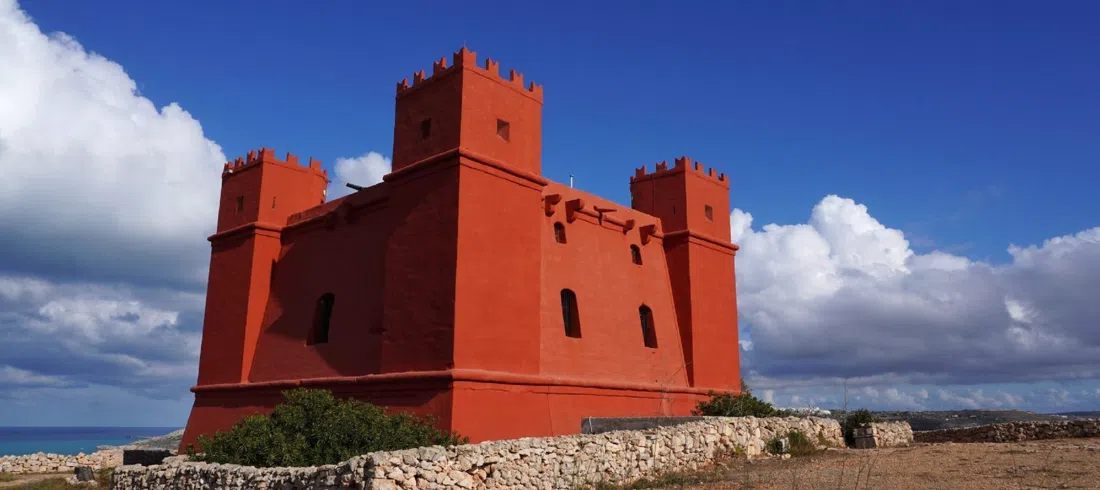
If your slot is a long one and you would rather walk than swim, Santa Marija Tower (St Mary's Tower) stands on the high ground above the bay. It is restored and staffed by the national trust, Din l-Art Ħelwa, open roughly Wednesday, Friday, Saturday and Sunday from 10:30 to 15:00, April to October, and a raised flag means it is open. Free or a small donation. The walk up is fifteen to twenty minutes and uphill with no shade, and the interior and roof are tight, so groups go up in waves. It only fits if you have a full five-hour slot and you are not planning to swim twice.
The stops in the middle of the island
Ċittadella in Victoria (Ir-Rabat) is the one stop that justifies a paid ticket. The streets and ramparts are free and open at all hours, and the wall walk gives you the whole island in a single sweep, down to the coast you drove in on. The €5 adult combo ticket covers the Visitors' Centre, the Gran Castello Historic House and the Old Prison and stays valid thirty days. The Visitors' Centre opens Tuesday to Sunday, 09:00 to 17:00, closed Mondays and also Wednesdays in January and February. Larger parties are time-ticketed into the museums.
Inside the walls, the Cathedral of the Assumption and Cathedral Museum takes a small separate ticket of a few euro from the cathedral shop, not covered by the combo. It was built without a dome because the money ran out, so a dome was painted instead: walk up the nave and watch the perspective flatten as you go. Shoulders and knees covered, quiet voices, no flash, and groups are fine outside Mass. It is closed to sightseers during services and open Monday to Saturday, roughly 09:00 to 17:00.
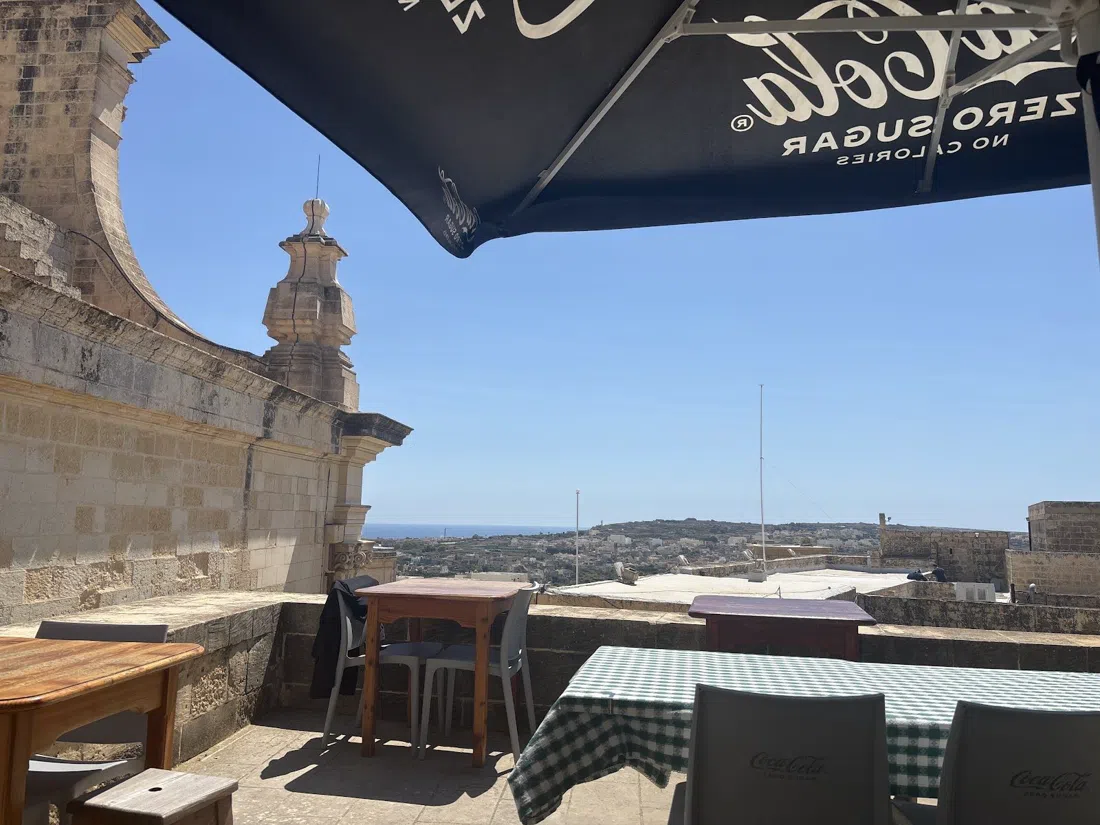
Thirty seconds from the cathedral door, Ta' Rikardu is the honest version of the traditional Gozitan lunch that tours advertise. Rikardu makes the cheese and the wine himself, from his own farm and vineyard. Reckon €12 to €20 per person for a platter and a glass of house wine. The rooms are small, so any group above six should call ahead or ask for the roof terrace rather than arriving with eight people unannounced.
North-east of Victoria, Ġgantija Temples and Ta' Kola Windmill in Xagħra is the archaeology stop. €10 for the adult combo covering both, €8 senior, youth and student, €6 for children aged 6 to 11, under-6 free. Open daily 10:00 to 18:00 from March to October and 09:00 to 17:00 in winter, last entry thirty minutes before close. A visit runs about an hour, and the interpretation centre is worth twenty minutes of that before you walk out to the stones. The boardwalk is one-way, so groups move through without bunching. Photography is fine, tripods are not.
Out west, the Basilica of the National Shrine of Ta' Pinu in Għarb takes coach and tour groups daily and absorbs them easily. Free, with a souvenir shop on site. The votive corridor, with its crutches, letters and photographs left by people who came here in trouble, holds up whether or not you are religious. Weekday Masses are at 07:30, 08:30 and 18:30, so a mid-morning or mid-afternoon stop is the clean one. Shoulders and knees covered, silence during Mass.
The coast road and the swimming stops
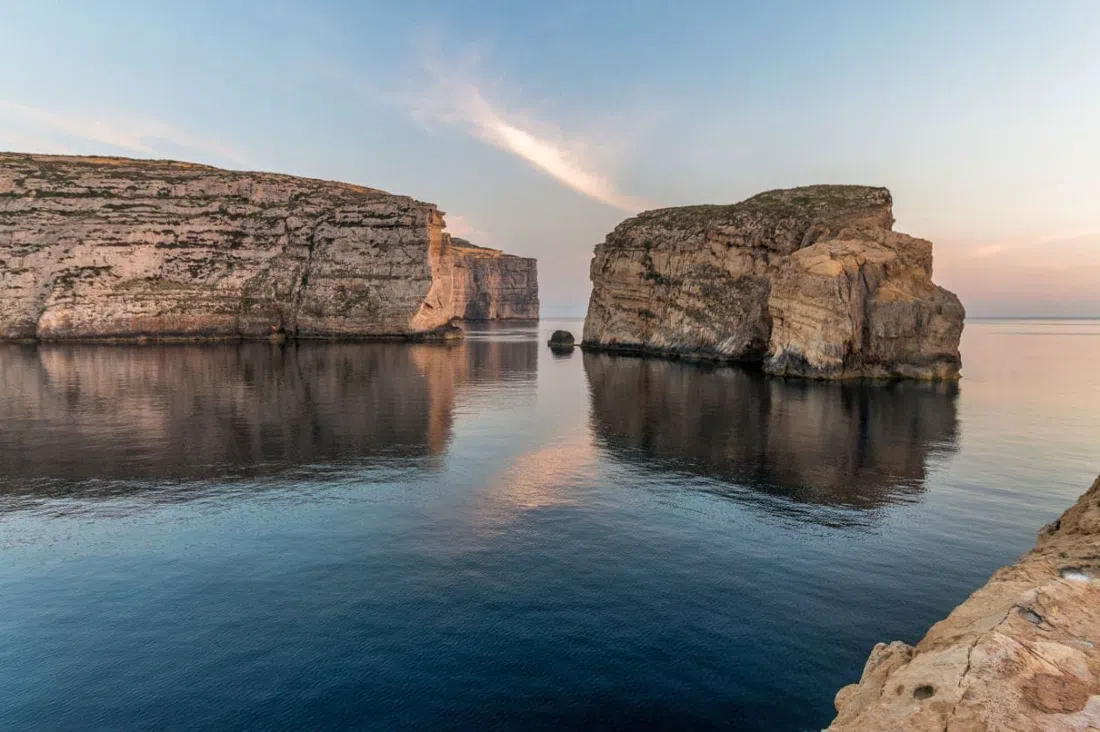
Dwejra on the west coast is the Inland Sea, Fungus Rock and the site where the Azure Window stood. It collapsed into the sea in 2017, so do not arrive expecting it. What remains is the run in a small wooden boat through the dark tunnel in the cliff and out into open Mediterranean, twenty to thirty minutes, about €4 to €10 per person, cash to the boatman, no booking. Each boat takes a handful of passengers, so groups ride in relays. The boats stop in rough weather, which is common in winter.
On the north coast, the Xwejni Salt Pans and the Leli tal-Melħ salt shop are a fifteen-minute stop that costs nothing. The Cini family have worked these pans for generations and will talk you through the harvest for free; a bag of hand-harvested sea salt is €3 to €8. The rock-cut shop holds only a few people at a time, and educational or group visits go by appointment. Scraping happens roughly May to August or September, so a summer visit sees salt actually being raked.
Ramla Bay and the Calypso Cave viewpoint in Xagħra is the red-sand beach and the clifftop platform above it. Free, with seasonal kiosks and sunbed hire in summer. The cave itself stays shut on safety grounds after geological movement, but the platform over it is open and that is where the photograph is. The lay-by is small, so convoys arrive in waves.
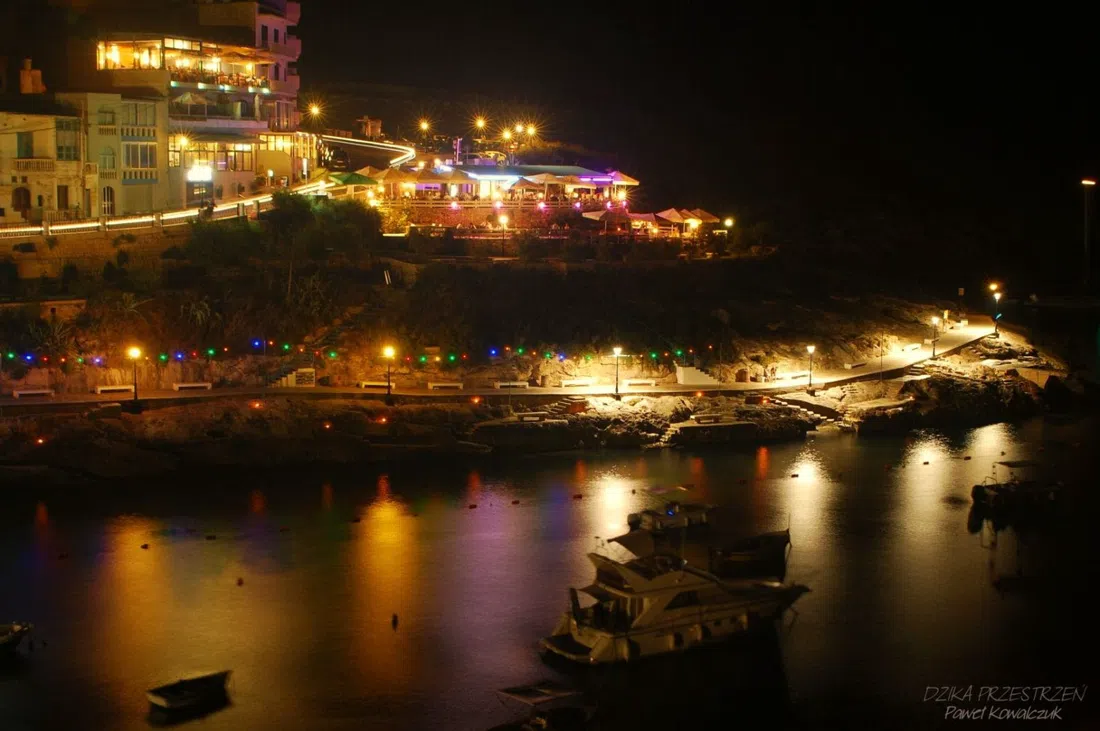
Xlendi Bay on the south-west coast is the swim stop that also feeds you: sheltered shallow water, cliff ledges for jumpers, and a promenade of restaurants facing west. A fish lunch runs €20 to €35 per person, and summer tables are best booked ahead. Parking at the bottom of the valley is tight for a convoy. This is where sunset routes end, rather than at Dwejra.
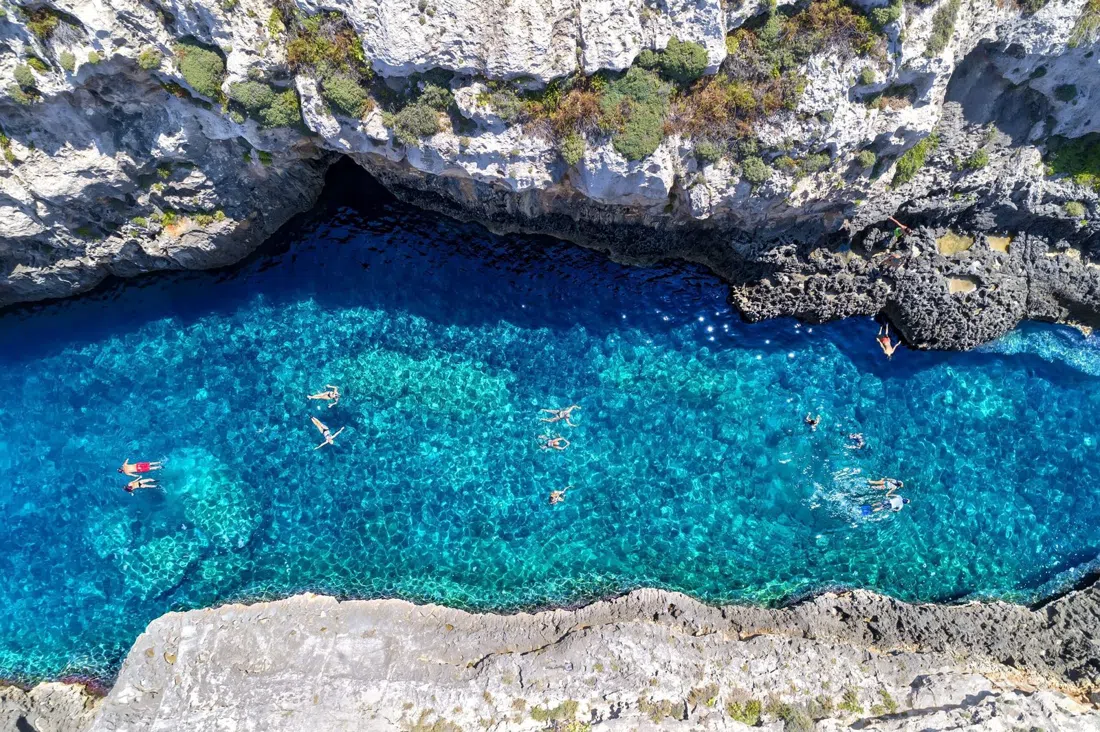
Wied il-Għasri, a narrow sea gorge on the north coast, is the quiet alternative to Ramla and the strongest snorkelling on that coast, but it is a poor fit for groups. Steep cut steps, a beach the size of a room, loose rock overhead, roadside space for a handful of vehicles, no lifeguard and no facilities. Go only when the sea is flat, bring water shoes, and skip it in swell.
Six seats, one vehicle and who that suits
The seating reality decides your day. Six forward-facing seats per tuk tuk is the hard number. If you book seats, you share with strangers and the route runs at the convoy's pace, which means the salt pans get fifteen minutes whether or not you wanted forty. If you book the whole vehicle (private whole-vehicle bookings are standard), the day runs at your pace, and you can trade the tower walk for a second swim or hold longer at the ramparts.
For two people, seats are the sensible buy. For four or more, the arithmetic on a whole vehicle is close enough that it is usually worth it. For anyone with mobility limits, be direct with the operator before you pay: the tuk tuk itself is a step up into an open cabin, the Comino landing is a boat transfer onto rock, and the tower walk is twenty minutes uphill.
Booking ahead versus turning up
The tour runs seven days a week, Monday through Sunday, which makes it easy to slot into a Valletta itinerary. It is also rated 4.7 out of 5 from 1,792 traveller reviews, and the booking platform flags it as likely to sell out, which means specific departures do go, not that whole months are gone. Other dates stay bookable.
Practically: book the vehicle or the seats a few days out in shoulder season, a week or two out in high summer, and book the Comino pass at the same time. The ferry does not need booking ahead in the same way, though the first sailings fill on cruise-call mornings.
Is it worth it
Yes, with one condition: it is worth it because of what it removes, not because a tuk tuk is inherently better than a car. For €90 to €100 you get the Comino boat, lunch, the transfers and a driver who knows which coast is sheltered today. Assembled yourself (ferry at €15 return, a hire car, a Comino boat at €25 to €40, lunch, the Ċittadella and Ġgantija tickets) you land in the same region, minus the local judgement and plus a day of parking in villages built for carts.
It suits first-timers, couples who want a full day without driving, families with older children, and anyone on a cruise call who needs a reliable return. It suits you less if you want long unhurried swims, if you burn easily and dislike open vehicles in July, or if you already know Gozo and only want Comino, in which case take the fast ferry and a standalone boat trip instead.
When to go
April to June and mid-September to early November are the strong windows: the sea is warm enough, the tower is open, Ġgantija still runs summer hours, and the Blue Lagoon is not at its cap. July and August work if you take the early Comino slot, 08:00 to 13:00, and accept that the lagoon shore will be busy by ten. Winter days are clear and cheap but Dwejra's boatmen often cannot run and the tower is shut from November.
Within a day, the pattern is consistent. First ferry out, Comino early, island loop afterwards, because the lagoon is calmest before mid-morning and the light on the ramparts is better late. If you are offered an afternoon Comino slot, take the inland stops first and treat the 13:30 to 17:30 window as your swim, ending west at Xlendi.
Practical notes
Transport: walk-on fast ferry from Valletta, about €7.50 one way and €15 return, roughly forty-five minutes. No cars. The tuk tuk collects and returns at Mġarr Harbour.
Cash: carry €30 to €50 in small notes. The Dwejra boatmen take cash only, the salt shop is a few euro, and kiosk drinks and deckchair hire on Comino are the real cost of the lagoon day.
Timing: about seven hours on the island plus the crossings, so a 12-hour day from a Valletta hotel. Do not book anything in Valletta before 20:00.
Budget: €90 to €100 per person for the all-inclusive day with the Comino boat and lunch, €25 per person deposit; add €5 for the Ċittadella combo and €10 for Ġgantija if those are not included in your route, plus €4 to €10 for the Dwejra tunnel.
Bring: sun cover you can wear in an open vehicle, water shoes, something that covers shoulders and knees for the cathedral and Ta' Pinu, and the Comino QR code either printed or downloaded, because signal at the disembarkation point is unreliable.
For where to base yourself before the early ferry, start with the Valletta hotel search, and for the rest of the city around it, the Valletta guide covers what to do with the evening you come back to.