
The ferry across the Grand Harbour takes about ten minutes and costs €3. On the far side the noise of Valletta stops, and you step onto a stone quay beneath three walled towns that most visitors see through a coach window, on a clock somebody else set. You do not have to see them that way.
What you are crossing to
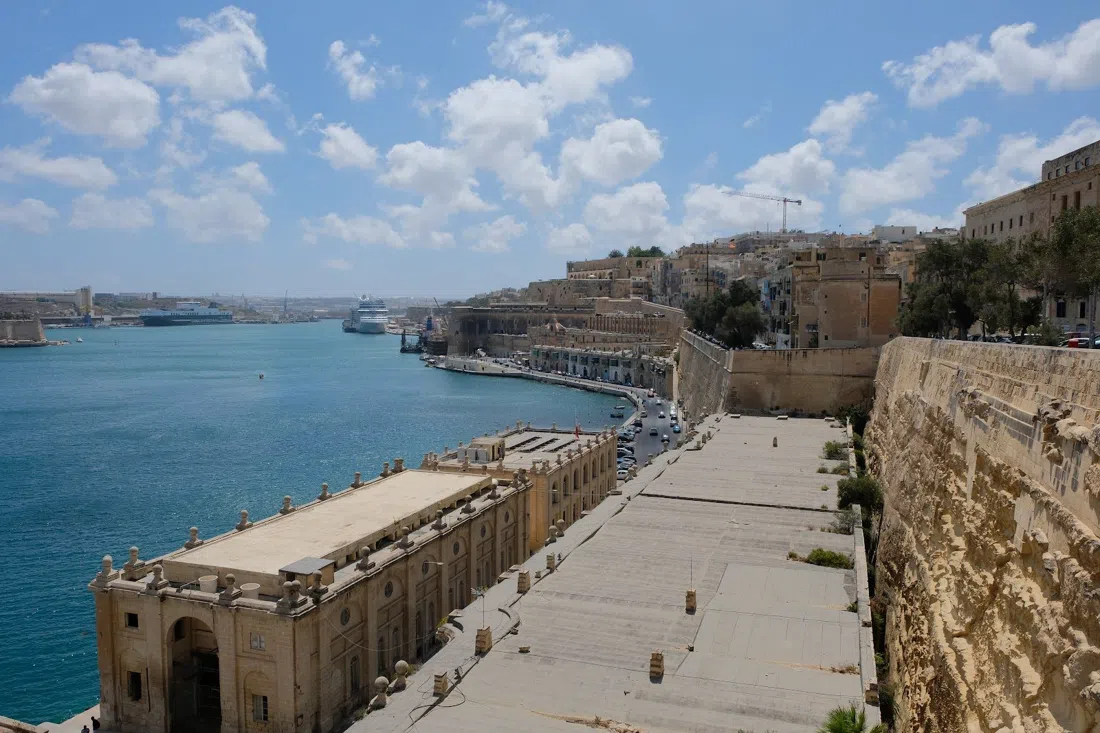
Three fortified towns sit directly opposite Valletta: Birgu (also called Vittoriosa), Senglea (Isla) and Bormla (Cospicua). Birgu and Senglea are two narrow fingers of rock pointing back at the capital with a creek between them; Bormla fills the ground behind, and that is the part that climbs. This was the Order of St John's base before Valletta existed, which is why the oldest church and the oldest fort in the harbour are here rather than across the water. The whole visit is walkable: one flat waterfront, one hill and a handful of lane-width streets. Everything below is within a kilometre or so of the ferry landing except one science centre round the headland. If you want the capital-side context first, the Valletta guide covers it.
Getting across the water
The Valletta–Three Cities Ferry (Valletta Ferry Services, from the harbour landing below the Valletta bastions) is the simplest way in. It is walk-on, takes no booking, runs every 15 to 30 minutes and crosses in about ten minutes. A single is €3, a return €5; children pay €1 single and €1.50 return; from 19:30 the night fare is €3.50 single. The terminal is a few minutes' walk from the cruise quay, which matters if your day has a hard end time. A group of thirty should split across two departures, because a party that size fills a sailing and leaves stragglers behind.
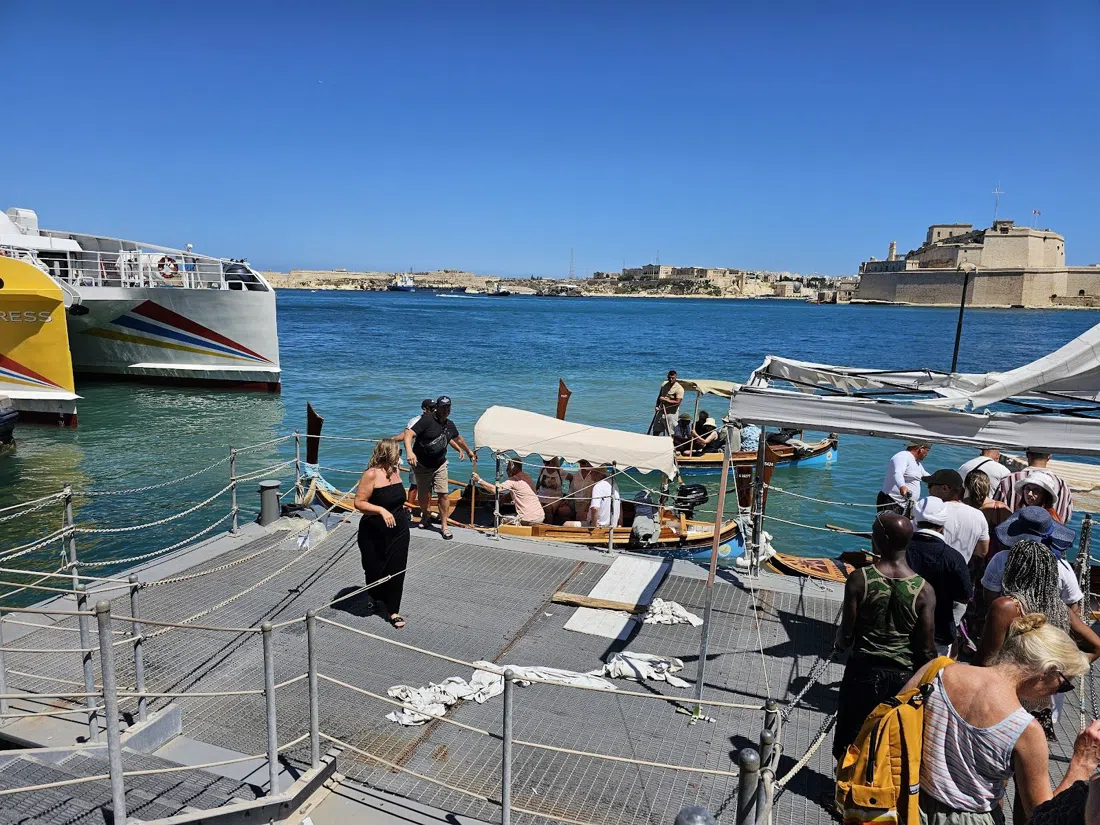
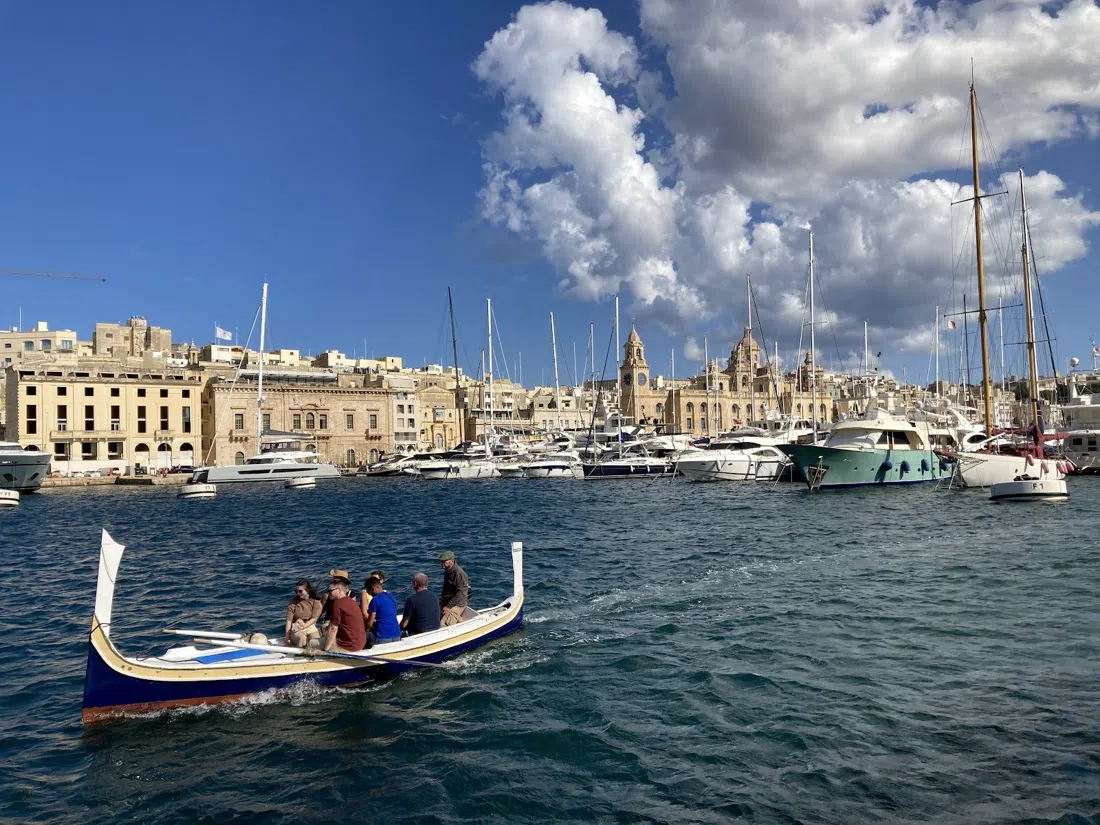
The slower option is a dgħajsa water taxi, run by the boatmen's cooperative Koperattiva tal-Barklori (Grand Harbour Tours) from the harbour quays. A crossing runs roughly €2 to €3 per person; a short harbour tour is about €8 each. Agree the fare before you step in and ask for the public rate rather than the first number quoted. It is the only way to see the creek walls from the waterline. The cooperative handles groups and private charters, weddings included, if you need more than one boatload, which has to be arranged ahead.
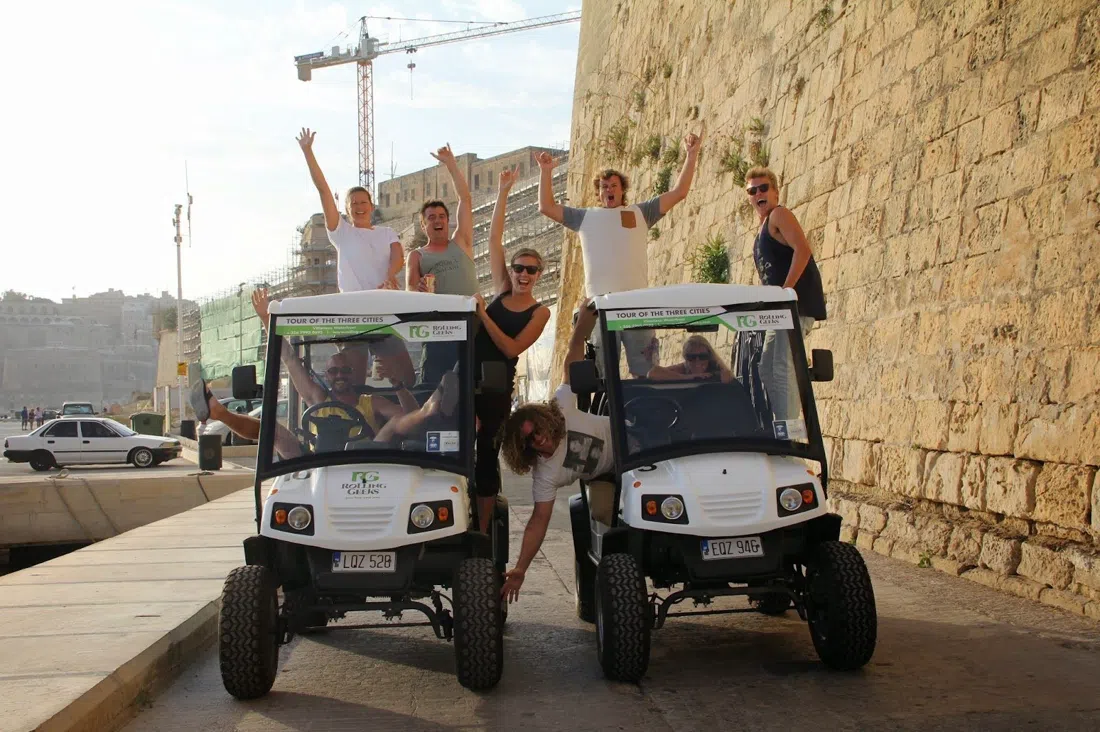
If steps and gradients are the problem, Rolling Geeks (self-drive electric cars, Birgu waterfront) is the honest fix. Two adults plus two under-12s per car, 300kg total, €95 per car for 2.5 hours or €80 for the short tour, €25 for each extra hour and €10 more per third or fourth passenger. Multilingual commentary plays as you drive, and the route covers all three towns in about 90 minutes of driving, including the hill between Bormla and Senglea that otherwise eats twenty minutes and a change of shirt. The driver must be 21 to 75 with a licence. The fleet is small, so pre-book and confirm your slot by phone before turning up. Larger parties convoy in several cars.
The flat spine of Birgu
From the landing, the Birgu Waterfront and Grand Harbour Marina (Birgu) runs along the creek to the foot of the fort without a single flight of steps, roughly ten minutes at a walking pace and shaded for much of it. This was the Knights' galley arsenal; it now berths yachts up to 100 metres, and the café terraces along it are where groups regroup when they have scattered. It costs nothing and it is the one stretch that suits wheels, luggage and tired knees.
Two minutes uphill from the waterfront, between the quay and Victory Square, is the Collegiate Church of St Lawrence (Birgu). It was the Order's first conventual church and it is free to enter. It is also a working parish church: cover shoulders and knees, expect it to be shut around services, and if you are with a group, go in quietly and outside Mass or feast preparations, with no guided commentary inside.
The lanes behind the waterfront
Il-Collachio and the Norman House (Birgu) is the knights' original quarter and the part of the town that still feels lived-in rather than curated: washing overhead, cats, doorways of houses people actually occupy. It is free and self-guided, and it is the piece of the day that rewards no plan at all. Two practical notes. The lanes are single-file in places, so a large group stretches out badly and is better split into small parties; and the cobbles and gradients want proper shoes. The light is best early or late, when the stone goes gold and the lanes are not a heat trap.
The three paid sites
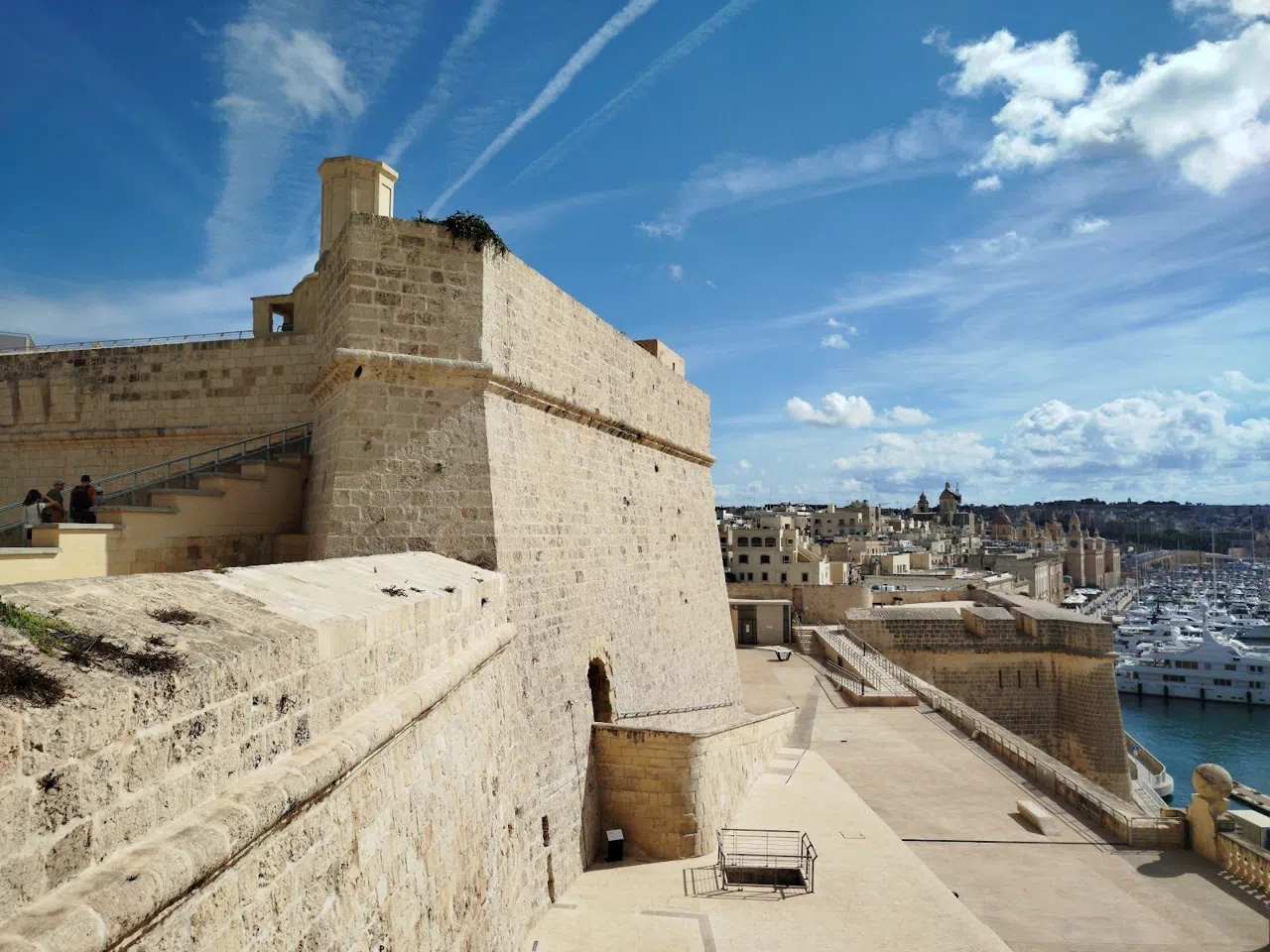
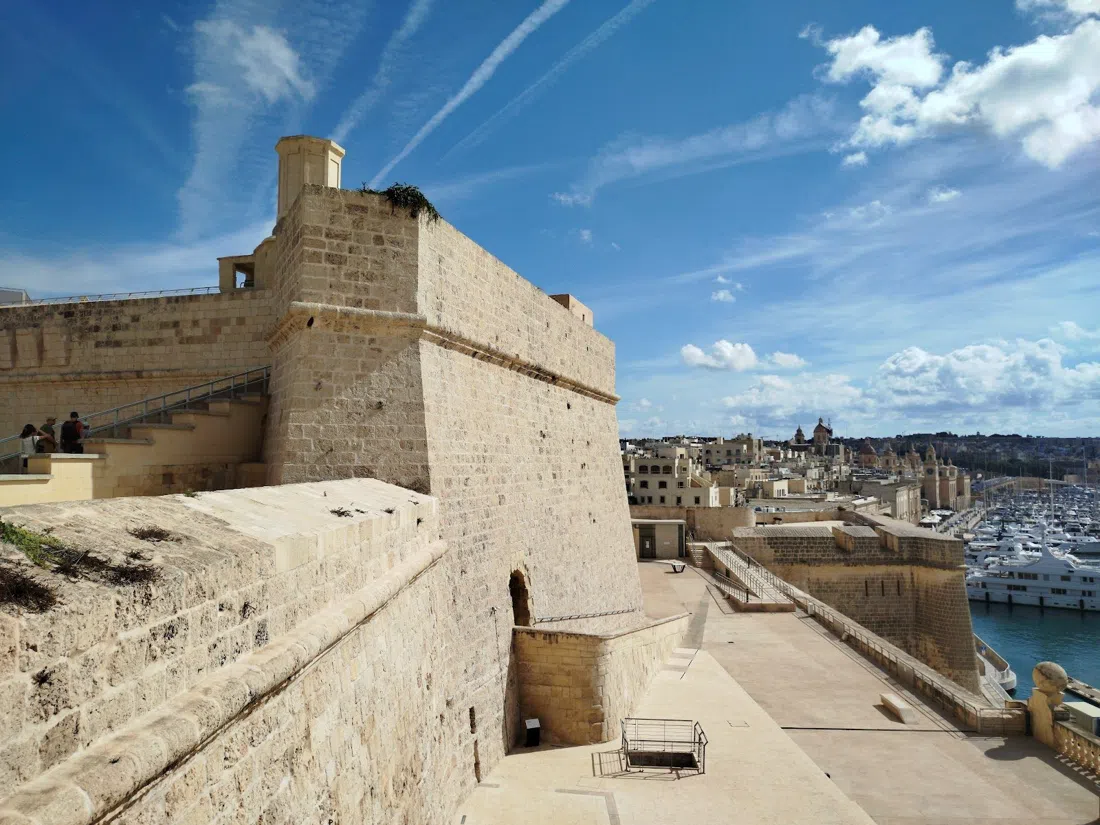
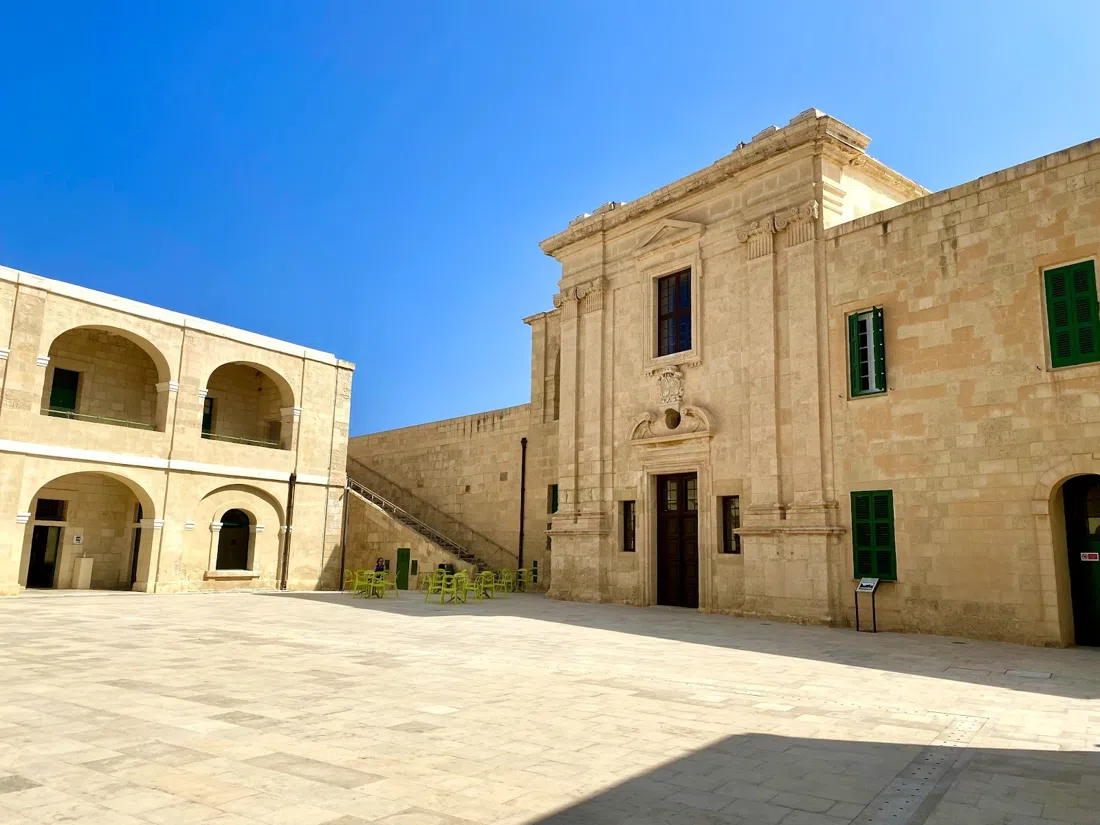
Fort St Angelo (Birgu) is the anchor of the visit and the one paid site worth the money even on a short day. Entry is €10 adult, €6 youth, senior or student, €4 child aged 6 to 11, free under 6. Allow two hours. Heritage Malta runs guided tours on request through their booking form. If you want a guide, book the guide and not just the tickets, because cruise groups here are routine and guides are the thing that runs out. Know before you commit that the upper fort is reached by steps only; an electric buggy assists in fair weather but not in bad.
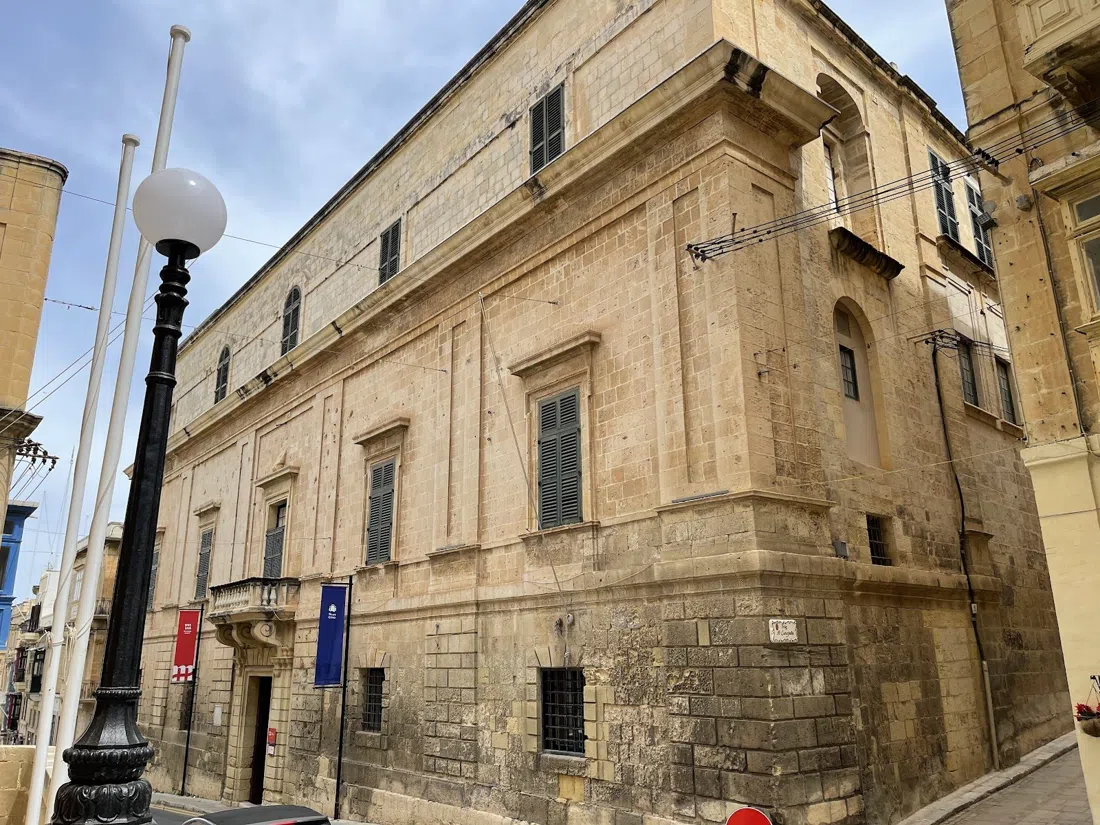
Inquisitor's Palace (National Museum of Ethnography) (Birgu) costs €3 to €6 depending on age band, and the ticket also covers the Birgu Old Armoury space. It is the only surviving inquisitor's palace in Europe open to the public: tribunal room, cells and kitchens from a court that sat here for centuries. Forty-five to sixty minutes is enough. The rooms are small and the stairs are tight, so a group of 10 to 15 works if you split it into halves and a full coach at once does not. It is also the best indoor fallback when the harbour wind is up and the bastions are unpleasant.
Malta at War Museum (Birgu) charges €14 adult, €12 senior, €7 child aged 5 to 15 and €28 for a family, with explicit group rates for ten or more if you pre-book, plus audio-guide and meal-deal discounts. The museum above ground is conventional; the reason to come is the rock-hewn shelter under the counterguard, cut by hand and lived in during the bombing. It is cold down there and the floor is uneven underfoot, so bring a layer and wear something with grip. It is closed on Sundays, so if Sunday is your only day, plan the rest of the walk around that.
Round the creek to Senglea
People give up on Senglea because of the geography: to walk from Birgu to Senglea you go round the head of the creek through Bormla, which means down and then up. It is perhaps twenty-five minutes on foot and steep in the middle. A water taxi across the creek or an electric car removes the climb entirely.
What is at the end is Gardjola Gardens and the Vedette (Senglea), an open public garden with no door policy, free, and the stone watchtower carved with an eye and an ear on the point. The view takes in Valletta, the harbour mouth and both creeks at once, and it is the photograph everyone leaves with. The tower platform holds only a few people, so groups queue for their turn. Ramps make both the garden and the tower steps wheelchair-accessible, which is rare here. Across the water, the Saluting Battery fires at noon and 16:00; if you want the bang, stand here for it.
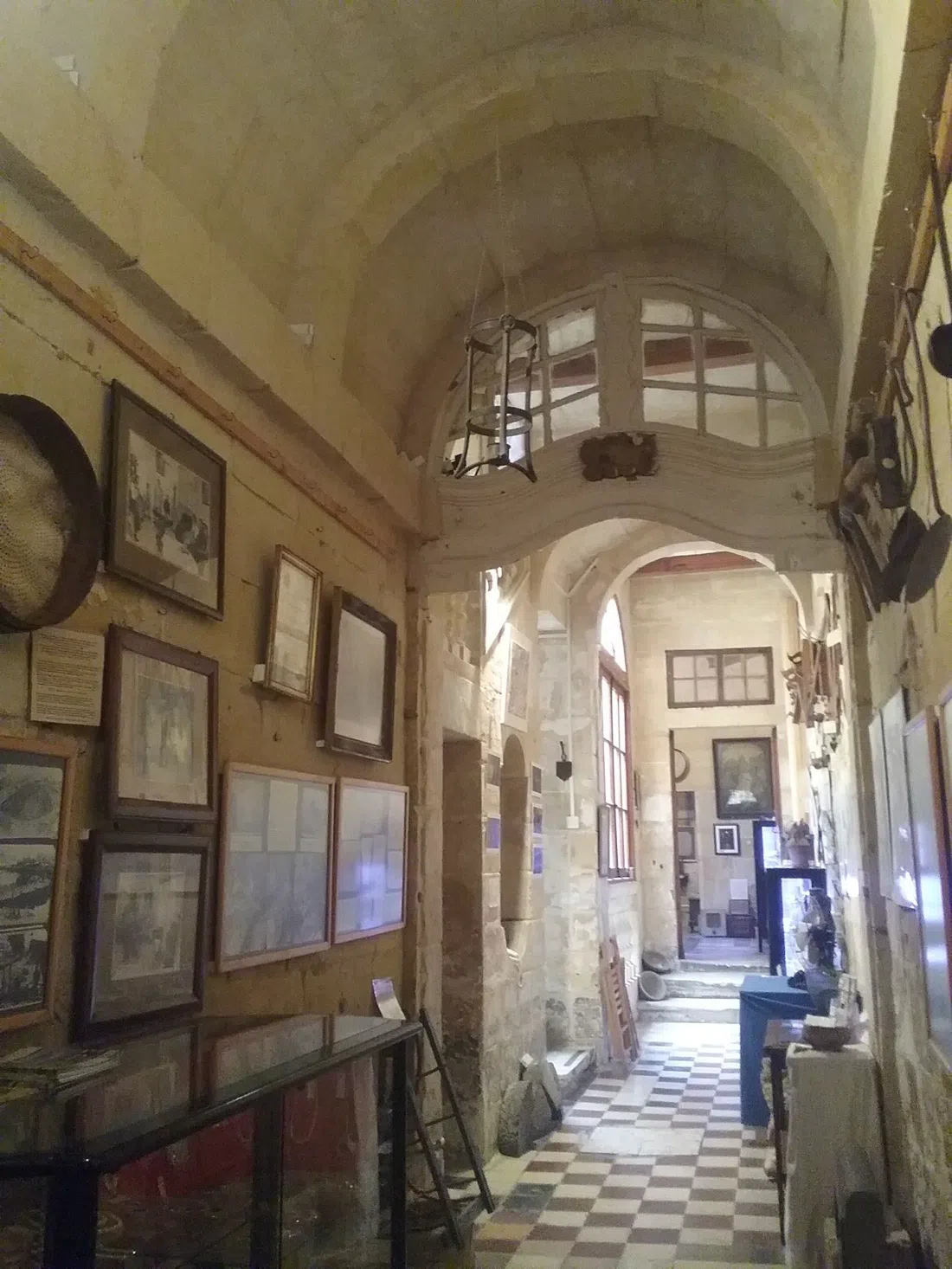
In Bormla itself, Bir Mula Heritage (Bormla) is a small private house museum of local social history and the one real reason to walk up into the town. It opens Saturday and Sunday from 10:00 to 12:00 or otherwise by appointment, the entry fee is small and confirmed on arrival, and groups are by appointment only and must be small. Check before you climb the hill, because it is a steep walk to find a locked door.
A short walk round into Kalkara, just outside the Three Cities proper, is Esplora Interactive Science Centre (Kalkara). Adult entry is about €15 to €17 with concessions and family rates. It is purpose-built for groups, with dedicated school and group booking lines and packages for larger parties, and it is the single thing in this area that will hold a bored child for two hours. Book planetarium slots online, because they sell out.

Eating without a reservation panic
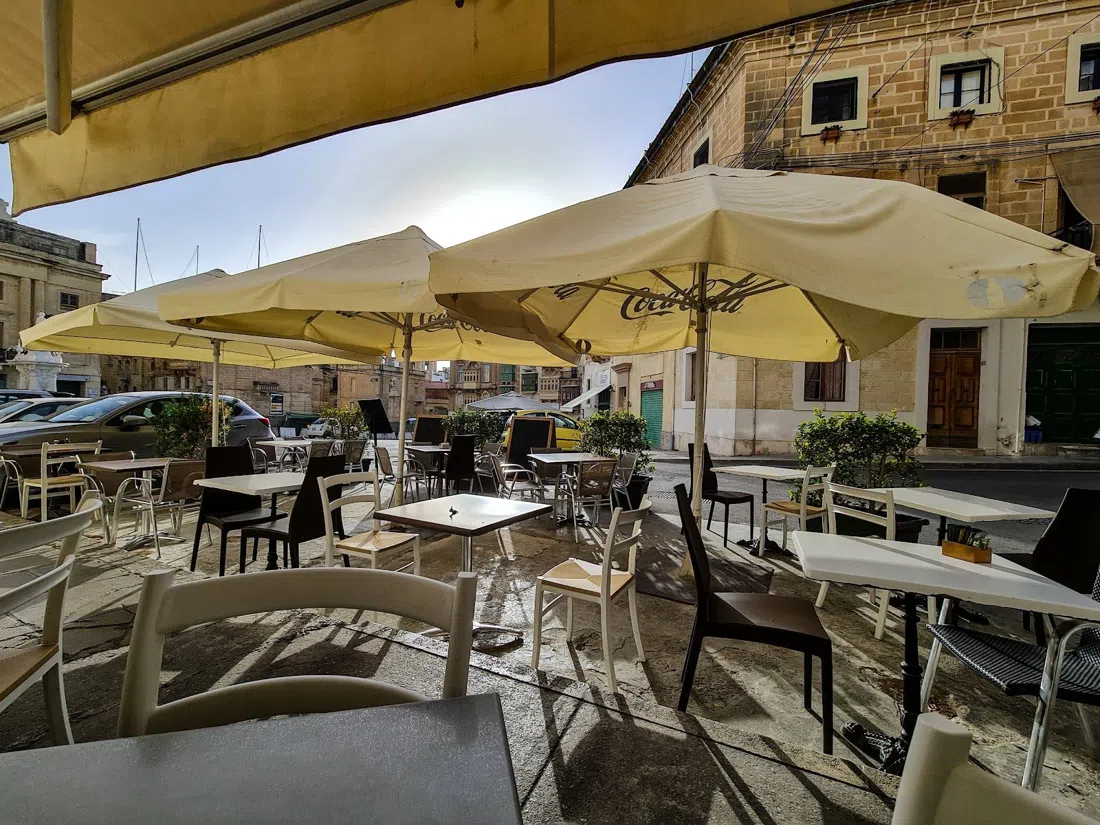
Café du Brazil (Birgu, on the main square) has been on the square since the 1950s and opens at 06:30, which makes it the obvious first stop off an early ferry. Coffee, pastries and light plates run €3 to €12. There are no bookings and the outdoor tables go fast, so anything over six people ends up split across tables. Treat it as good espresso, imqaret and Maltese snacks rather than a meal you build the day around.
Don Berto (Birgu waterfront) is the dependable middle of the road: pizza, pasta and grills, mains roughly €12 to €25, open all day from 12:00 with an evening service. It is family-friendly, used to large parties, and the one place that will seat a mixed group without fuss. Phone for same-day; pre-book for a group.
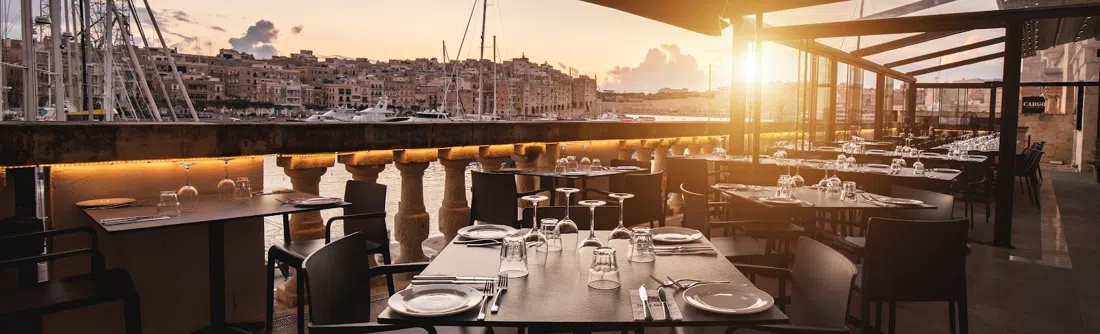
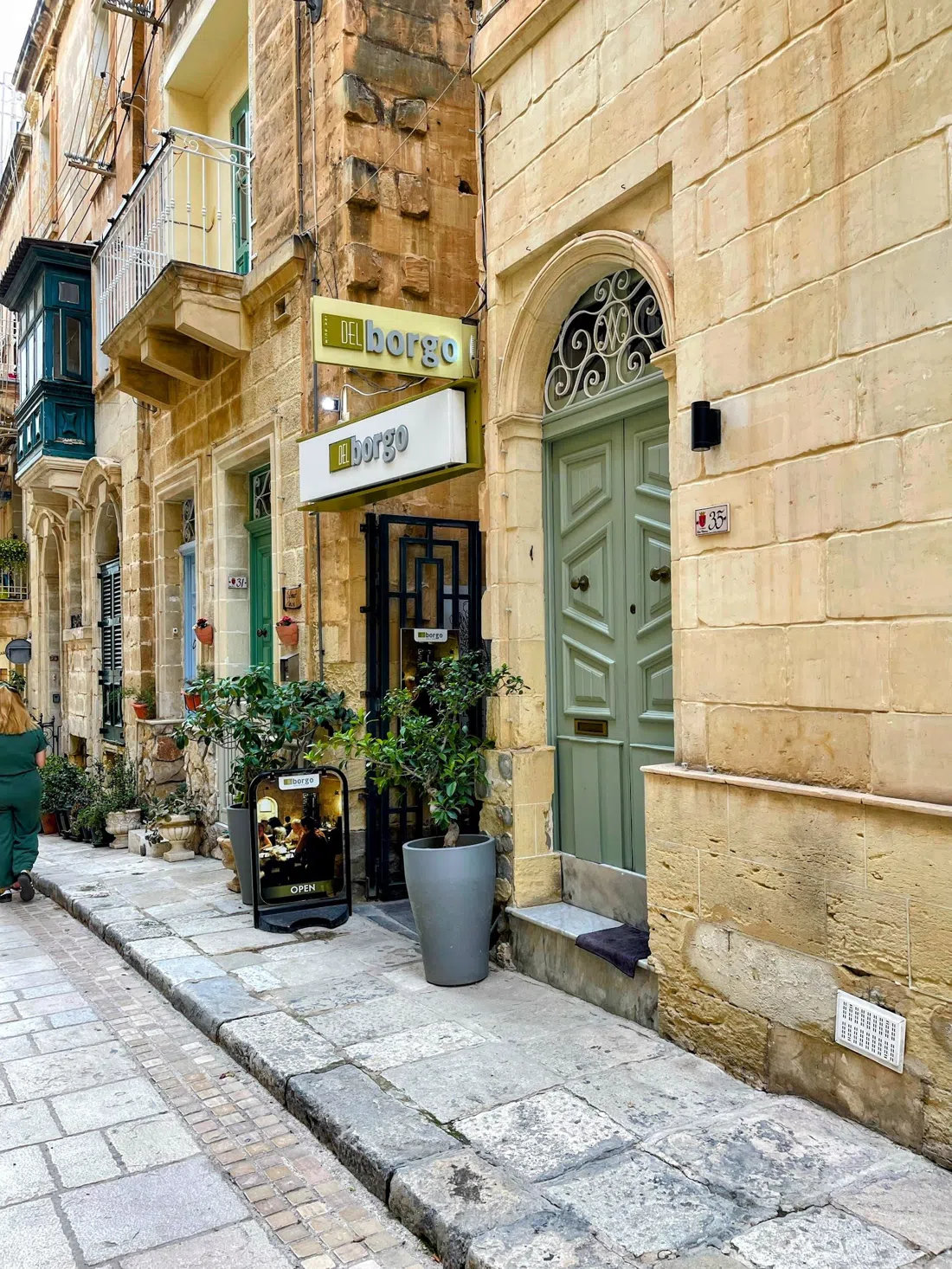
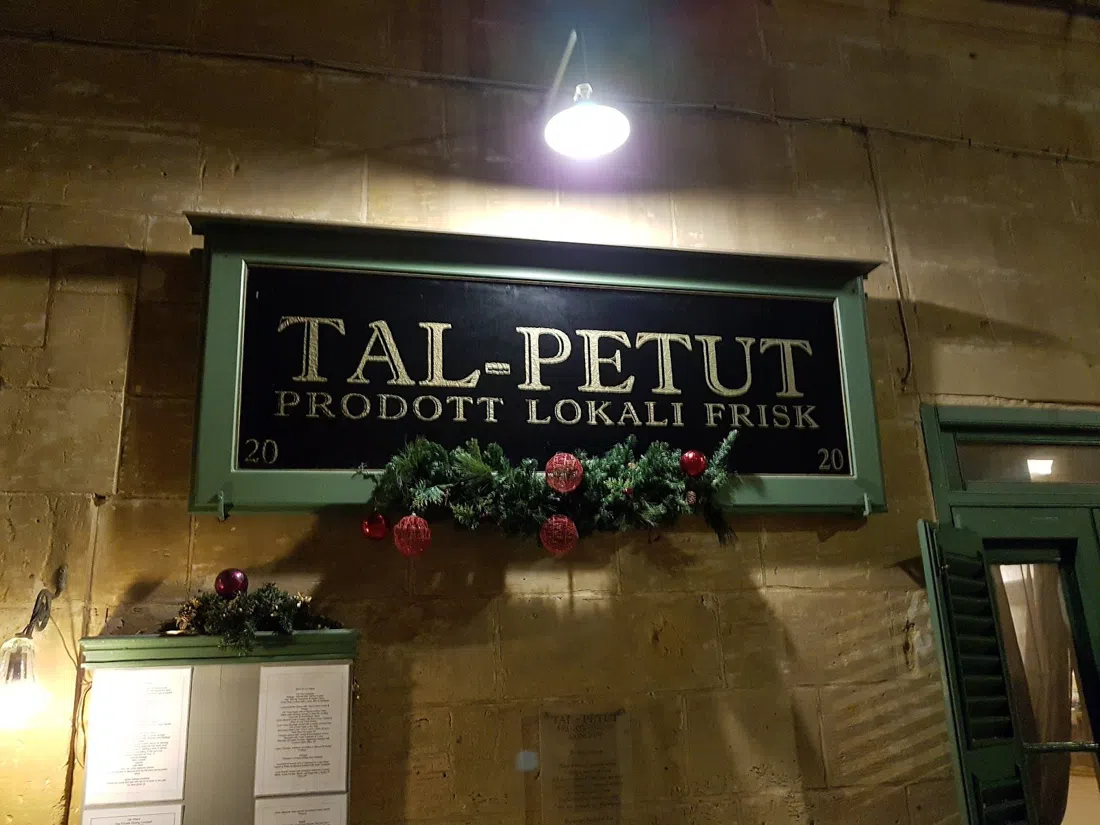
Two places are worth staying the night for rather than squeezing into a shore day. Del Borgo (Birgu) is a wine bar and shop with over 300 wines in cellar rooms that were once the Prince of Wales music club's; €15 to €30 a head for wine and platters, evenings only, and the rooms suit a group of up to a dozen. Call ahead, because it fills quickly once Birgu's evening starts. Tal-Petut (Birgu) is private home dining: about €45 per head for a three-course sharing meal, evenings only, Monday to Saturday, one party at a time. There is no printed menu. You agree the food with the host from whatever was good at market that morning. The whole house can be reserved, which makes it excellent for a private dinner and impossible as a walk-in. Arrange it in advance by phone or email. If an evening here appeals, run a Valletta hotel search and take the late ferry back across at the €3.50 night fare.
Doors, steps and who struggles
Nothing here has a dress code beyond the church, and nothing turns you away for arriving alone. The constraints are physical rather than social. Steps: the upper fort, full stop. Narrow stairs: the Inquisitor's Palace. Cold and uneven floor: the war shelter. Gradient: the lanes of Il-Collachio and the route through Bormla. The waterfront, the marina and the Gardjola Gardens are the accessible core, and you can build a good two hours out of those three alone. Groups over about fifteen should assume they will be splitting in halves at the indoor sites and convoying if they drive.
Booking ahead or turning up
For two people, almost all of this is a turn-up day. The ferry takes no booking, the fort, the palace and the war museum sell tickets at the door, and the gardens, the lanes, the church and the waterfront cost nothing. Book ahead only for the things that run out: a Heritage Malta guide at the fort, a Rolling Geeks car, a group rate at the war museum, a table at Tal-Petut, an appointment at Bir Mula, and a planetarium slot at Esplora.
A guided option exists too, and it is attached to this page rather than described here. The comparison is money against effort: there are 1,296 traveller reviews across the bookable tours covering this area, with the top-rated one at 4.9 out of 5 from 649 reviews, and prices start from 337 USD per person. Doing it yourself (ferry, fort, palace, lunch) comes to well under €40 a head. Pay for a tour if you want transport, commentary and someone else watching the clock; do not pay for it to skip queues you would not have met anyway.
Best time to go
Early is better than late, and not only for crowds. Café du Brazil is open from 06:30, the lanes of Il-Collachio photograph best in low light, and the bastions are exposed with no shade once the sun is high. A first ferry across, the waterfront, the fort at opening and an early lunch is a complete morning and leaves the afternoon free.
Day of the week decides the order more than the season does. The war museum is closed on Sundays. Bir Mula Heritage opens only Saturday and Sunday from 10:00 to 12:00, or by appointment. Del Borgo and Tal-Petut are evenings only, Tal-Petut Monday to Saturday. If you want the Saluting Battery to fire while you are standing at the Vedette, be there at noon or 16:00.
Weather changes the plan rather than cancelling it. When the harbour wind is up, the open bastions and the tower platform are unpleasant and the Inquisitor's Palace is the right call; the electric buggy that assists on the way up to the upper fort runs in fair weather, not in bad. The guided tours here run seven days a week, so a dud forecast is not a reason to lose the day. Swap outdoors for indoors and keep going.
Is it worth it
Yes, with one condition: give it half a day rather than ninety minutes. Fort St Angelo and the lanes behind it are the best hours in the harbour, and the crossing itself is worth the €3 on its own. It suits independent walkers, anyone with an interest in siege history, couples who want an evening with no queue, and families, provided you accept that small children will care about the boat and the science centre more than the tribunal room. It suits you less if you cannot manage steps and gradients without help, or if you have under two hours ashore, in which case do the ferry, the waterfront and the Vedette and leave the museums for a return trip.
Practical notes
Transport. Ferry €3 single, €5 return, €1 and €1.50 for children, €3.50 single after 19:30; every 15 to 30 minutes, about ten minutes across, no booking. Water taxi roughly €2 to €3 for a crossing, about €8 each for a short harbour tour, fare agreed before boarding. Electric car hire from €80 for the short tour, pre-booked and confirmed by phone.
Cash. Malta uses the euro. Cards are normal at the museums and restaurants; carry small notes for the water taxi, the café and the entry fee at Bir Mula.
Timing. Two hours for Fort St Angelo, 45 to 60 minutes for the Inquisitor's Palace, about an hour for the war museum, ten minutes at the Vedette and as long as you like in the lanes. Half a day covers the fort, one museum, the lanes and lunch comfortably.
Budget. Two adults doing it independently: €10 return on the ferry, €20 for the fort, €12 for the palace, €25 to €40 for lunch at the waterfront. Call it €70 to €85 for the pair, before anything you choose to add.
Wear. Shoes with grip, a layer for the shelter, and something that covers shoulders and knees if you plan to step into the church.