The Valletta issue
Notte Bianca in Valletta Without the Republic Street Crush
Notte Bianca falls on Saturday 3 October 2026. This is the order to walk Valletta in, which doors are free, and where a group can still eat at 23:00.

By Robin de VriesSlow days across Valletta's streets
Valletta runs about a kilometre from City Gate to the tip at Fort St Elmo, and some six hundred metres across at its widest, so on an ordinary evening you can walk the whole grid in a quarter of an hour. On Notte Bianca, Saturday 3 October 2026, the same walk takes an hour, because the buildings that normally keep office hours are open and their queues are standing in the street. Nothing on the free programme can be booked, so the only thing you control is the order you do it in.
Do the ticketed interiors in daylight
Two of the interiors people come to Valletta for are not part of the free night, and both shut long before it begins.
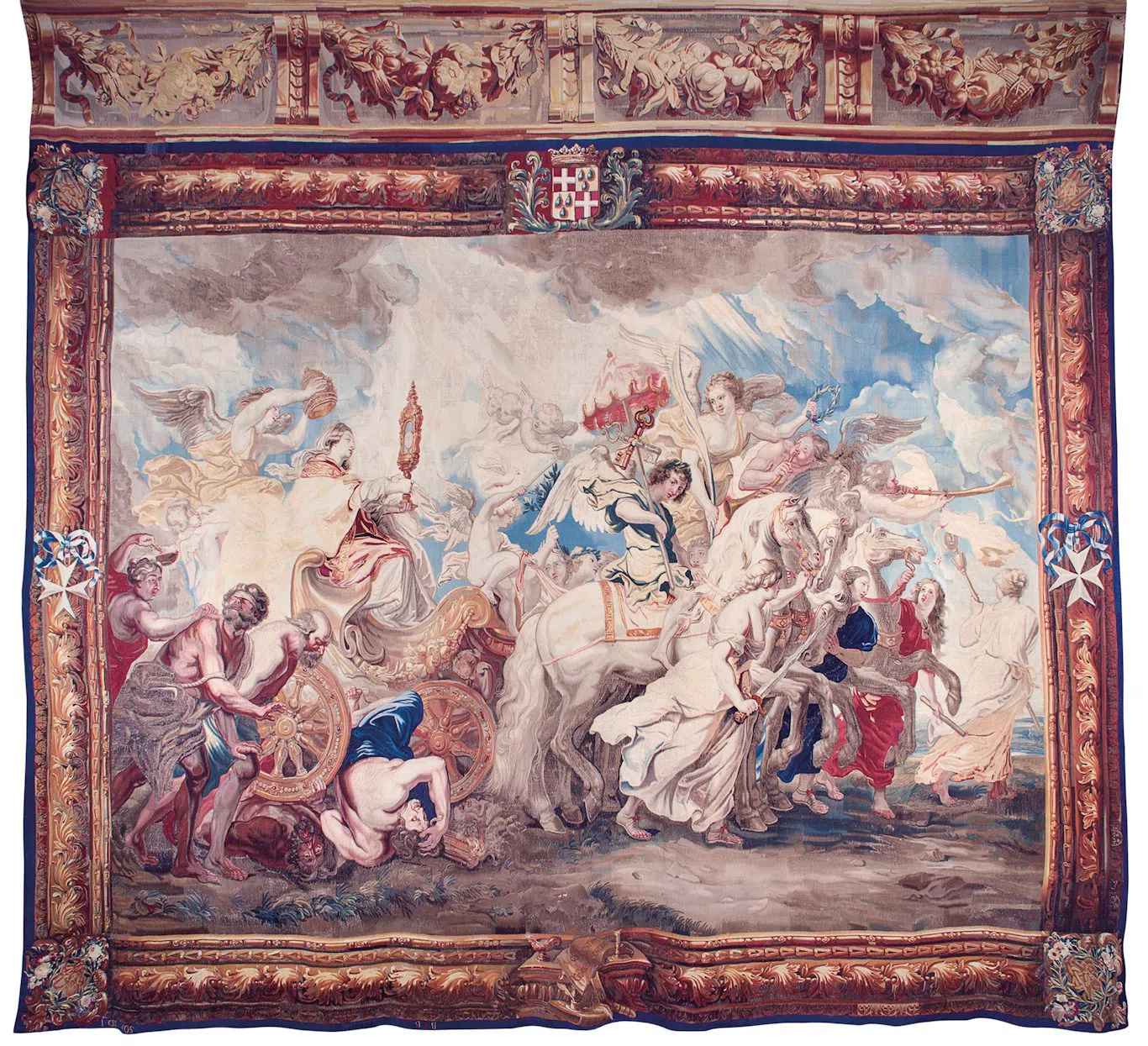
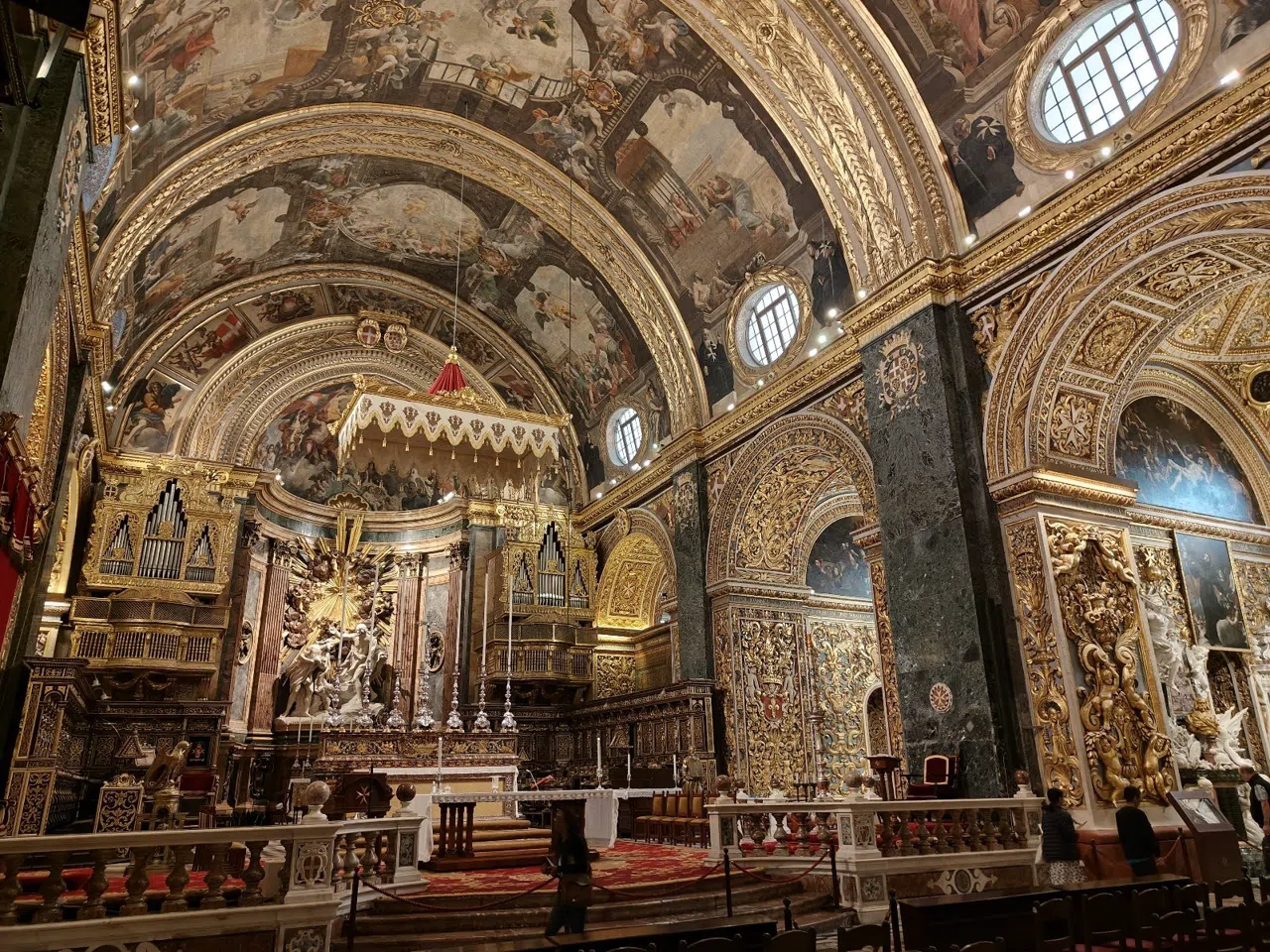
St John's Co-Cathedral (St John's Square, off Republic Street, three minutes inside City Gate) takes its last admission at 16:00 and closes on Sundays and public holidays. Adult entry is around €15 and includes an audio guide in eleven languages. It is a working cathedral and it is not reliably part of the Notte Bianca programme, so treat it as a daytime commitment rather than something you might squeeze in later. Allow an hour and a quarter: the nave first, then the Oratory with the Caravaggio, which is where everyone slows down. Groups are welcome and the audio guides let people move at their own pace, but the side chapels are narrow and a party of ten will end up strung out across three of them. On 3 October, be at the ticket desk by 14:00; the queue thickens through the afternoon as people arrive early for the evening.

Casa Rocca Piccola (74 Republic Street, in the lower third of the grid, roughly 700 m from the gate) runs 45-minute guided tours on the hour in English, at about €12, and is closed on Sundays. The format is small-group by design and each slot is capped, so anything above six people needs to be pre-booked rather than turned up with. It is still the de Piro family home, which is why it reads as a house and not a museum. The wartime shelters cut into the rock below are the part visitors remember, and they are genuinely tight and low, worth saying to anyone in your group who would rather stay upstairs. A 15:00 or 16:00 tour leaves you at the quiet end of Republic Street with an hour in hand.
Plan your Valletta trip
Live prices from our booking partners.
Free cancellation on many rooms. We may earn a commission when you book.
Start at the City Gate end before the queues form
The two stops worth making in the first hour are both within 200 m of the gate, which matters when the middle of the city is still filling up.
National Museum of Archaeology (Auberge de Provence, Republic Street, about 150 m inside City Gate) costs €5 on a normal day, opens 09:00 to 18:00 from March to December, and runs free with extended hours on the night. You can do it properly in forty minutes, and that is the point: on an evening when everything else has a line, a museum you can finish is the right thing to start with. The prehistoric temple rooms are on the ground floor. Heritage Malta sites take groups without fuss.

Spazju Kreattiv (St James Cavalier, on the bastion beside Castille Place) is the contemporary counterweight to all the baroque. Gallery entry is free year-round, the arthouse cinema is around €7 with a limited number of seats, and the programme runs late on festival night. The roof terrace is the first place in this walk where you can sit down and hear a conversation, so note where it is now and come back to it when you need it.
The one queue worth standing in
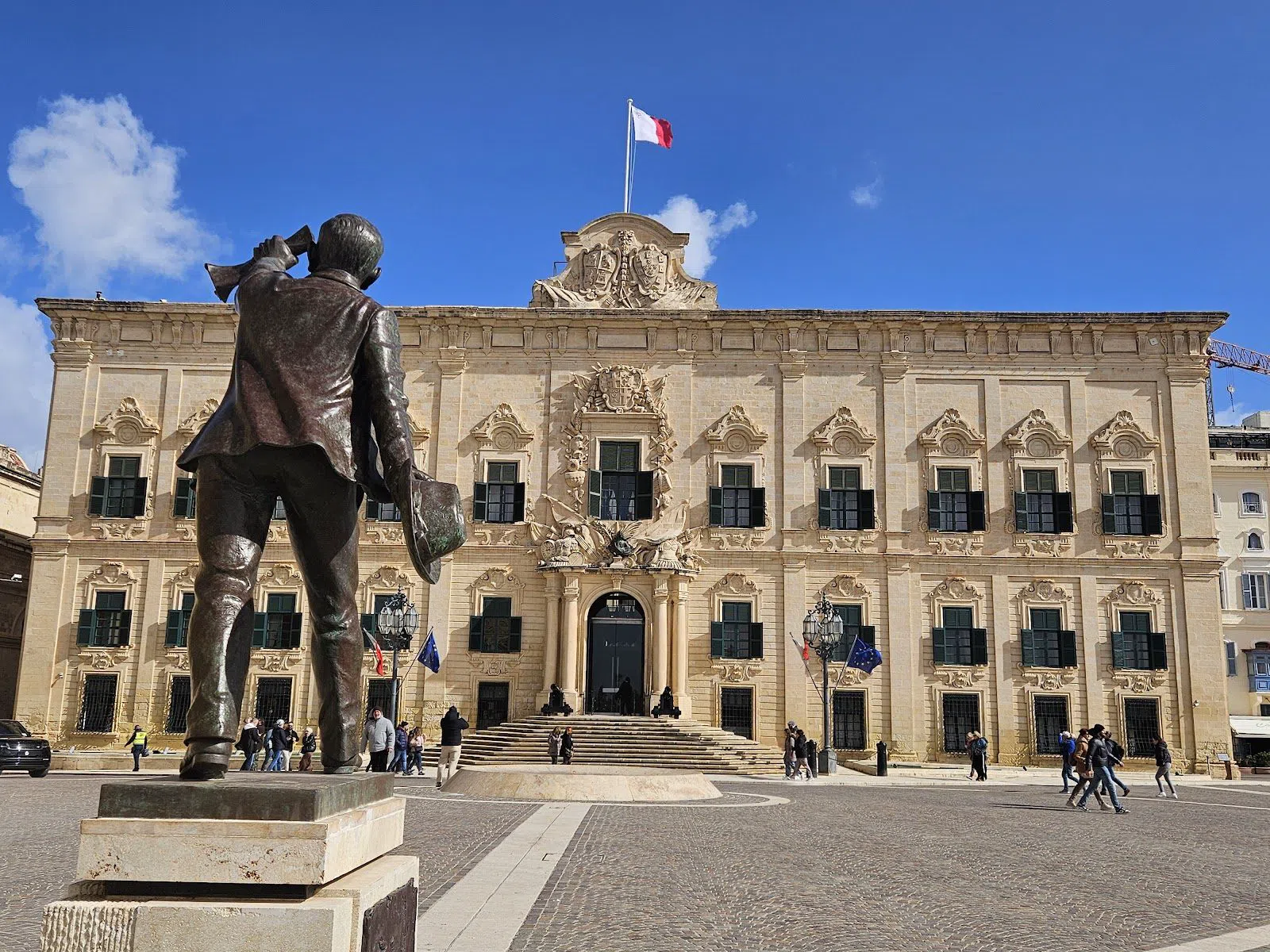
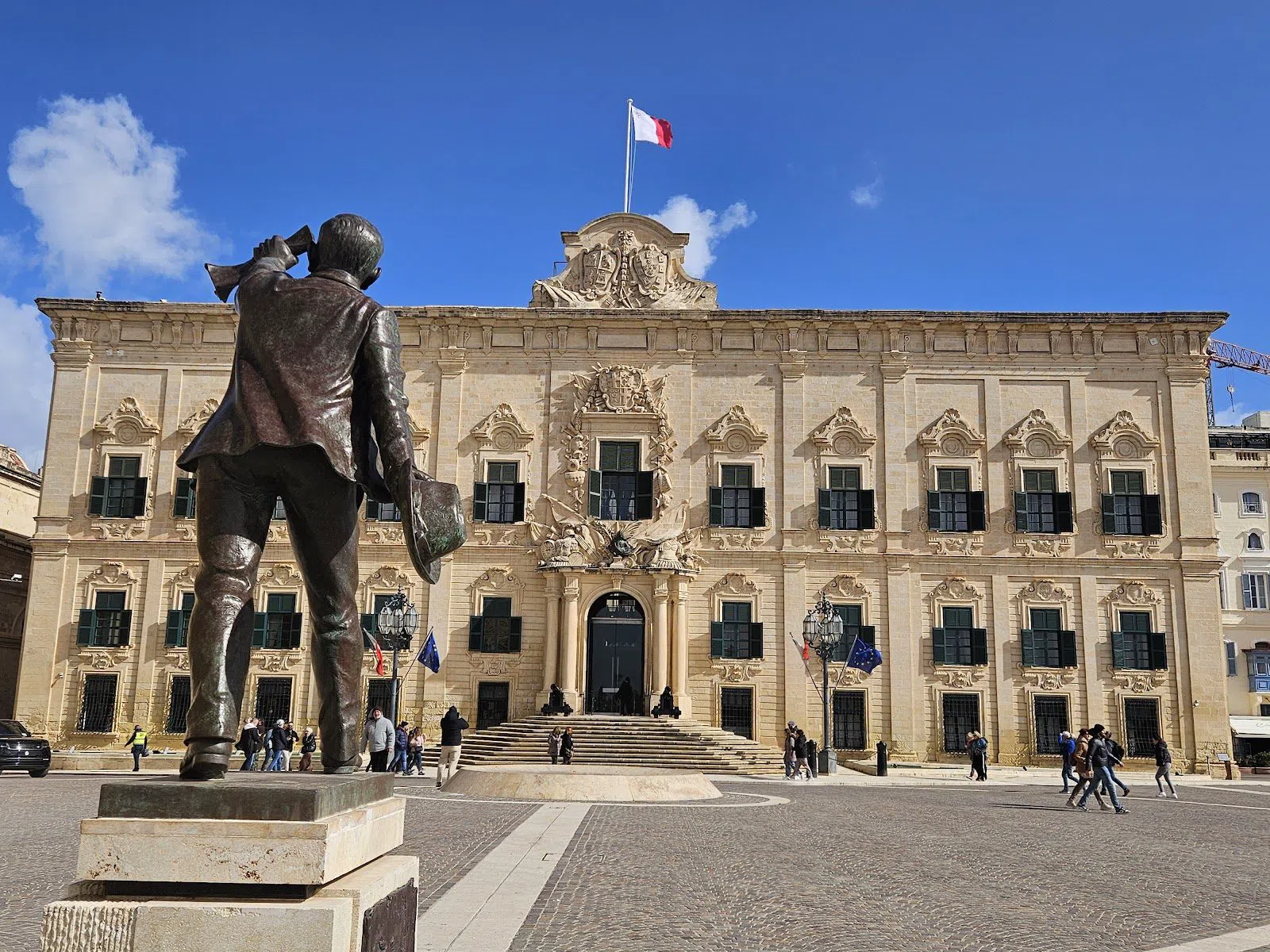
Auberge de Castille (Castille Place, 300 m from City Gate up a gentle rise) is the Office of the Prime Minister for the rest of the year. Notte Bianca is essentially the one night it opens to the public, entry is free, there is no booking of any kind, and you join a walk-up queue that builds fast after 19:00. Groups are fine in the sense that nobody counts you, but you file through the state rooms in single line and you will not be talking to each other while you do it. So decide early: either be in the queue before 19:00, or leave it until late and accept that entry may close before you reach the door. Do not try to hold places for people arriving in twenty minutes; the line is dense and it does not work.
Upper Barrakka Gardens and the Saluting Battery (above Castille Place, two minutes further on) are free, unlimited in group size, and normally open 07:00 to 22:00, with the hours usually stretched for the festival. This is where the children's programme tends to be pitched and it is the obvious place to agree to meet if your group splits, because everyone can find it without a map. The battery below is separately ticketed at about €3 and the cannon fires at noon and 16:00, which puts the firing squarely in your daytime plan rather than your night one.
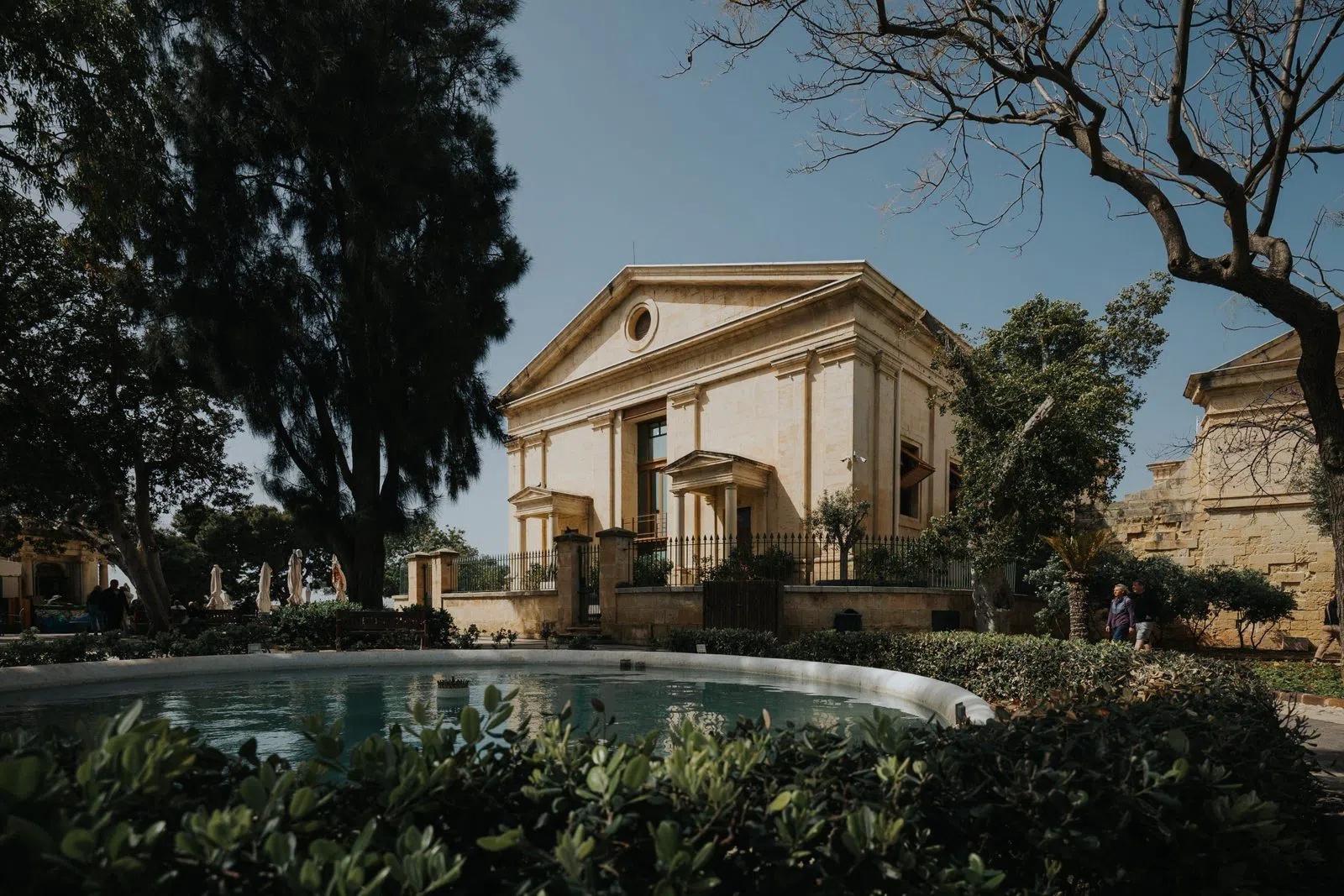
Palace, library and theatre on the upper grid
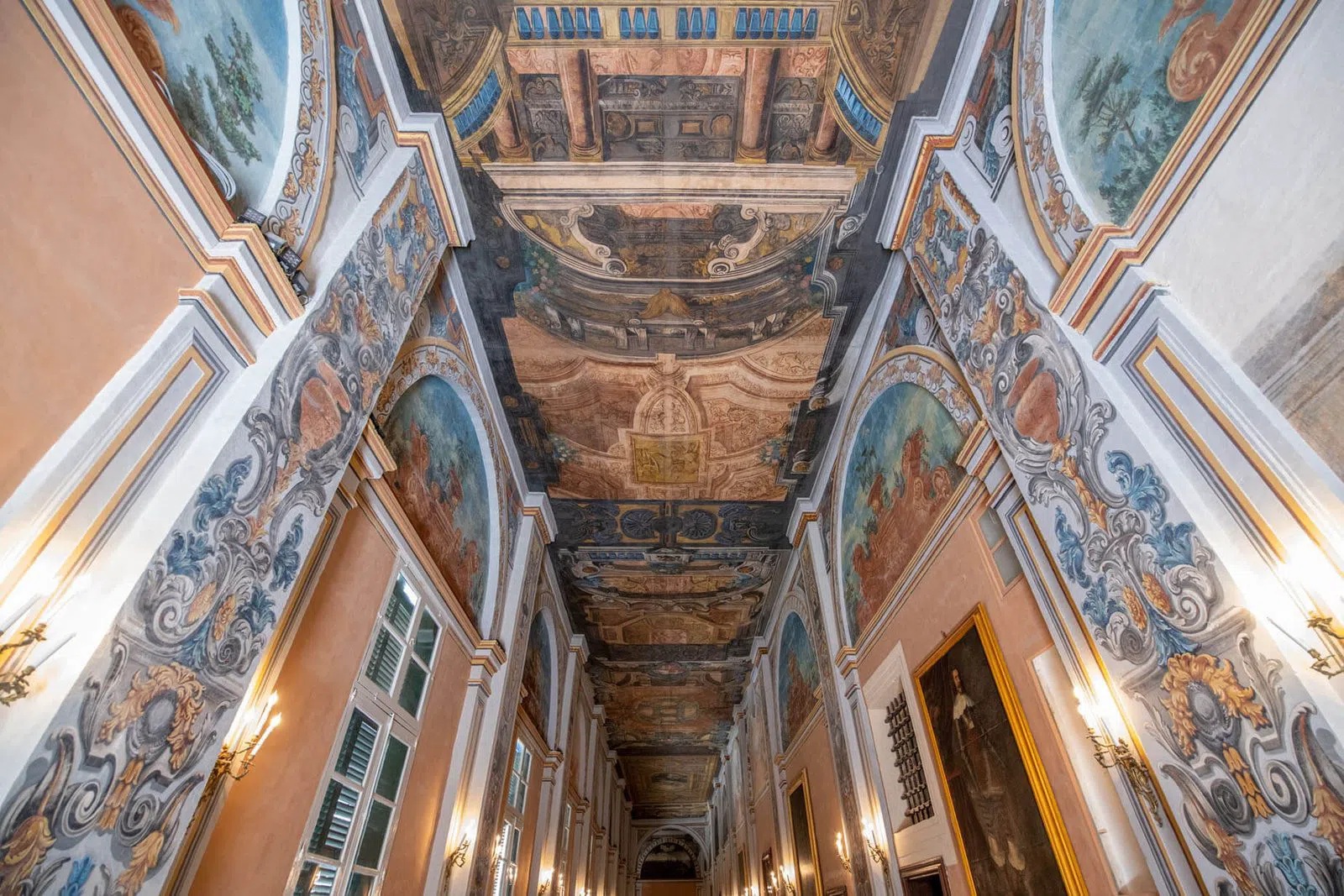
Grandmaster's Palace and the Palace Armoury (St George's Square, 400 m along Republic Street) reopened in 2024 after a long restoration. The armoury is around €10 on a normal day and free on the night, and the State Rooms are the interior most people are here for. They can also shut without notice for state functions, so check on the day before you commit an hour to reaching them. Go early. By 22:00 St George's Square is the densest point in the city and the entrance is on it.
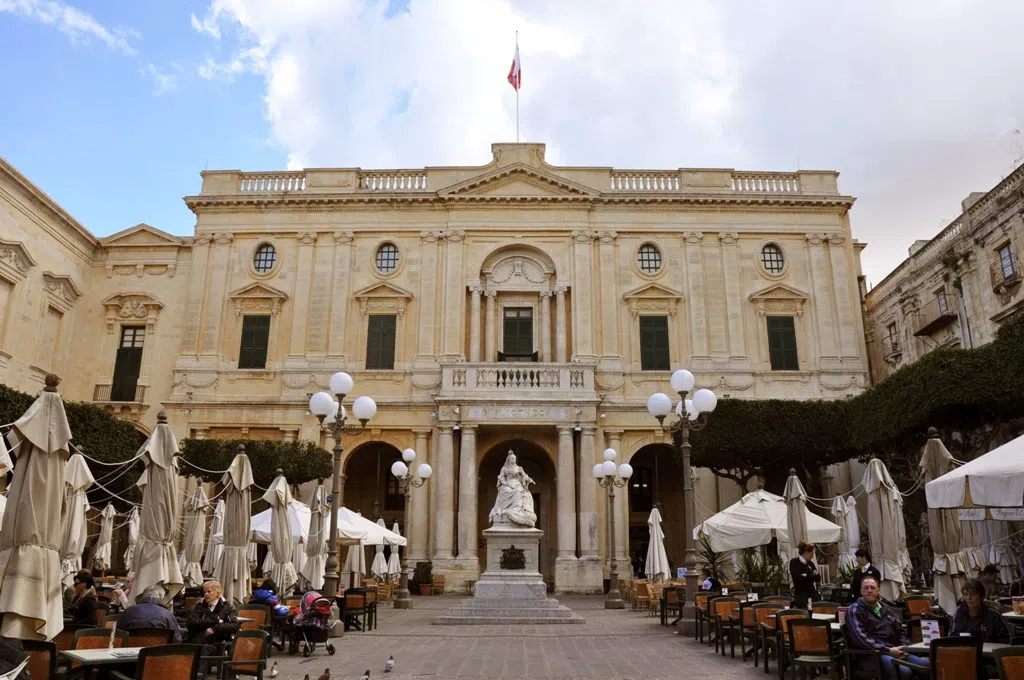
National Library of Malta (the Bibliotheca, Great Siege Square, immediately next door) is free and opens specially for the festival, worth knowing because it normally closes at 12:30 in the summer months and on Saturdays, so a standing-in-the-reading-room-at-night visit is not otherwise available. You need a passport or ID card to be issued a visitor tag; leave it at the hotel and you do not get in. It stays a quiet room even on this night. Go in twos and threes rather than as a group of ten.
Teatru Manoel (Old Theatre Street, two minutes uphill from the square) is one of Europe's oldest working theatres and a regular Notte Bianca venue. On normal days there are 30-minute backstage tours at about €5 and ticketed performances; on the night the free slots are first-come and fill within minutes of opening. Treat it opportunistically: if the door is open as you pass, go in; if you build your evening around getting inside, you will probably be disappointed.

Walk to the tip when Republic Street stops moving
Fort St Elmo and the National War Museum (the tip of the peninsula, about 1 km and fifteen minutes from City Gate, nearer thirty when the streets are full) is the furthest walk of the night, which is exactly why it stays breathable while Republic Street is shoulder to shoulder. It is about €10 normally and free on the night, and the site is big enough to swallow a large group without anyone feeling herded. Two caveats: the Gun Experience and the Harbour Fire Command are temporarily closed, so if either was your reason for going, check before making the walk. Between 21:00 and 23:00 is the window when the trade-off works best. Republic Street is the slow route down; Merchants Street and the lower cross streets move faster.
The lower half most visitors never reach
MUŻA (Auberge d'Italie, Merchants Street, mid-grid) holds the national art collection, rehung thematically rather than chronologically, at about €5 on a normal day and free on the night; its usual hours are 10:00 to 18:00 daily from March to October. On late-opening nights the courtyard doubles as a performance space, and a courtyard is a useful thing when you are six people trying to stand somewhere without blocking a doorway.
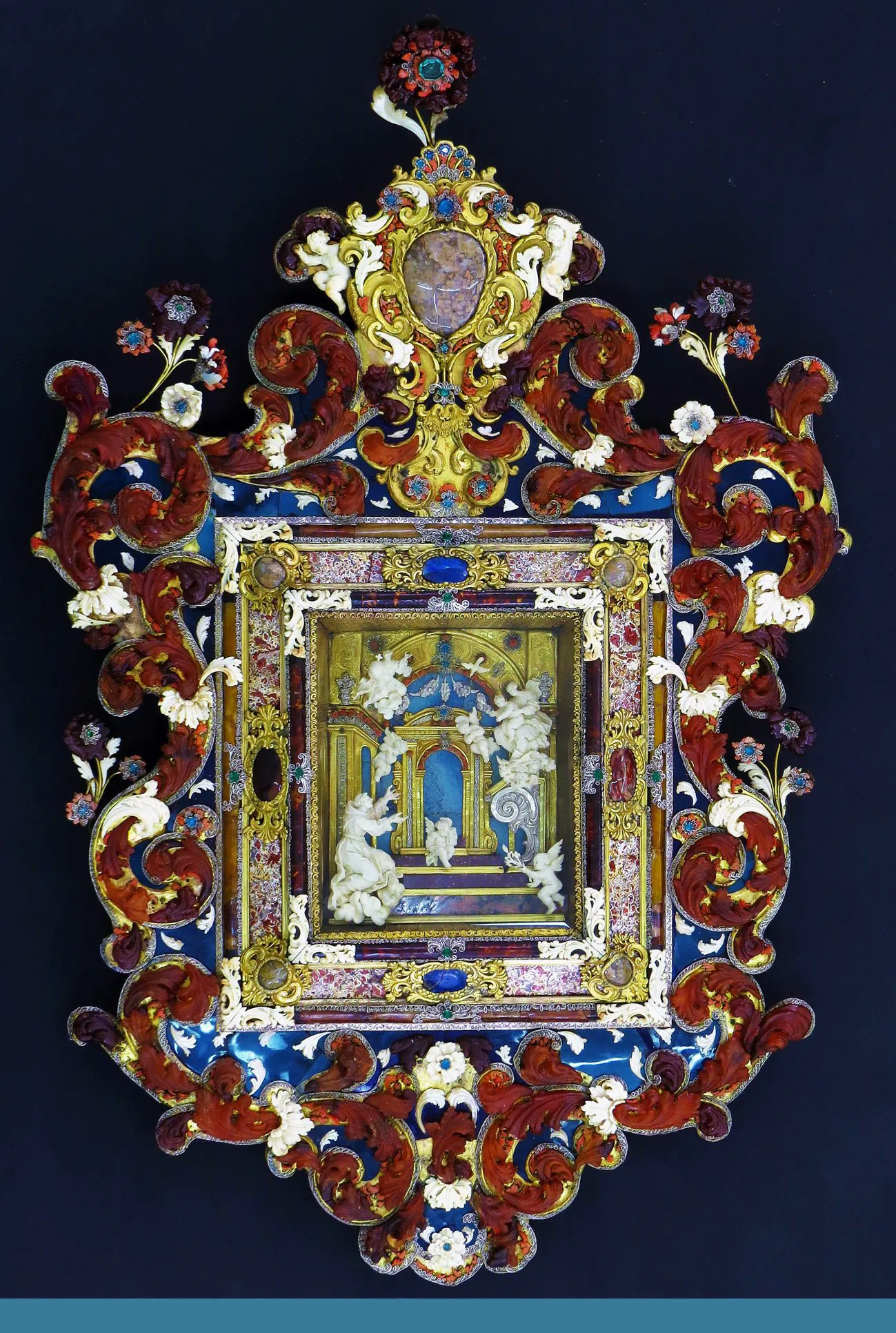
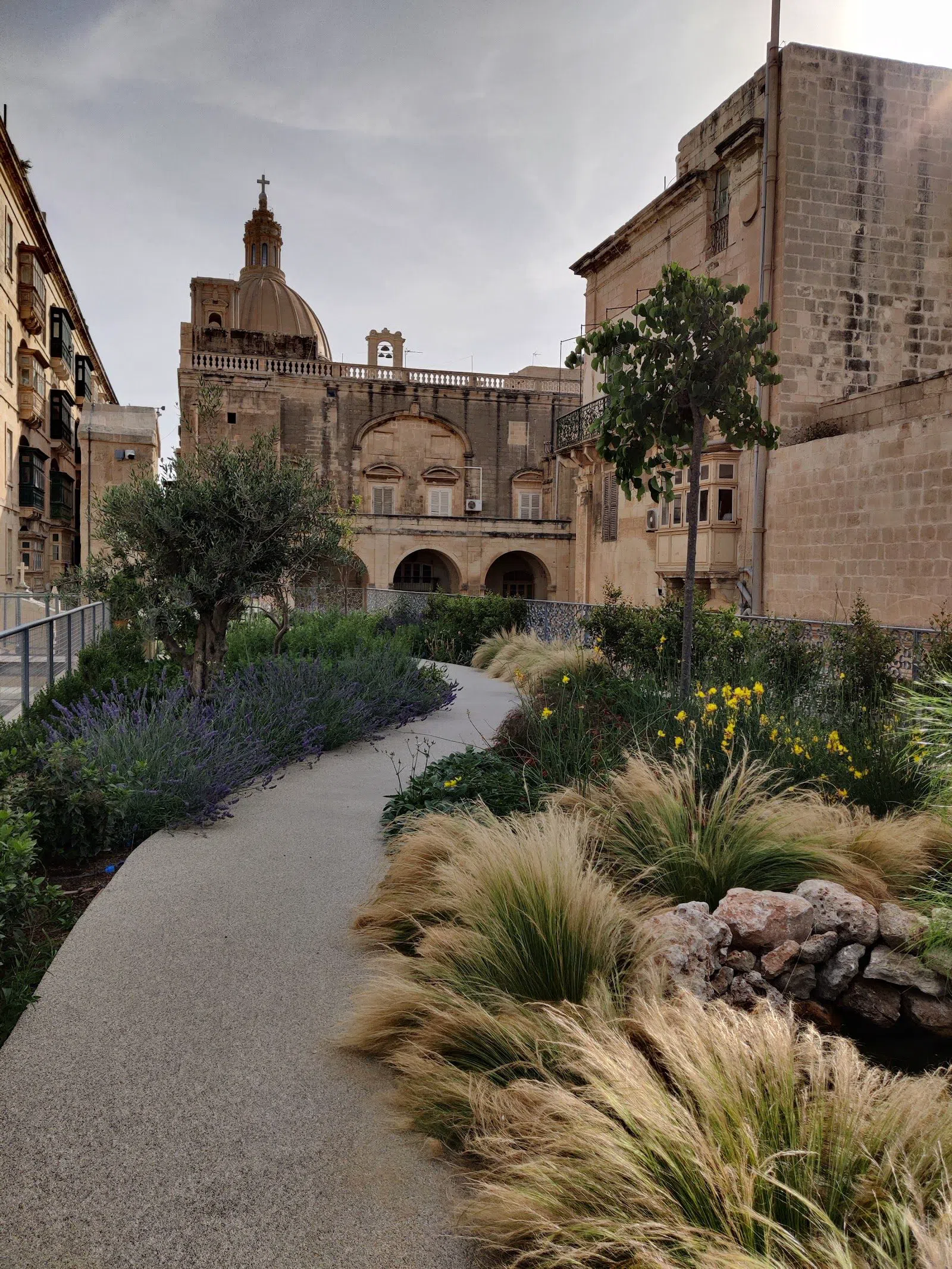
Valletta Design Cluster (the old abattoir building in the Biċċerija, lower Valletta) is free, open-access and deliberately informal, a community makerspace with multi-use rooms and a public roof garden. It sits in the quiet lower half of the grid, five minutes below Merchants Street, which most visitors never walk into. The roof garden is somewhere to sit down, look out over the lower city and let a group reassemble without buying anything.
Where to eat and drink once the museums fill up
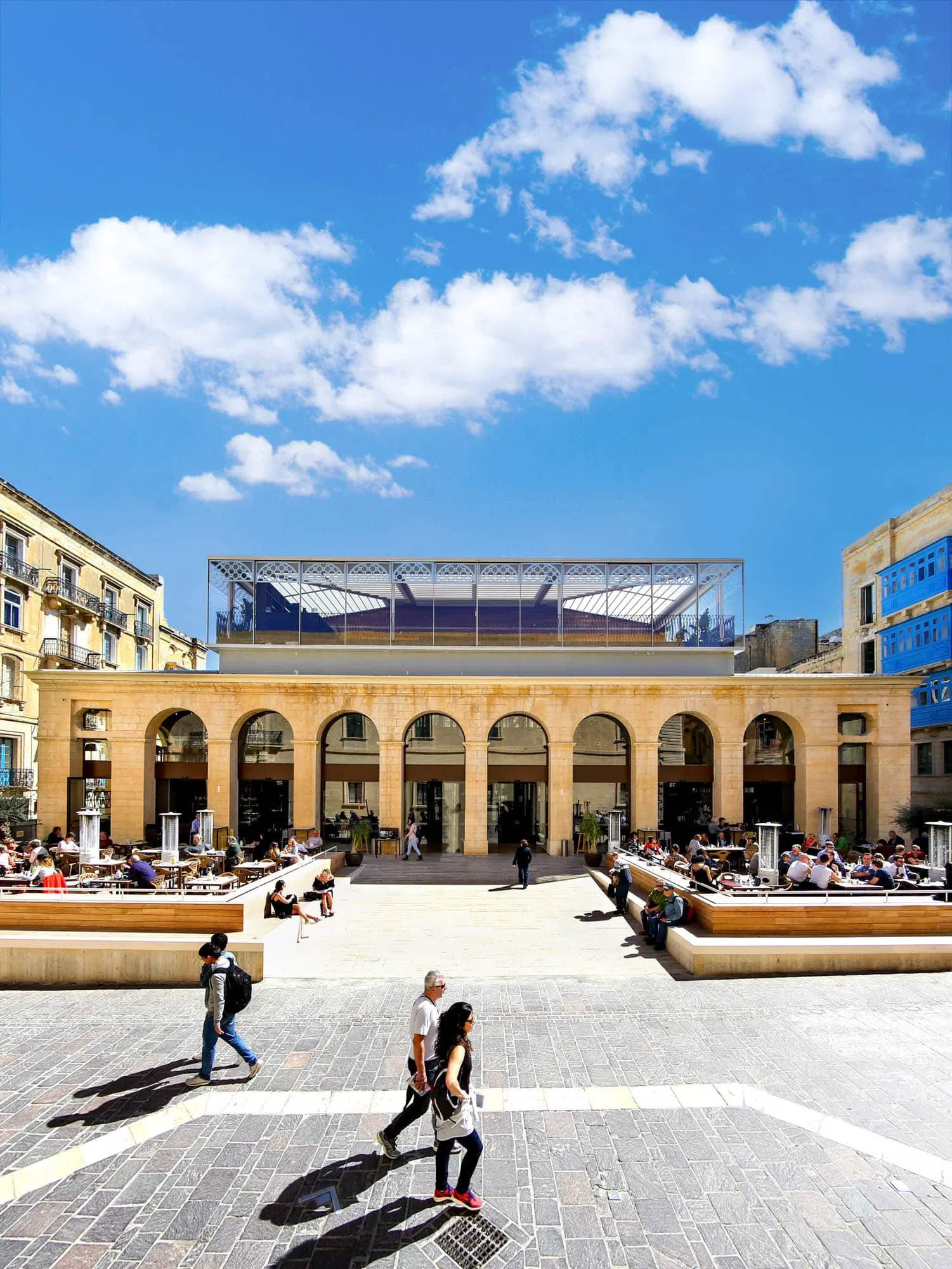
Is-Suq tal-Belt (Merchants Street, mid-grid) is the answer for anyone travelling in a group of six or more. It is a walk-in food hall with communal seating, no bookings, €10 to €20 a head, open until 00:30 on Fridays and Saturdays, so on 3 October it is serving well past the point when kitchens elsewhere have closed. Expect to split across two tables and to send one person ahead to hold them.
Trabuxu Wine Bar (Strait Street) has been open since 2002 and is the place to drink Maltese Girgentina and Ġellewża without being lectured about them. The cellar is small: reserve for any group, particularly on a Friday or Saturday, or you will not get in on this night. Reckon on €25 to €40 a head with a board. It suits two to four people; it does not suit eight who turn up hopeful. It is closed Mondays and Tuesdays, which does not affect this date.
Yard 32 (the quieter southwest stretch of Strait Street) carries more than 200 gins and 42 tonics, at €10 to €15 a drink and €6 to €12 for tapas, open to 01:00 midweek and later at weekends. The footprint is small, so book ahead or arrive before the crowd migrates off the main drag. It is the sensible fallback when Republic Street is impassable and you still want to sit down.

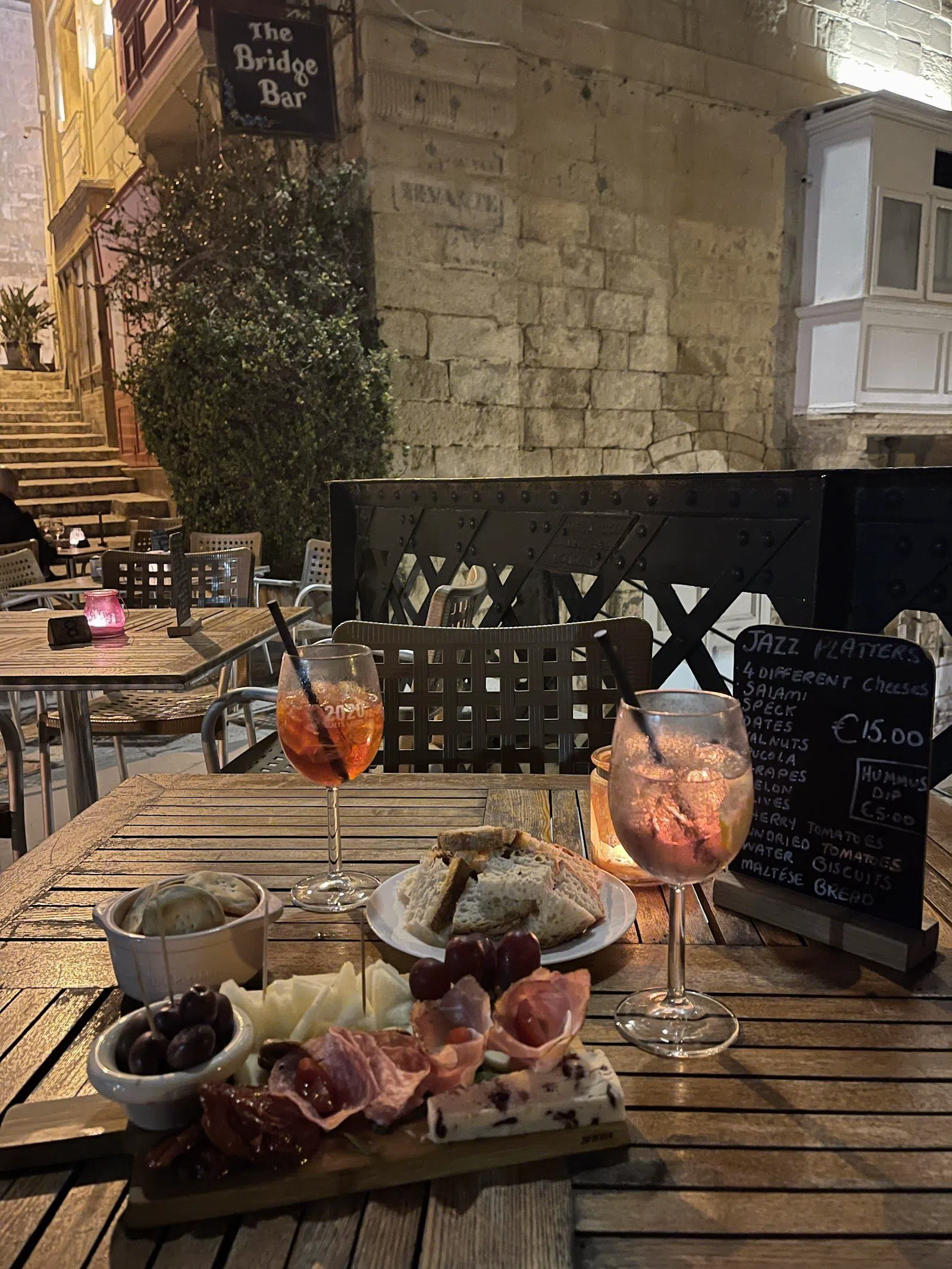
The Bridge Bar (St Ursula Street, on the steps) has no tables worth the name: everyone sits on the stone steps with a drink at €5 to €10, from 19:00 until late. That absorbs a group better than any indoor bar in the city, and it costs nothing to stand. The live jazz runs on Fridays from May to late November, so there will be no band on Saturday 3 October; what you get instead is the cheapest good view in the lower city and room to breathe.
A running order that works
- 14:00: St John's Co-Cathedral, before the 16:00 last admission
- 15:30 or 16:00: Casa Rocca Piccola tour, pre-booked
- 18:15: National Museum of Archaeology, forty minutes, done
- 18:45: join the Auberge de Castille queue before it lengthens
- 20:30: Grandmaster's Palace, then the National Library next door
- 21:30: Teatru Manoel if a slot is open, otherwise Spazju Kreattiv and its roof
- 22:00: walk down to Fort St Elmo while the middle of the grid is solid
- 23:00: Is-Suq tal-Belt for food
- 00:15: The Bridge Bar steps, or Yard 32 if you want a seat
Practical notes for the night
Transport. Buses terminate just outside City Gate and extra late services are usually laid on for the festival, though you should check the operator's timetable on the day rather than assuming. Harbour ferries land below the bastions on both sides and generally run late on this night. The Barrakka Lift connects the quay to Upper Barrakka Gardens for about €1 going up and free coming down, but it stops earlier than the party does, so confirm the last car before you rely on it. Driving in is a poor idea: the grid is pedestrian for the event and the car parks outside the gate fill early. Taxis and ride apps drop you at the gate, not inside.
Cash and ID. Malta uses the euro. Bars, the food hall and the museums take cards, but carry €20 to €30 in small notes for street stalls and the Saluting Battery. Bring a passport or ID card if the library is on your list.
Footing. Valletta's limestone paving is polished smooth and several of the cross streets are staircases, some of them steep. Wear shoes with grip rather than shoes you like the look of. It is the main reason the walk to Fort St Elmo takes longer at midnight than the map suggests.
Budget. The night itself is free: Castille, the palace and armoury, the archaeology museum, MUŻA, Fort St Elmo and the library cost nothing on 3 October. The daytime interiors run to about €27 for the cathedral and Casa Rocca together. Food and two drinks land at €35 to €55 a head depending on where you sit. Call it €60 to €85 per person for the full day and night.
Staying. Sleep inside the grid if you can, because the ability to drop a bag and come back out is worth more than anything else on a night like this. Start with a Valletta hotel search and book by August, as the date is well known locally. Rooms facing Republic Street or Strait Street will hear the city until 03:00, so ask for the courtyard side if you intend to sleep at all. For the rest of the year, when the same buildings keep office hours, the Valletta guide covers what is open when.
Before you go
When is Notte Bianca 2026 and when should I arrive in Valletta?
Notte Bianca falls on Saturday 3 October 2026. The free openings run through the evening and into the small hours, but the queue for the Auberge de Castille builds fast after 19:00, so be in the city by late afternoon if that building is your priority. Check the published programme on the day for the exact venue times, which vary year to year.
Is everything in Valletta free on Notte Bianca?
The Auberge de Castille, Grandmaster's Palace and Palace Armoury, National Museum of Archaeology, MUŻA, Fort St Elmo and the National Library all waive entry on the night, which would otherwise cost roughly €5 to €10 each. Private and ticketed places do not: St John's Co-Cathedral is about €15, Casa Rocca Piccola about €12, and the Saluting Battery about €3. Food and drink are full price.
Can I see St John's Co-Cathedral on Notte Bianca night?
Not reliably. It is a working cathedral with a 16:00 last admission, not a dependable part of the free night programme, so plan it for the afternoon of 3 October instead. Closures on Sundays and public holidays are worth checking if you shift your dates.
Where can a group of eight eat late in Valletta on the night?
Is-Suq tal-Belt on Merchants Street is the practical answer: a walk-in food hall with communal seating, open to 00:30 on Saturdays, at €10 to €20 a head, and the only central option that will absorb six or more at 23:00 without a booking. For drinks afterwards, The Bridge Bar's steps take a large group easily; Trabuxu's cellar does not, unless you reserved.
Do I need to book anything in advance for Notte Bianca?
Nothing on the free programme can be booked. Castille, the palace and the museums are walk-up only, and the free Teatru Manoel slots are first-come and fill within minutes. Do book Casa Rocca Piccola tours for any group, a table at Trabuxu if you want one, and your accommodation well ahead, since rooms inside the grid go early for this date.